
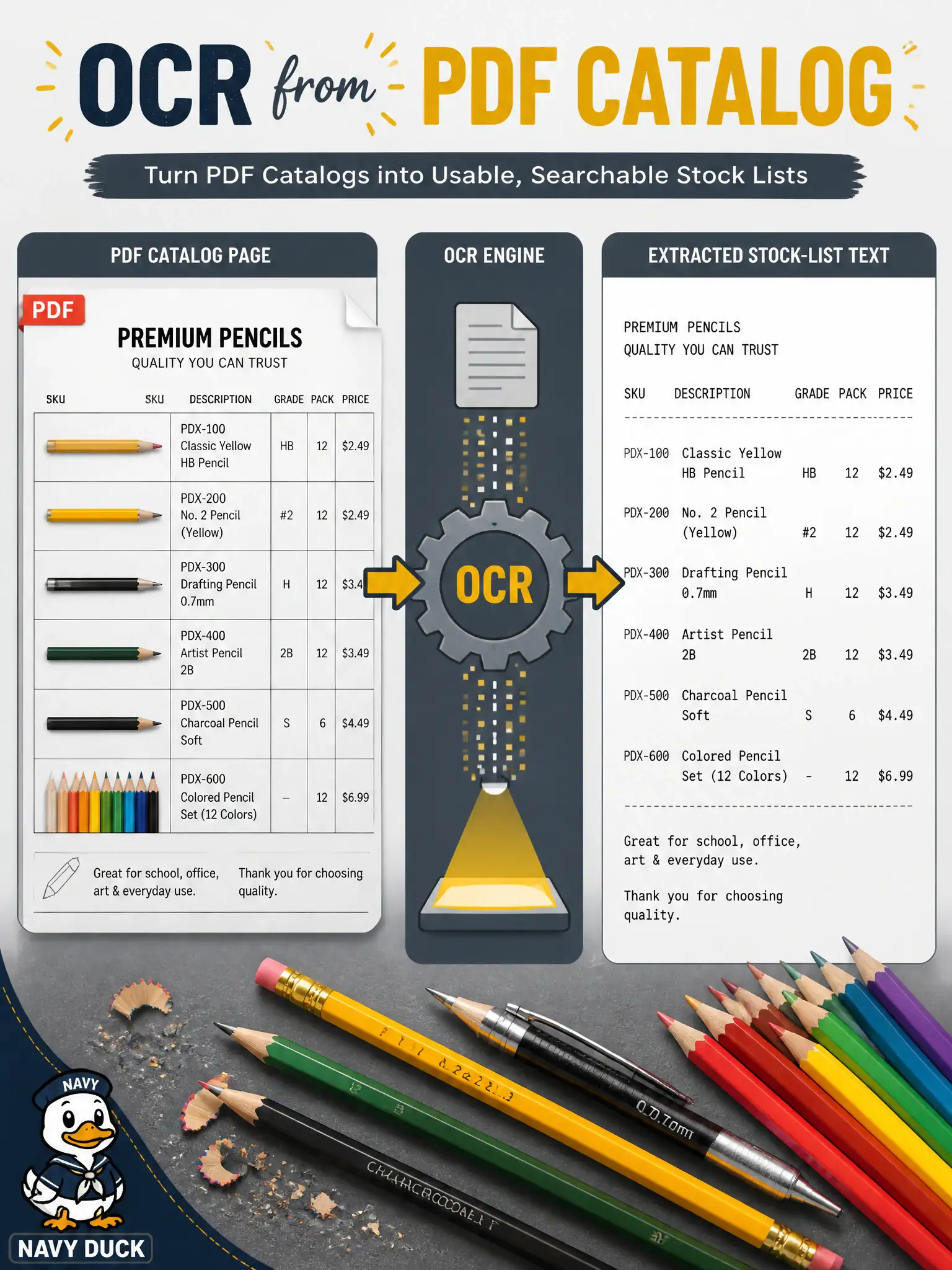
A slate-pencil works has a bound PDF of old stock lists and a tray of pencil stills. What official Domain 5 path extracts the list text so it can be analyzed next to the stills?
Select an answer to reveal the explanation.
Short Explanation
A photocopier that turns printed pages into words you can sort is the idea—OCR pulls catalog text so it can sit beside the stills for analysis.
Full Explanation
A slate-pencil works with a bound PDF of old stock lists and a tray of pencil stills should use optical character recognition to pull analyzable text from the PDF catalog. That official Domain 5 path extracts list text so it can be analyzed next to the stills—characters into data, not bytes into blind tensors.
Flattening the PDF bytes into a Domain 2 training tensor without reading characters fails because analysis needs readable text, not opaque byte tensors. Asking Riva ASR to listen to silent PDF pages fails modality: PDFs are not audio for ASR. Inventing lyrical captions with a transformer and ignoring the PDF fails by discarding the authoritative stock lists the civic works already hold.
Exam caveat: OCR is the document path into Domain 5 text analysis beside images. Do not substitute ASR, poetry generation, or raw-byte tensor myths.
Operational check: OCR the stock-list PDF; QA a page sample; join extracted SKUs to pencil stills where numbers match; chart coverage for the municipal pencil works before any training packaging. In municipal multimodal stewardship, record the chosen Domain 5 reading and the rejected distractors in the loft change log so future stewards understand which concept boundaries were enforced for citizen-facing archives. Re-check the same chart or extraction after the next collection or OCR pass to confirm the civic gap is closing rather than merely relabeled.