
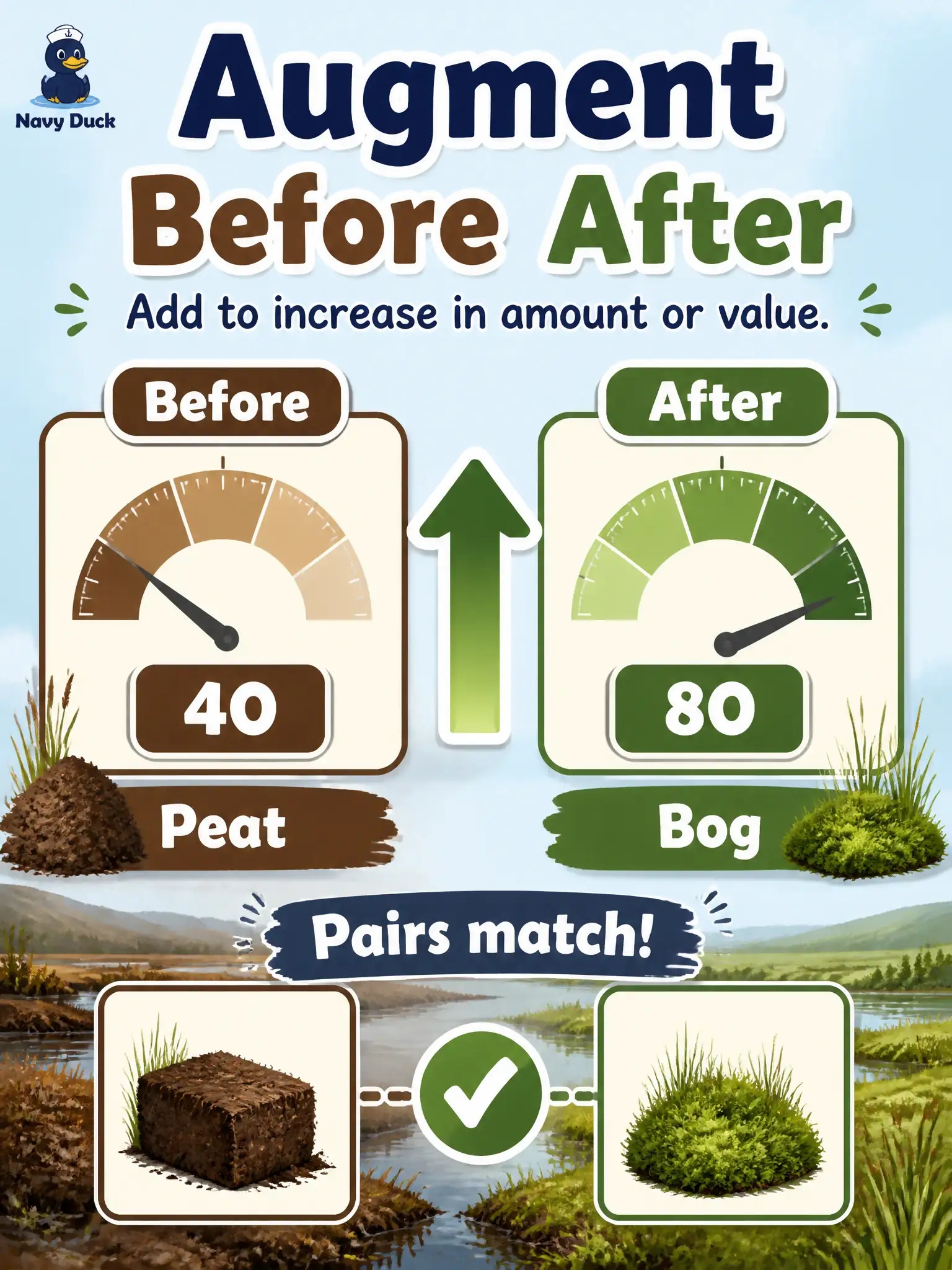
A peat-cutter’s bog hut compares holdout scores before and after a mild stills-and-audio augmentation. Scores rose and pairs still match. How should that result be filed?
Select an answer to reveal the explanation.
Short Explanation
A before-and-after weigh-in that shows improvement is evidence, not a new diet philosophy. The score rise with matching pairs is Domain 5 analysis of helpful augmentation—not a fusion rewrite.
Full Explanation
When a peat-cutter’s bog hut compares holdout scores before and after a mild stills-and-audio augmentation, and scores rose while pairs still match, that result is Domain 5 analysis evidence that the official augmentation skill helped accuracy. File the before/after as evaluation of a safe transform—not as architecture, trust certificates, or finished software claims.
Filing it as Domain 2 fusion theory that must be rewritten from scratch fails because an accuracy lift under mild augmentation does not rewrite fusion theory. Calling it a Domain 7 authenticity certificate for every augmented clip fails because better holdout scores do not disclose or certify authenticity of synthetic content. Claiming Domain 4 software implementation is now complete fails because a data-augmentation analysis win is not an implementation-complete declaration.
Exam caveat: Domain 5 owns the augment-and-measure story. Keep score lifts tied to pair fidelity; do not smuggle the result into fusion, trust, or “implementation done” narratives.
Operational check: archive pre/post holdout metrics with the mild recipe; confirm pair checks still pass; promote only that recipe into the municipal bog-hut training config; reject later “stronger” transforms that break pairs even if someone hopes for bigger gains.