
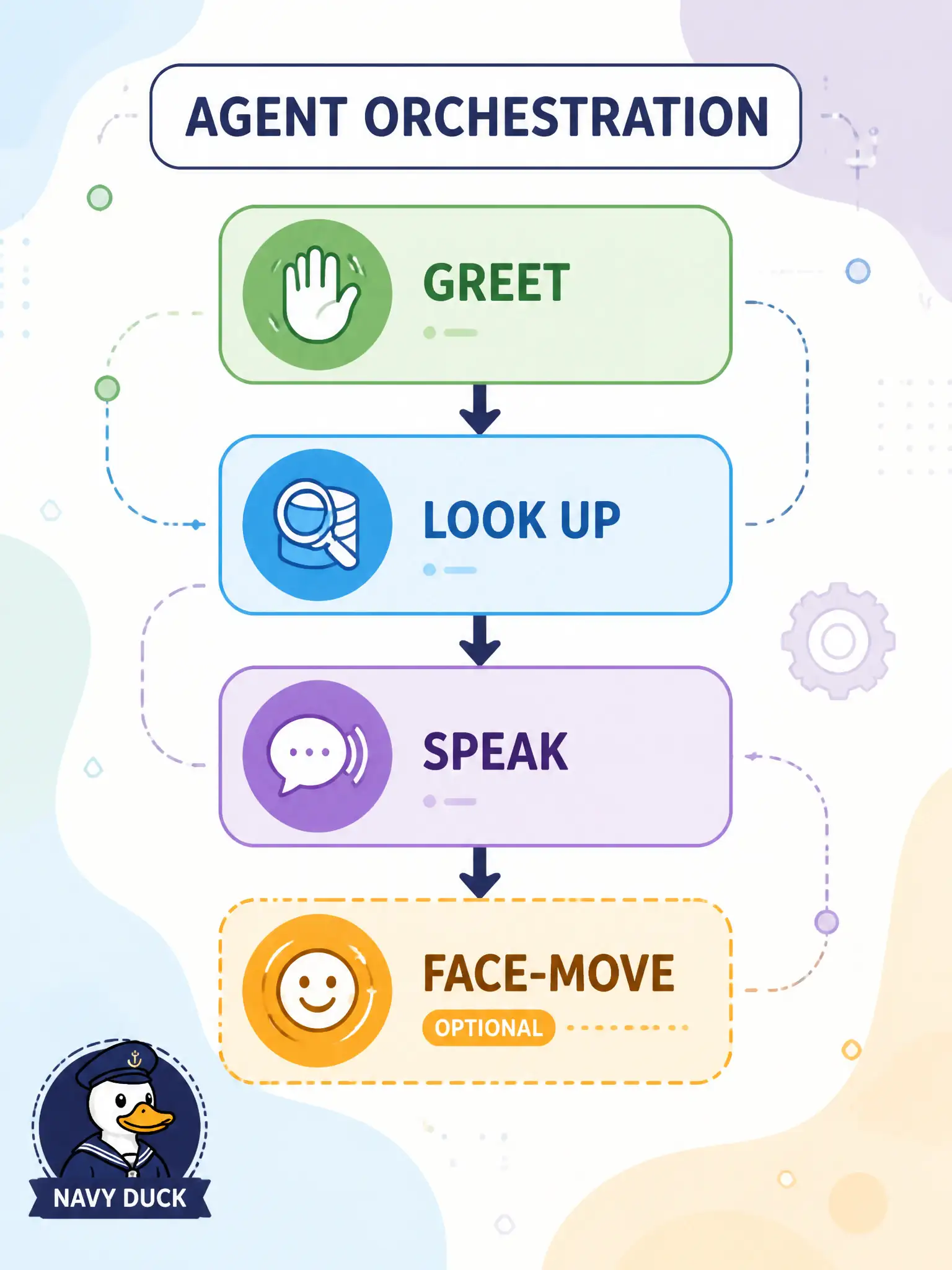
A sled-maker loft wants the system to greet, look up a runner part, speak a reply, then optionally move a face. What kind of orchestration is that sequencing of jobs?
Select an answer to reveal the explanation.
Short Explanation
Greet → look up → speak → smile is a script of jobs. That sequencing of roles and tools is agent orchestration, not a fusion wiring pattern.
Full Explanation
Sequencing jobs so a sled-maker loft system greets, looks up a runner part, speaks a reply, then optionally moves a face is agent orchestration: planning or sequencing actions, tools, or roles. Early fusion of raw greeting waveforms with part-number pixels is a meeting-point design, not the multi-act script. Intermediate fusion does not require every step to share one concat layer. Sample-rate conversion checklists prepare audio; they do not plan actions. Exam caveat: agent orchestration is the action script, independent of a particular fusion layer. Operational check: write the civic step list (greet → lookup → speak → face) as an agent plan; keep fusion/encoder choices in a separate modality diagram. Store the sled-maker greet→lookup→speak→face flow as an agent playbook distinct from fusion. Agent orchestration sequences sled-maker acts: greet, lookup, speak, optional face—separate from fusion layers. Store the sled-maker greet→lookup→speak→face sequence as an agent playbook file that does not mention early or late fusion unless a step truly needs it. Close q129 with a municipal evidence note that records why the correct mechanism fits this civic multimodal scenario, why each of the three distractors fails by a distinct concept, and which operational check was observed in logs or dataset cards before promotion. File that note with the run packet so later maintenance cannot silently revive a rejected framing.