
A silversmith dumps whole file blobs—PDF bytes, WAV bytes, camera bytes—into one array and calls it multimodal input. What is wrong with that approach?
Select an answer to reveal the explanation.
Short Explanation
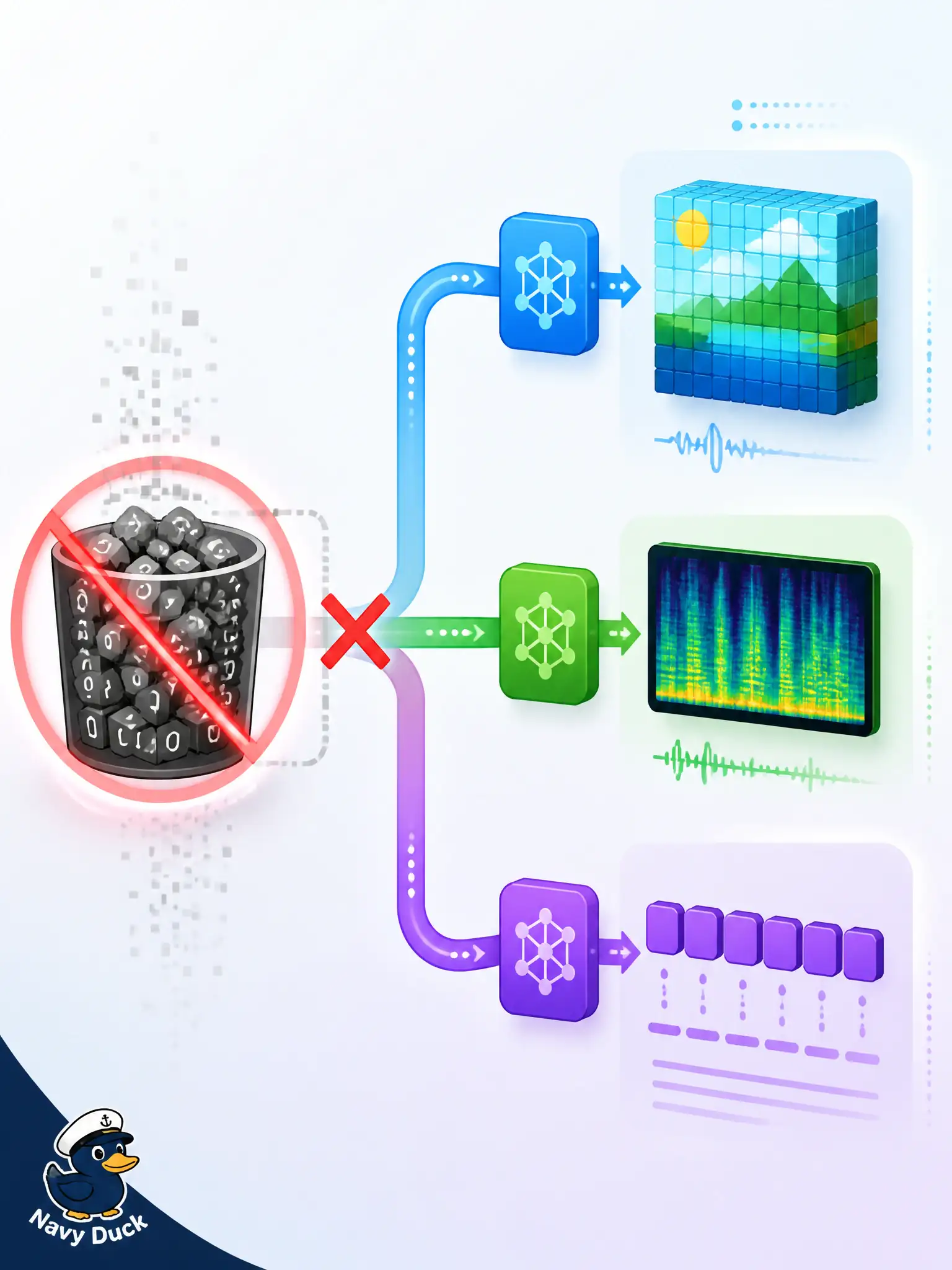
A mixed dump of file guts is not a model meal. Each modality still needs its own decode into tensors or tokens before anything is “ready.”
Full Explanation
Dumping whole file blobs—PDF bytes, WAV bytes, camera bytes—into one array is not multimodal input readiness. Raw bytes are not neural-network ready without a per-modality decode into tensors or tokens. Undifferentiated file bytes are not the preferred multimodal tensor format. WAV, PDF, and camera bytes all need appropriate decode; none are exempt. Multimodal systems can mix modalities; mixed blobs are not illegal for “legal reasons,” but they are invalid until decoded per modality. Exam caveat: readiness is modality-specific decode, not byte concatenation. Operational check: for each silversmith file type, run the proper decoder (OCR/text, audio waveform/spectrogram, image tensor) and only then assemble a multimodal batch. Replace byte-blob loaders with modality-specific decoders in the silversmith ingestion pipeline. Decode each silversmith modality into tensors/tokens; undifferentiated file bytes are not multimodal features. Replace silversmith byte-blob ingestion with explicit PDF/text, audio, and image decoders, assembling multimodal batches only after each arm is tensorized. Close q117 with a municipal evidence note that records why the correct mechanism fits this civic multimodal scenario, why each of the three distractors fails by a distinct concept, and which operational check was observed in logs or dataset cards before promotion. File that note with the run packet so later maintenance cannot silently revive a rejected framing.