
A telescope-grinding shop hears that high-resolution synthesis often works in a compressed stage and then decodes to pixels. What architecture awareness does that describe?
Select an answer to reveal the explanation.
Short Explanation
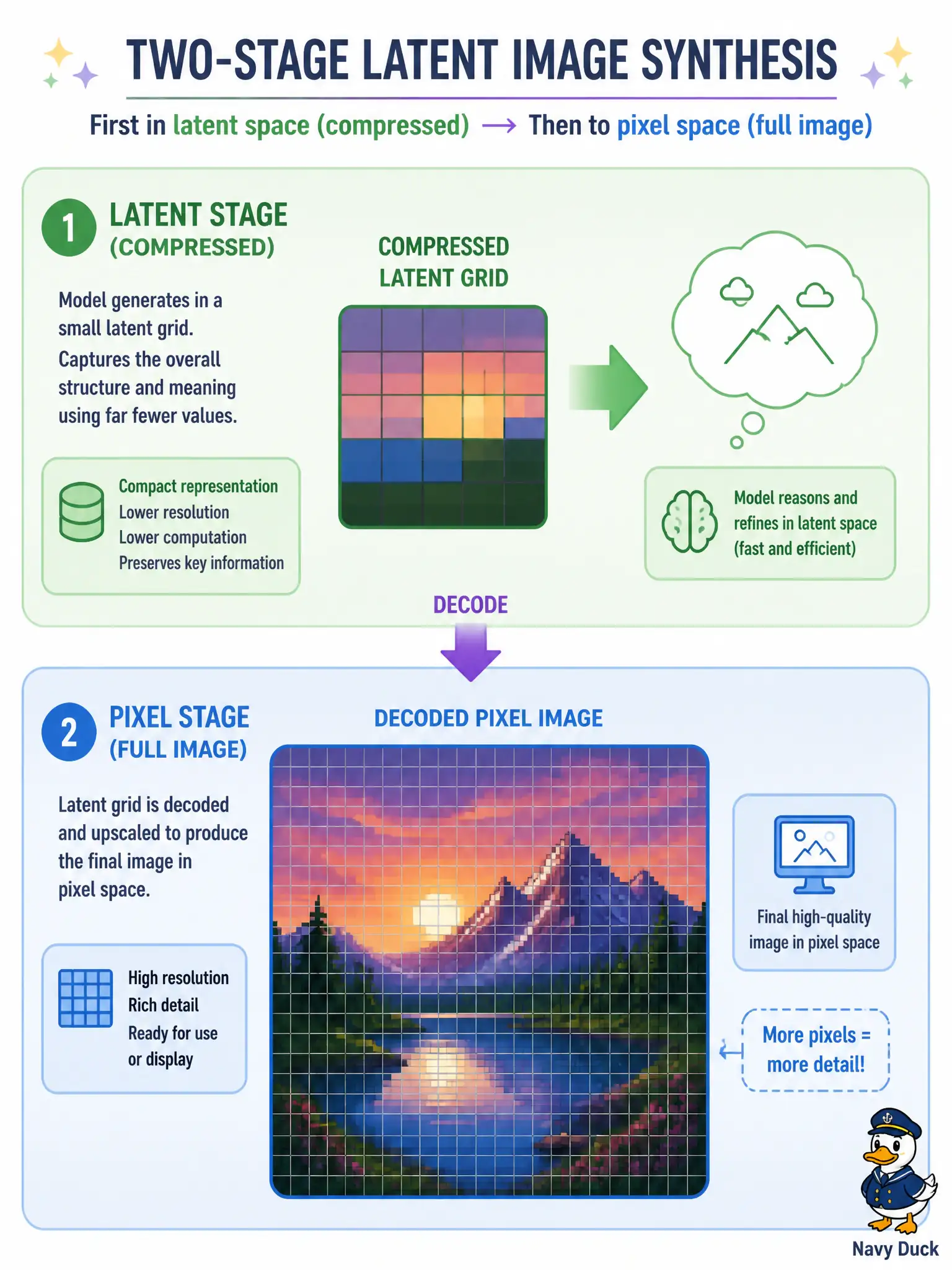
Shape the rough glass in a smaller workshop, then open it up to full aperture—that is latent-then-decode thinking. Two-stage synthesis works in a compressed space before pixels. It is architecture awareness, not a product quiz.
Full Explanation
High-resolution synthesis awareness for a telescope-grinding shop often means two-stage or latent image synthesis: generate in a compressed latent space, then decode to pixels. Shaping structure in a smaller workspace before opening to full aperture is the conceptual move. Inventing a new NVIDIA product name for every resolution is not required. Counting finished JPEGs in a Domain 1 render trial without an architecture idea misses the latent-then-decode point. An ASR-only path with no image decoder is the wrong modality story. Exam caveat: associate answers cite latent-then-decode awareness, not product quizzes. Operational check: on a civic high-res pipeline diagram, locate the compressed generation stage and the pixel decoder; confirm evaluation still uses decoded stills, not latent codes alone, when stakeholders judge image quality. Validate that stakeholders review decoded pixels from the latent pathway, not only compressed codes. Latent-then-decode is the high-res synthesis awareness: generate compressed, then decode to telescope-shop pixels stakeholders can judge. Do not invent product names to explain the two-stage idea. Close q096 with a municipal evidence note that records why the correct mechanism fits this civic multimodal scenario, why each of the three distractors fails by a distinct concept, and which operational check was observed in logs or dataset cards before promotion. File that note with the run packet so later maintenance cannot silently revive a rejected framing.