
A term newborn is limp and apneic after drying and warming with a heart rate of 80/min, poor tone, and no cry at 60 seconds. The warmer is on, airway is positioned, secretions are cleared, and stimulation has failed. Monitors show falling SpO2 despite free-flow oxygen. Which neonatal resuscitation intervention best follows the correct sequence for this infant?
Select an answer to reveal the explanation.
Short Explanation
You're racing to inflate tiny lungs before the heart gives up further. Ventilation is your lifeline here, like pumping air into a flat tire before pushing the car.
Full Explanation
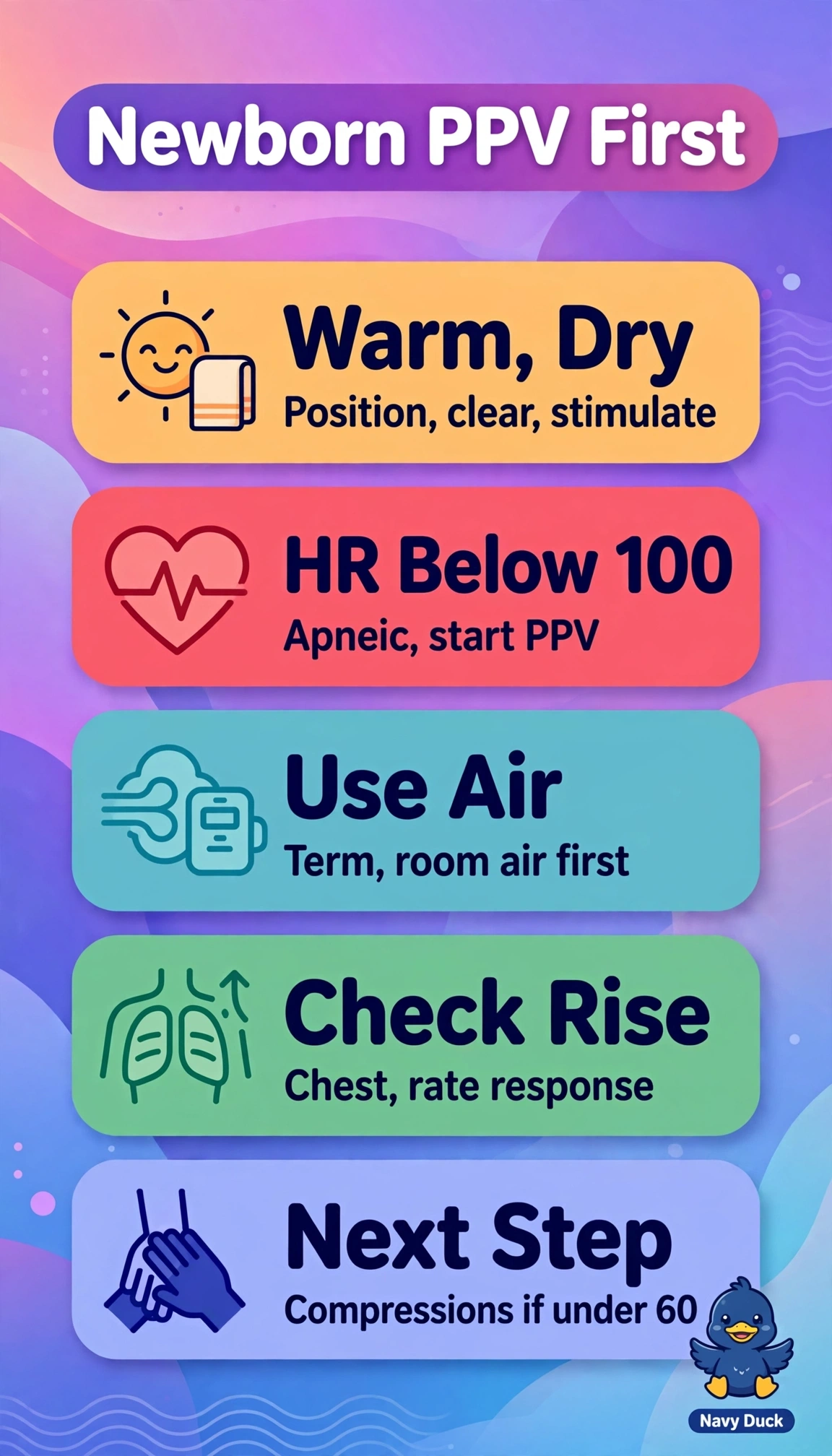
This term infant is limp, apneic, bradycardic at 80/min with falling SpO2 after completed initial steps including warming, positioning, clearing secretions and stimulation, so neonatal resuscitation prioritizes lung aeration through immediate effective positive-pressure ventilation, with room air preferred for term initiation to limit oxidative injury while reversing hypoxia-mediated bradycardia, plus prompt reassessment of chest movement, heart rate and saturation to determine escalation. Starting identical ventilation but with 100% oxygen preserves ventilation and reassessment yet fails oxygen-titration principle by missing the requirement to begin with room air and adjust by preductal oximetry, conferring no added benefit and increasing reperfusion injury risk. Starting chest compressions now for rate below 100 preserves urgency and monitoring yet fails threshold-sequencing principle, because compressions are indicated only for rate below 60/min after 30 seconds of effective ventilation with visible chest rise, and premature compressions compromise ventilation that usually recovers rate. Using CPAP with room air preserves oxygen stewardship and reassessment yet fails ventilation-mode principle, because CPAP depends on spontaneous effort and cannot aerate the apneic lung or correct bradycardia. An exam caveat is that any bradycardia below 100 does not trigger compressions or 100% oxygen; sequence matters. A practical check is confirming seal, neutral position, visible chest rise at 40-60 breaths/min with rate improvement in 15-30 seconds before advancing.