
A 71-year-old with COPD presents with fever, productive cough, tachypnea, hypoxemia, and right lower lobe consolidation with leukocytosis and CURB-65 score of 3. Sputum culture is pending, influenza test is negative, and blood pressure is borderline. Oxygen needs are rising despite low-flow cannula. Which pneumonia management strategy best addresses severity, oxygenation, and infection control?
Select an answer to reveal the explanation.
Short Explanation
You've got a high-risk lung infection that needs momentum. Severity sets the pace here, like admitting a frail hiker before the storm hits.
Full Explanation
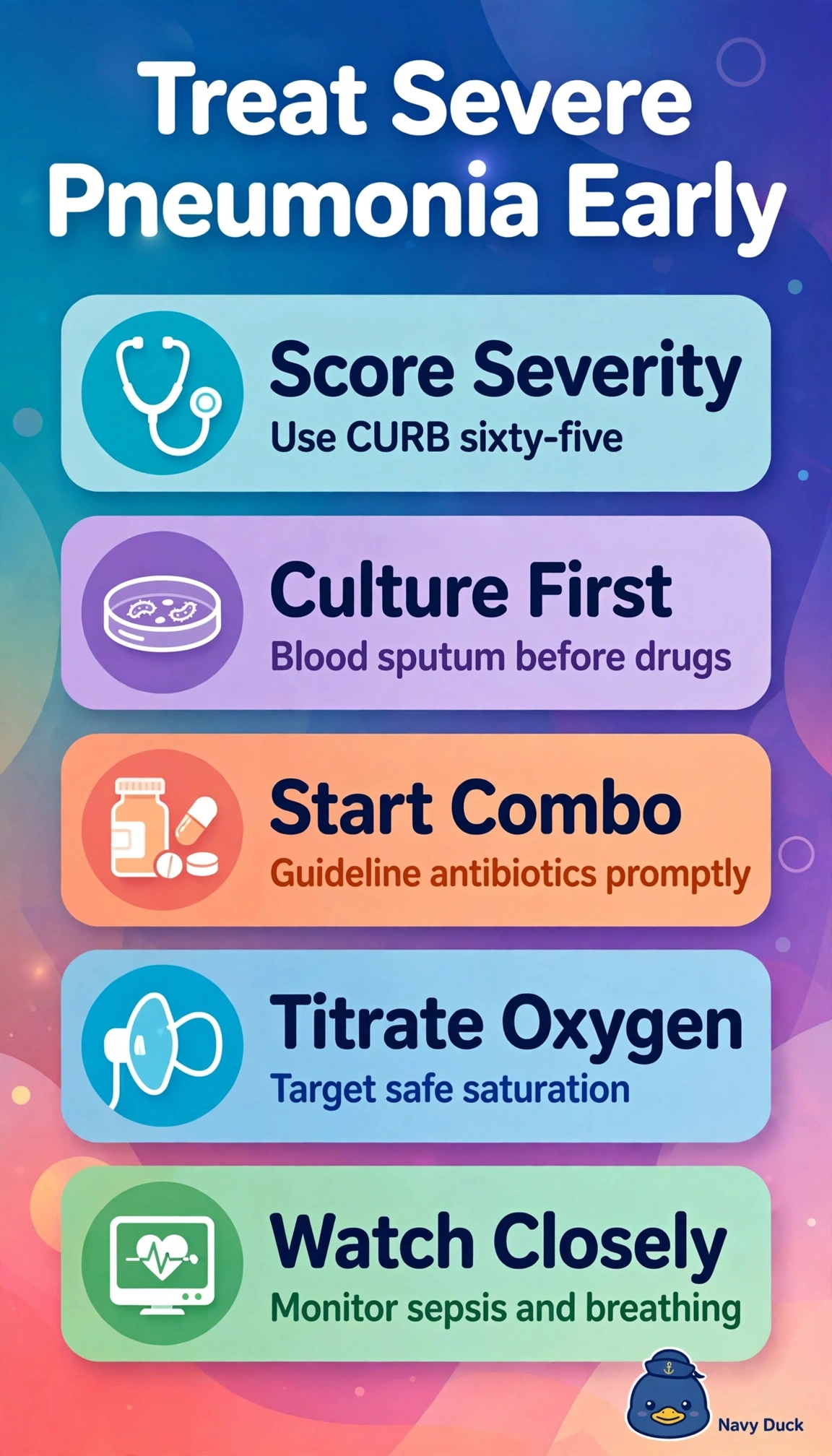
This case reflects severe bacterial community-acquired pneumonia in an older COPD patient with fever, productive cough, consolidation, leukocytosis, hypoxemia worsening on low-flow oxygen, borderline pressure, and CURB-65 of 3, so admission enables hemodynamic and respiratory monitoring plus escalation planning, guideline-concordant combination antibiotics ensure early broad bacterial coverage while cultures pend and influenza is negative, and titrated oxygen corrects hypoxemia without worsening hypercapnia. High-flow oxygen without titration to a target range fails oxygen-prescription principles in COPD because uncontrolled oxygen can worsen carbon dioxide retention, acidosis, and reduced drive while obscuring clinical decline. Oseltamivir-based care with isolation and titrated oxygen fails etiologic reasoning because negative influenza testing with purulent sputum, leukocytosis, and lobar consolidation favors bacterial infection needing antibacterials rather than primary antiviral therapy. Home oral therapy with home oxygen fails site-of-care triage because CURB-65 of 3 with borderline hypotension and rising oxygen needs predicts deterioration and requires inpatient, potentially critical-care, assessment. An exam caveat is not to delay empirical antibiotics or admission for pending sputum results or overinterpret one negative viral test. A practical check is to verify early antibiotic timing, target saturation, vital trends, mental status, and explicit escalation thresholds at reassessment.