
A 62-year-old with sudden dyspnea, pleuritic chest pain, tachycardia 128/min, hypotension 88/56 mmHg, SpO2 88% on 4 L/min, and unilateral leg swelling has CT confirmation of large pulmonary embolism without active bleeding. Bedside echo suggests right ventricular strain, lungs are clear, and the patient remains anxious but alert. Which cardiopulmonary support strategy should the therapist prioritize for obstructive shock from pulmonary embolism?
Select an answer to reveal the explanation.
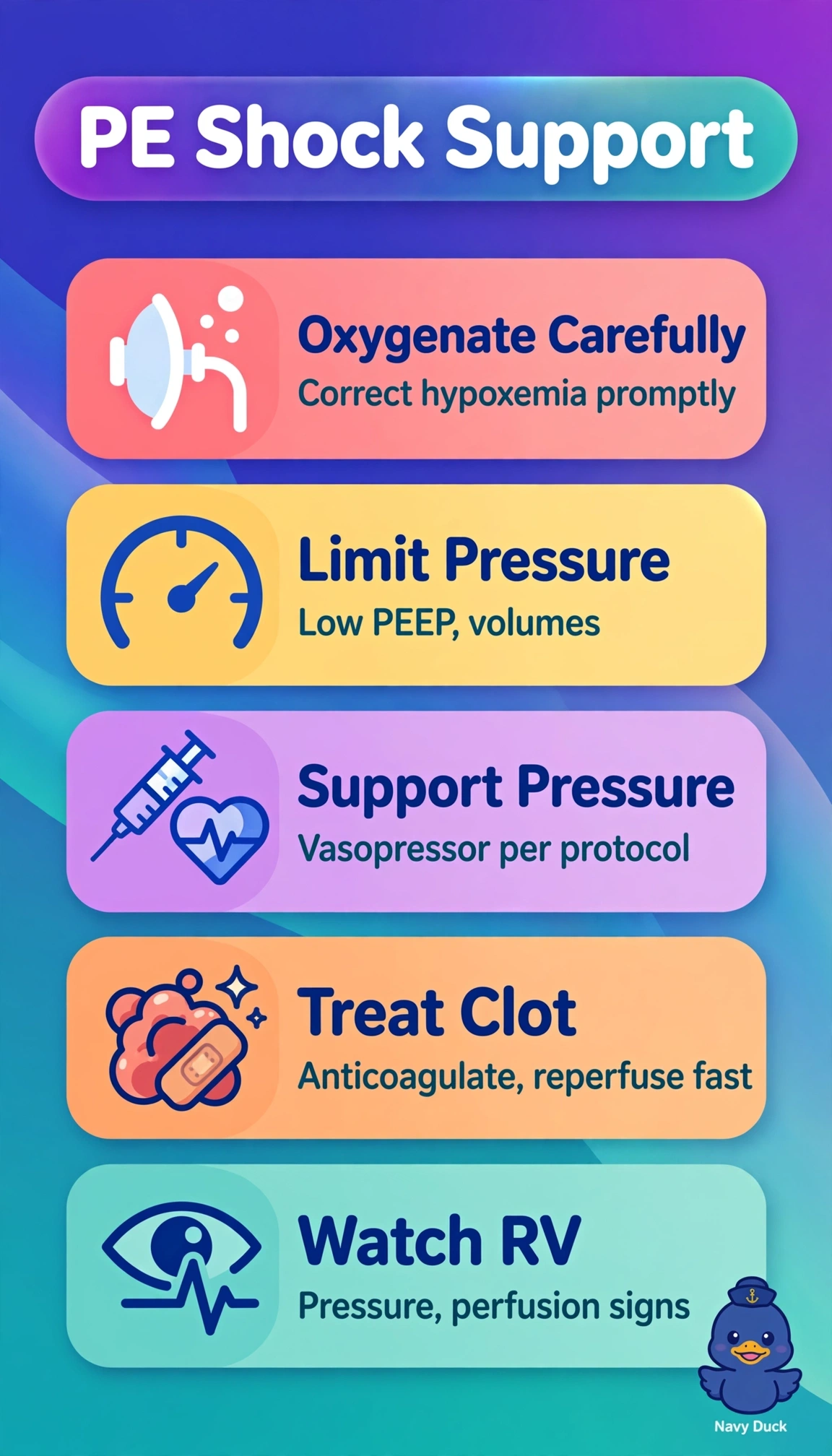
Short Explanation
You are protecting a strained right heart, not flooding it. Gentle oxygen with low chest pressure acts like easing off a kinked hose. Your focus is right-ventricular-afterload control while definitive clot care mobilizes.
Full Explanation
Large embolism with hypotension, tachycardia, hypoxemia and echo right ventricular strain defines high-risk obstructive shock in which obstruction raises afterload, reduces left ventricular preload and cardiac output, and worsens mismatch. The correct strategy restores delivery without compromising hemodynamics by correcting hypoxemia to reduce vasoconstriction, keeping intrathoracic pressure low to preserve venous return and right ventricular filling, and supporting perfusion with norepinephrine while pursuing rapid reperfusion with thrombolysis, catheter intervention or embolectomy with anticoagulation since no bleeding is stated. The noninvasive ventilation with moderate positive pressure approach helps many hypoxemic patients but fails here by concept because clear lungs indicate obstruction rather than recruitable collapse, and added pressure impedes return and elevates afterload. The oxygen, fluid trial, norepinephrine and heparin-alone approach suits stable embolism but fails by concept because anticoagulation prevents propagation without removing obstructive thrombus causing shock. The fluid restriction and diuretic approach suits hypervolemic congestion but fails by concept because frank hypotension requires preserved preload and diuresis lowers output. An exam caveat is not to confuse right strain with left failure requiring diuresis and high pressure. A practical check is to verify pressure, mentation, lactate, saturation, ventricular function and bleeding status before intubation.