
In the ED a 68-year-old with COPD exacerbation is alert with accessory muscle use, ABG shows pH 7.30 with PaCO2 62 mm Hg, SpO2 86% on 2 L, and wheezes with poor bronchodilator response so far. Which combined noninvasive ventilation and medical treatment plan best manages this exacerbation?
Select an answer to reveal the explanation.
Short Explanation
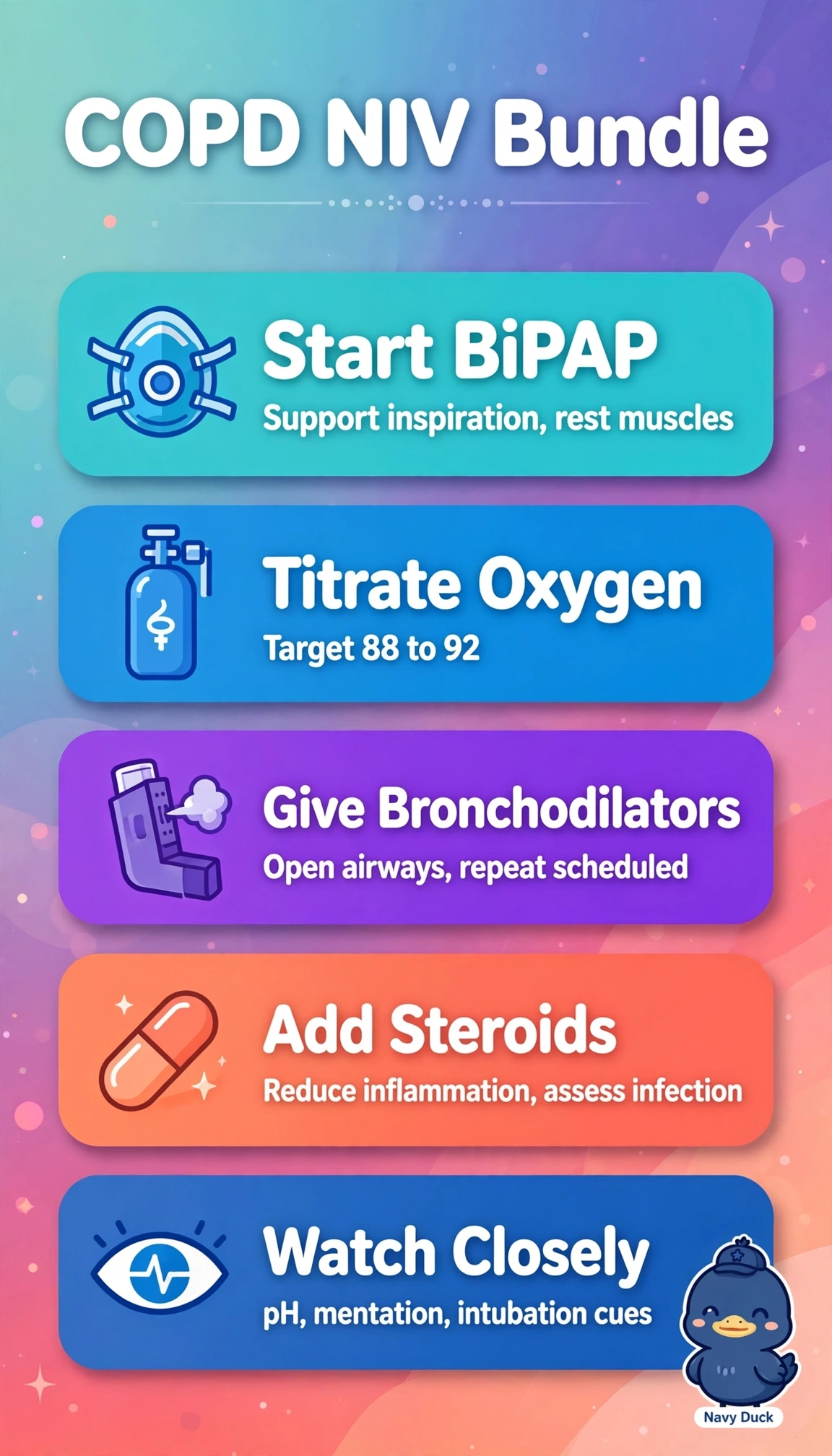
Acidotic but awake is prime time for support plus meds together. BiPAP unloads tired muscles while targeted oxygen keeps you safe — titration avoids both hypoxia and worsening hypercapnia.
Full Explanation
The correct plan matches acute hypercapnic failure because alertness with accessory muscle use, pH 7.30 and PaCO2 62 mm Hg show fatiguing ventilation that needs inspiratory help, so BiPAP augments tidal volume, unloads muscles, improves CO2 washout and pH while titrated oxygen at 88-92% corrects SpO2 86% without suppressing drive or worsening V/Q mismatch and Haldane-related CO2 rise, and bronchodilators relieve bronchospasm, systemic steroids curb inflammation and relapse, and antibiotics cover suspected infection. The high-oxygen variant fails on oxygen titration because 94-98% suits many hypoxemic disorders but in COPD retainers risks increased dead space, reduced ventilation, narcosis and worsening acidosis. The CPAP-based plan fails on ventilatory support because single-level pressure aids oxygenation in edema or apnea but lacks pressure support to increase alveolar ventilation and rest muscles, leaving hypercapnia unresolved. The steroid-sparing plan fails on inflammation control because omitting systemic steroids despite correct ventilation and bronchodilators forgoes shorter recovery and fewer treatment failures. An exam caveat is that BiPAP requires cooperative mentation, airway protection, hemodynamic stability and no facial injury or vomiting, so worsening consciousness, intolerance, or pH decline after 1-2 hours requires intubation without delay. A practical check is to ensure mask seal and synchrony, monitor SpO2, rate, work of breathing and mentation, and repeat ABG early to confirm rising pH and falling PaCO2.