
A 45-year-old with asthma exacerbation received three albuterol-ipratropium treatments, systemic steroids, and oxygen, now with normalized work of breathing, peak flow 85% of personal best, saturation 96% on room air, and minimal wheeze. The emergency team considers next respiratory orders. Which therapy decision should the therapist recommend for continued care?
Select an answer to reveal the explanation.
Short Explanation
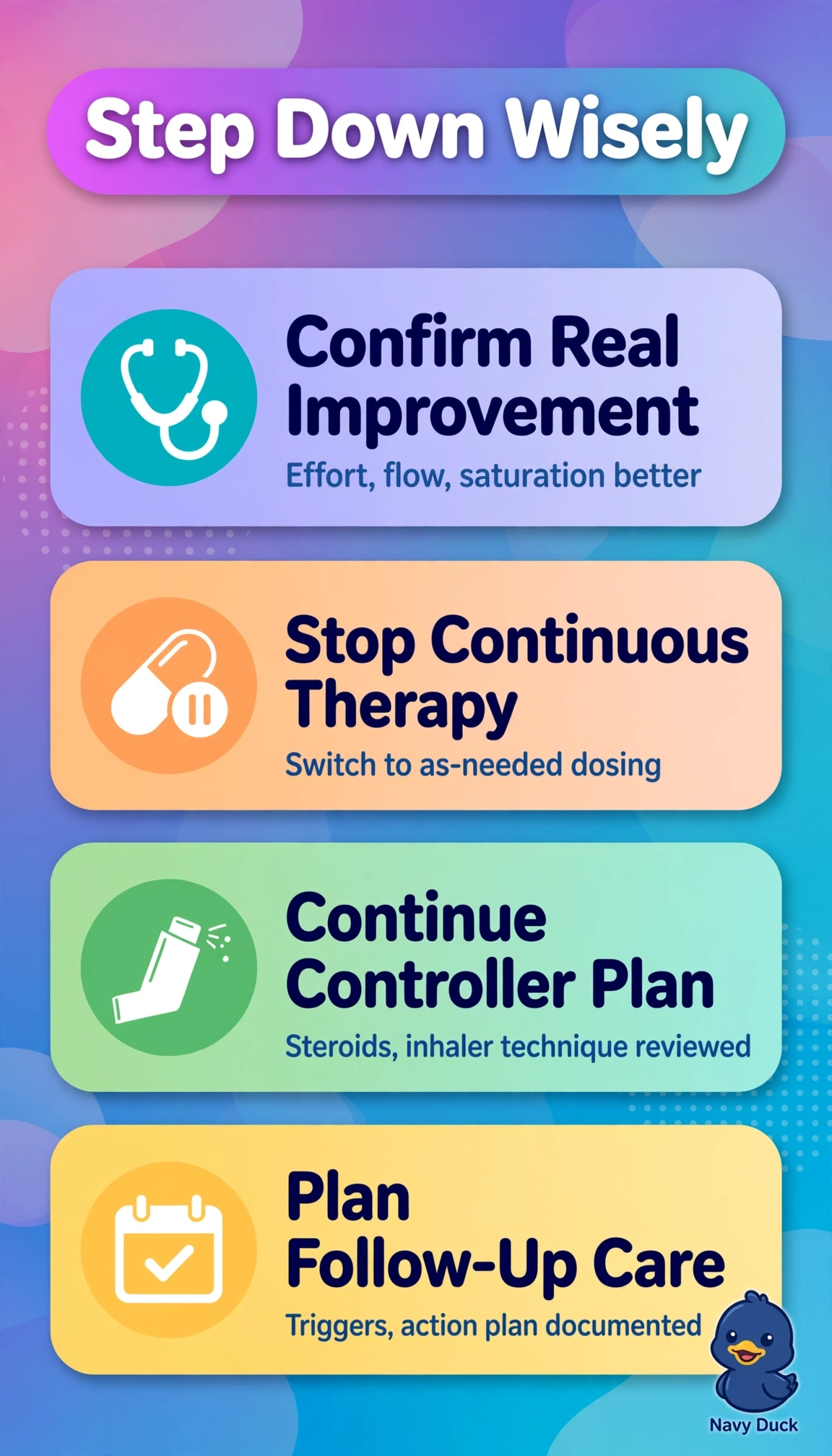
You've helped them turn the corner, like easing off the gas once you're back at cruising speed. Now you can stop the continuous nebs and keep them steady with step-down care to an as-needed inhaler plus a quick action-plan review.
Full Explanation
The 45-year-old shows substantial recovery after three albuterol-ipratropium treatments, systemic steroids, and oxygen, with normalized work of breathing, peak flow 85% of personal best, saturation 96% on room air, and minimal wheeze, placing the patient in the improving discharge zone where guidelines favor de-escalation, so discontinuing continuous nebulization and transitioning to as-needed short-acting bronchodilator with action-plan review correctly matches restored control, prevents overtreatment, and addresses inhaled corticosteroid resumption, adherence, triggers, and written plan. Continuing as-needed albuterol-ipratropium fails by medication stewardship because ipratropium helps only during initial severe bronchospasm and once stabilized adds no bronchodilation while increasing dry mouth, urinary retention, and complexity. Maintaining low-flow oxygen despite adequate room-air saturation fails by oxygen titration because supplementation corrects hypoxemia and is weaned when normalized, while unnecessary oxygen prolongs care and obscures assessment. Using scheduled short-acting bronchodilator rather than as-needed dosing fails by step-down because fixed-interval therapy is reserved for persistent distress and depressed peak flow, whereas near-baseline flow with normalized effort warrants PRN use to limit tremor, tachycardia, and hypokalemia. Exam caveat: peak flow 80-100% with minimal symptoms should not be mistaken for need for admission or continuous therapy; anchor to personal best, work of breathing, and room-air saturation. Practical check: repeat peak flow after a PRN dose, confirm sustained room-air saturation, verify steroid course and inhaled corticosteroid resumption, and use teach-back with prompt follow-up arranged.