
In a 20-bed medical ICU ventilator-associated events have increased, oral care and head-of-bed elevation are inconsistent, and sedation vacations are often missed on night shift. The quality committee asks respiratory therapy to lead prevention. Which ventilator-associated event prevention protocol should the therapist initiate first to reduce harm?
Select an answer to reveal the explanation.
Short Explanation
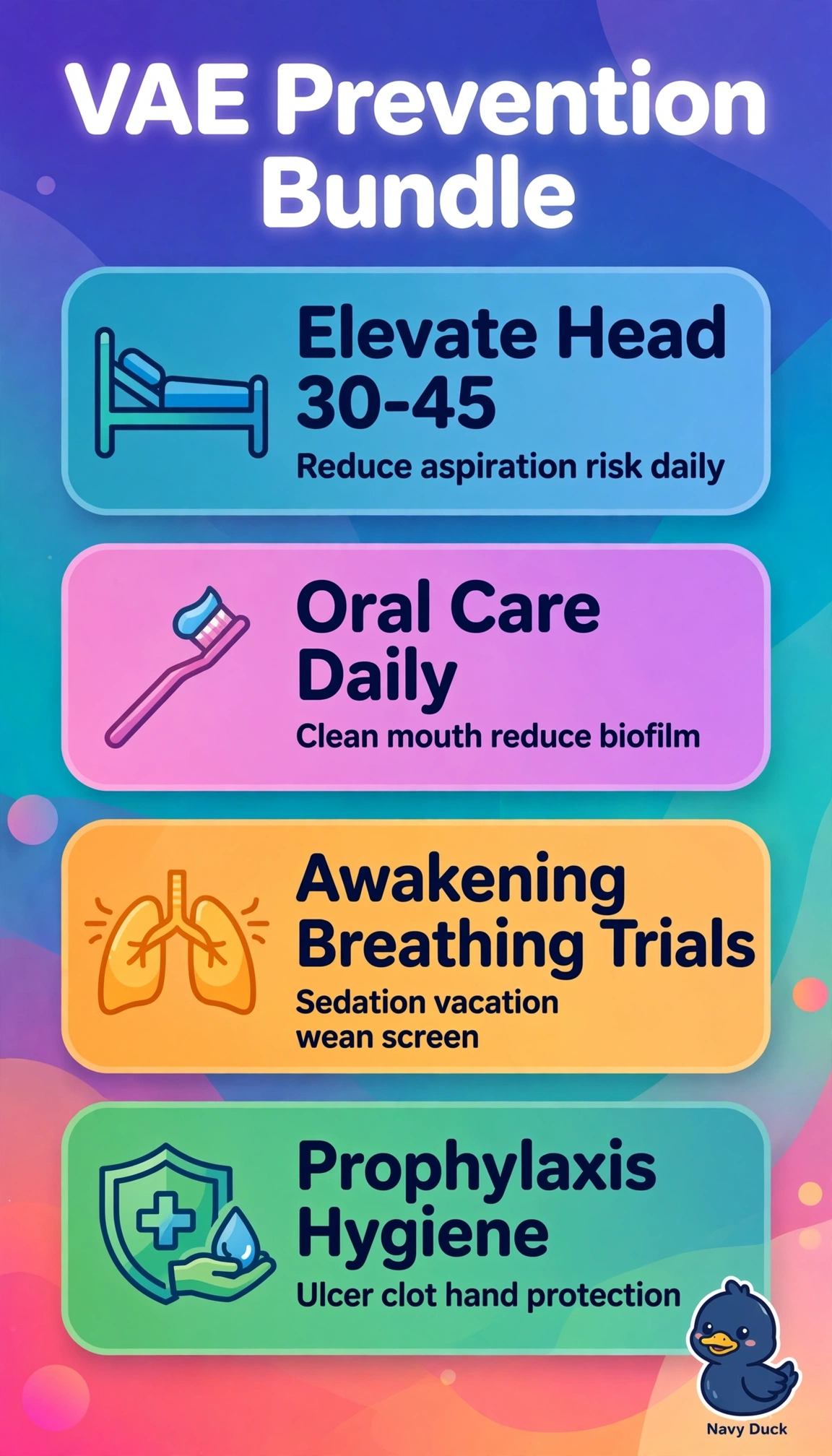
You've got several gaps stacking up here, so you'll make the biggest dent by tackling them together like a pit crew covering every tire at once. Sticking to your daily bundle keeps oral care, elevation, sedation breaks, and ulcer prevention working as one team for safer weaning.
Full Explanation
The correct protocol succeeds because increased events stem from combined gaps in oral care, head-of-bed elevation, and missed sedation vacations, and a daily bundle addressing oral decontamination, 30-45 degree elevation to reduce aspiration, coordinated awakening and breathing trials to shorten ventilation, plus ulcer and thrombosis prophylaxis directly corrects all stated deficiencies with proven harm reduction. The approach providing oral care, elevation, and prophylaxis without daily sedation interruption fails on liberation since continued sedation prolongs ventilation and preserves VAE risk even when positioning and hygiene are excellent, leaving a named night-shift failure unaddressed. The approach emphasizing hand hygiene, sterile suction, and circuit replacement only when soiled fails on targeting since it reflects sound infection control and avoids unnecessary circuit breaks yet does not restore the missing elevation, oral care, and awakening practices driving this cluster. The approach implementing vacations, elevation, and oral care only on days fails on reliability since prevention requires round-the-clock standardization, ownership, and handoff auditing, so day-only assignment perpetuates nighttime inconsistency. Exam caveat is to choose the comprehensive bundle when the stem lists multiple bundle elements as inconsistent rather than selecting a single familiar infection measure that addresses only background risk. Practical check is to verify compliance with a bedside checklist documenting angle, oral care, awakening trial outcome, and prophylaxis on every shift with multidisciplinary review.