
A rural critical access hospital only checks medication storage logs and infection control practices during the month before its scheduled triennial accreditation window, leading to repeated citations for expired supplies. Which approach best sustains continuous survey readiness?
Select an answer to reveal the explanation.
Short Explanation
Cramming for an accreditation survey is like cleaning your house only when guests pull into the driveway—something always gets missed. The trap is relying on tidy policy binders or last-minute consultants instead of testing real bedside habits all year long.
Full Explanation
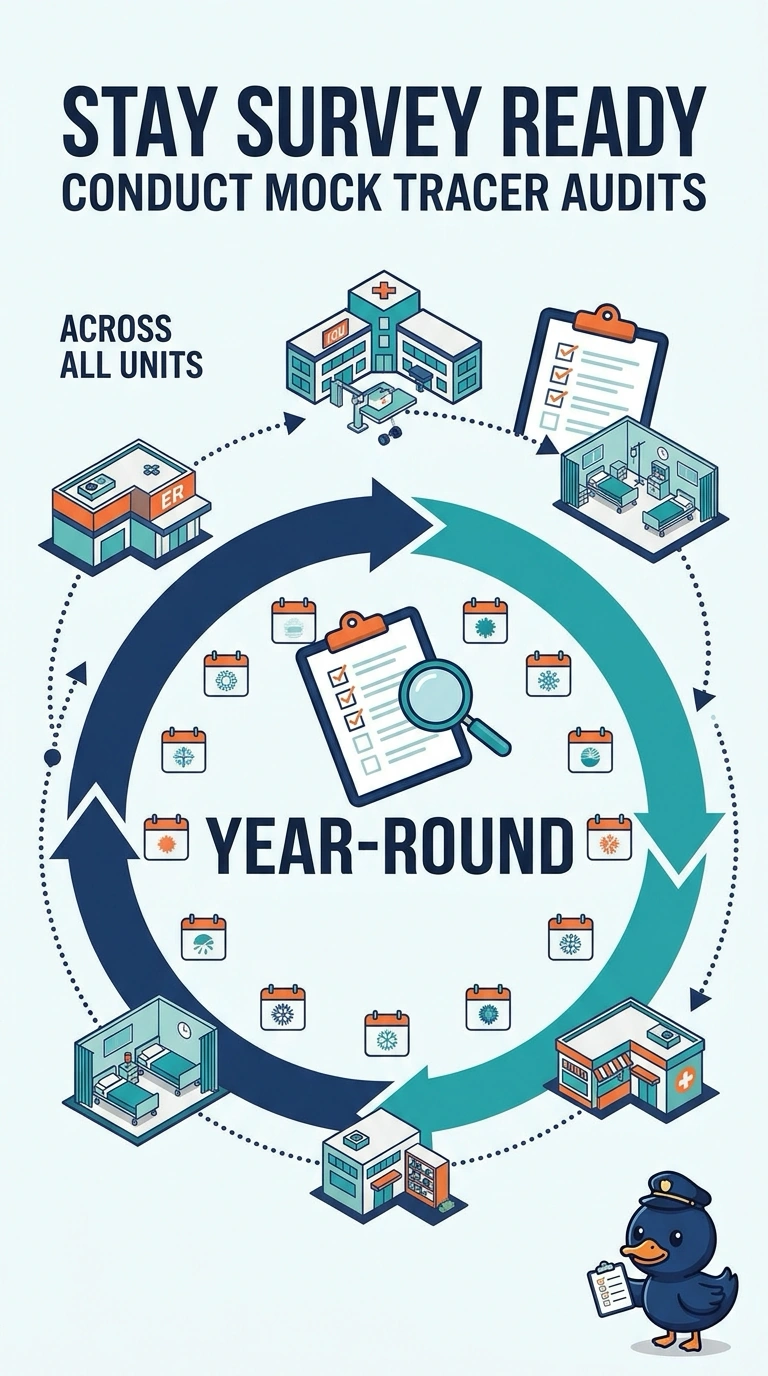
Accreditation surveyors evaluate whether safe practices are embedded in daily care, not whether a facility can pass a last-minute inspection. Conducting periodic mock tracer audits across units year-round mirrors actual survey methodology by following real patient journeys through medication storage, infection control, and documentation workflows so gaps are caught and fixed continuously. By contrast, Archiving policy binders centrally for rapid inspector retrieval organizes paperwork but does not verify that frontline staff follow procedures at the bedside. Similarly, Scheduling an annual leadership lecture on accreditation standards raises high-level awareness without testing unit-level compliance or expired-supply checks. Likewise, Hiring external consultants for a mock survey during the ninety-day pre-survey window encourages temporary workarounds rather than durable operational habits and leaves vulnerabilities unaddressed for most of the triennial cycle. A practical caveat is that mock tracers lose value if findings are simply filed away without clear owners and due dates. As an operational check, track every mock tracer finding in a closed-loop corrective action log and re-audit high-risk areas like medication rooms within two weeks.
Prefer to study offline? Printable PDF study book + test engine ($7.50, unofficial). These questions stay free here.