
A hospital's utilization review committee notes rising lengths of stay among medically stable patients who no longer meet acute inpatient criteria, yet no clinical complications are occurring. Which utilization management action best identifies the root causes of these extended stays?
Select an answer to reveal the explanation.
Short Explanation
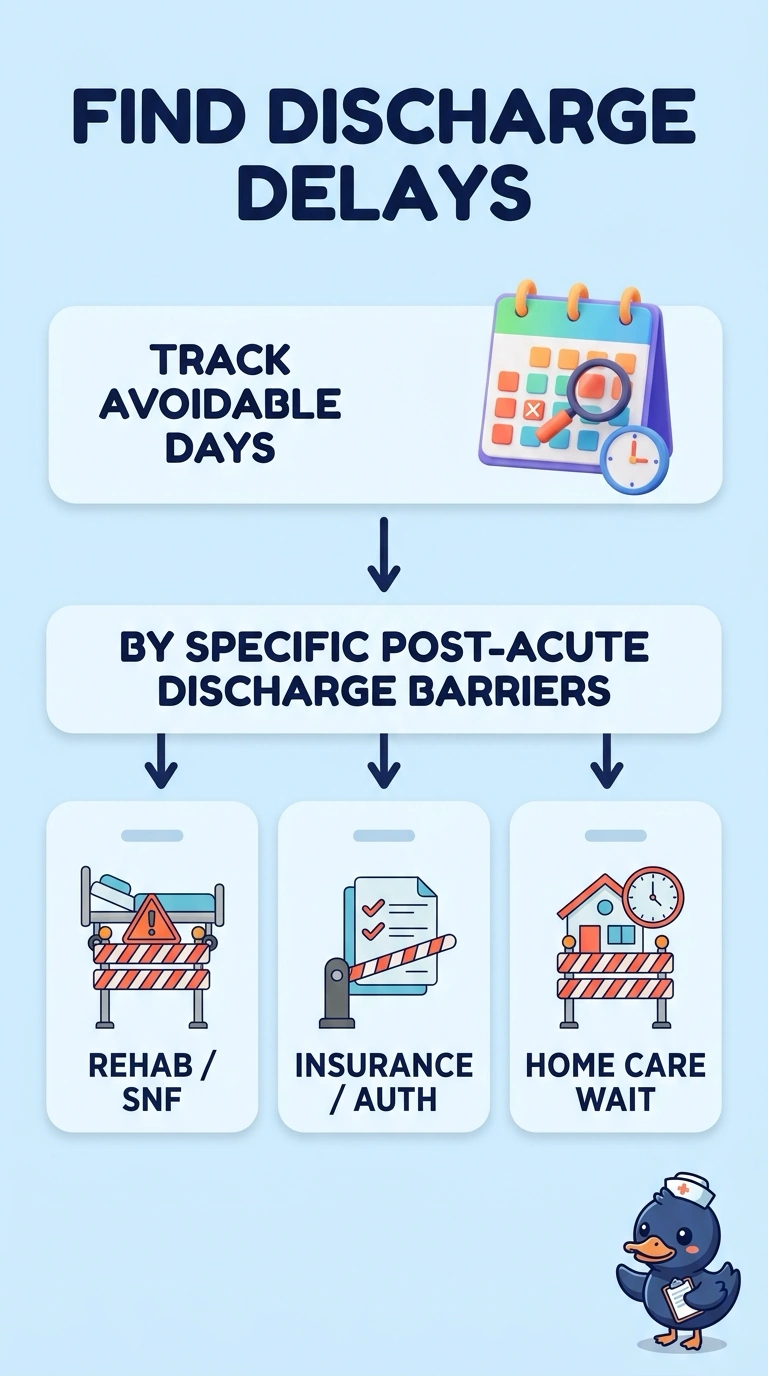
Watching medically stable patients sit in acute beds without tracking why they are stuck is like staring at a traffic jam without looking for the lane closure. The trap is asking doctors for more paperwork instead of measuring external bottlenecks. You uncover fixable flow delays by categorizing avoidable days by barrier.
Full Explanation
To uncover why stable patients remain hospitalized, the committee should Track avoidable days by specific post-acute discharge barrier, such as skilled nursing bed shortages, insurance authorization delays, guardianship proceedings, or home-health staffing gaps. Categorizing avoidable days turns vague length-of-stay complaints into actionable data that case management and leadership can use to negotiate payer workflows or expand community partnerships. Telling staff to Require attending physicians to document daily acute-care justification notes creates documentation burden when the patient genuinely no longer needs acute hospital care. Trying to Convert stays exceeding five days to outpatient observation status when the attending agrees misuses status determination, which must reflect medical necessity and payer criteria rather than length of stay or agreement, and it leaves the discharge barrier unresolved. Choosing to Limit utilization review audits to patients covered by commercial plans creates a biased sample that misses Medicare and Medicaid cohorts where post-acute placement delays are often most severe. Caveat: avoidable-day tracking should use standardized, objective delay codes so teams can trend barriers reliably across units. Operational check: review categorized avoidable-day counts weekly in multidisciplinary discharge rounds and escalate top recurring barriers to senior operations leaders.
Prefer to study offline? Printable PDF study book + test engine ($7.50, unofficial). These questions stay free here.