
A regional health system sees rising medication errors and patient experience declines on medical units where nurse turnover has doubled and overtime hours are at record highs. Senior executives treat staffing burnout as a separate human resources issue unrelated to clinical quality. How should the quality leader reframe this challenge in the strategic plan?
Select an answer to reveal the explanation.
Short Explanation
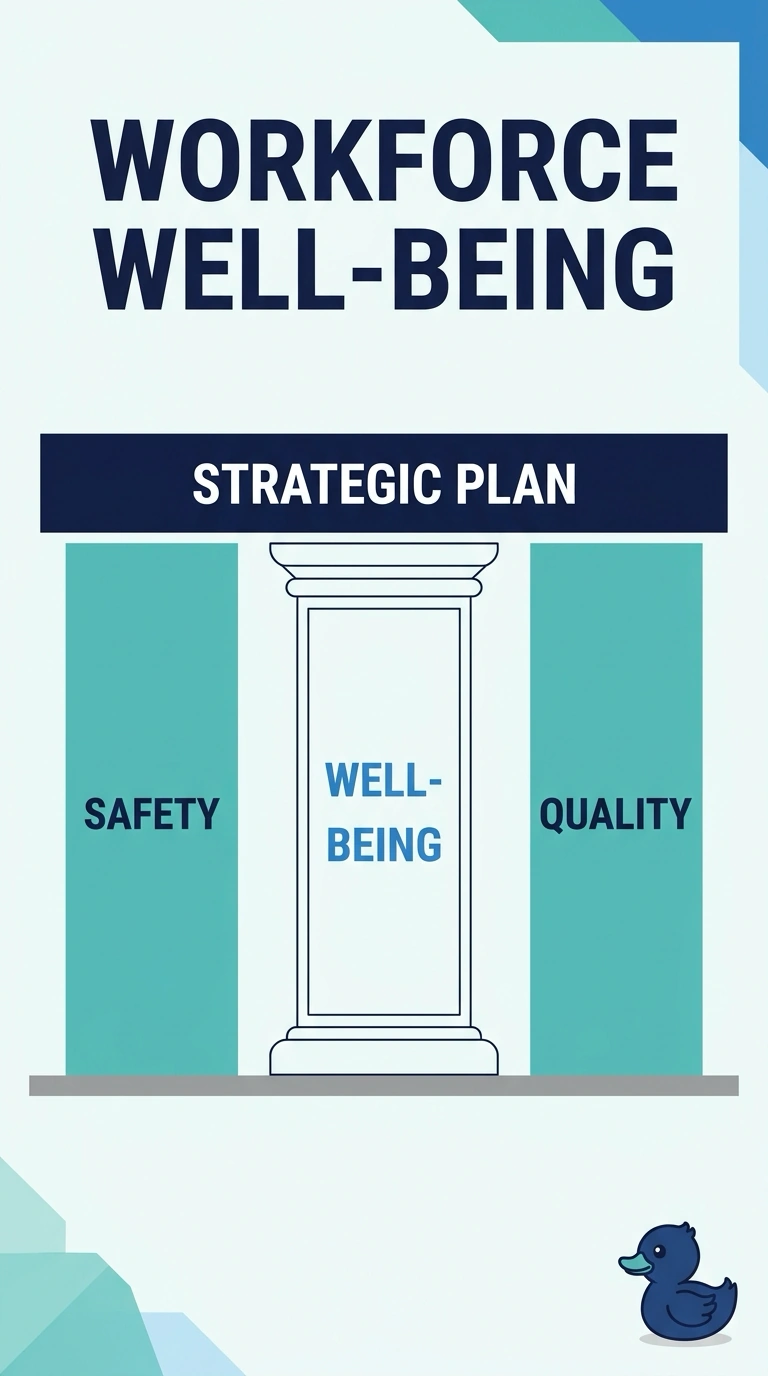
You cannot build a high-reliability safety culture on top of an exhausted workforce—your clinicians’ well-being and your patients’ outcomes rise and fall together. When you connect workforce sustainability to quality, you help leadership address a root driver of safe care rather than siloing burnout within human resources. That alignment gives your strategic plan a clearer path to improving both staff and patient outcomes.
Full Explanation
Integrating workforce well-being as a core strategic pillar linked to safety and quality reflects modern healthcare quality frameworks, including the Quadruple and Quintuple Aim, which recognize staff burnout, excessive workload, and turnover as direct threats to patient safety, reliability, and patient experience. When you pair staffing stability and psychological safety indicators with clinical outcomes on executive dashboards, leaders can address workflow friction and workload drivers systemically. Delegating workforce well-being metrics to human resources with annual reporting to the board perpetuates organizational silos and ignores how clinical workflow design drives burnout. Adding resilience webinars for night-shift nurses and reviewing overtime next fiscal year offers only individual coping support and delays action without fixing the excessive workload and staffing workflows that drive errors. Reducing audit frequency on high-turnover units until staffing stabilizes removes safety visibility precisely when patients are most vulnerable. One caveat is that well-being initiatives can fail if leadership offers only individual resilience classes without fixing administrative burden and staffing workflows. As an operational check, review nurse turnover, overtime rates, and safety event trends side by side in quarterly quality committee meetings.
Prefer to study offline? Printable PDF study book + test engine ($7.50, unofficial). These questions stay free here.