
Two community hospitals merge into a single health system, and each campus currently uses different fall-rate definitions, incident reporting categories, and medical staff quality committee charters. What should the quality leader prioritize first to integrate governance?
Select an answer to reveal the explanation.
Short Explanation
Merging two hospitals without aligning their quality rules is like combining two orchestras playing from different sheet music — you cannot lead when everyone reads a different score. Your first win comes from getting everyone on shared definitions and clear governance lines.
Full Explanation
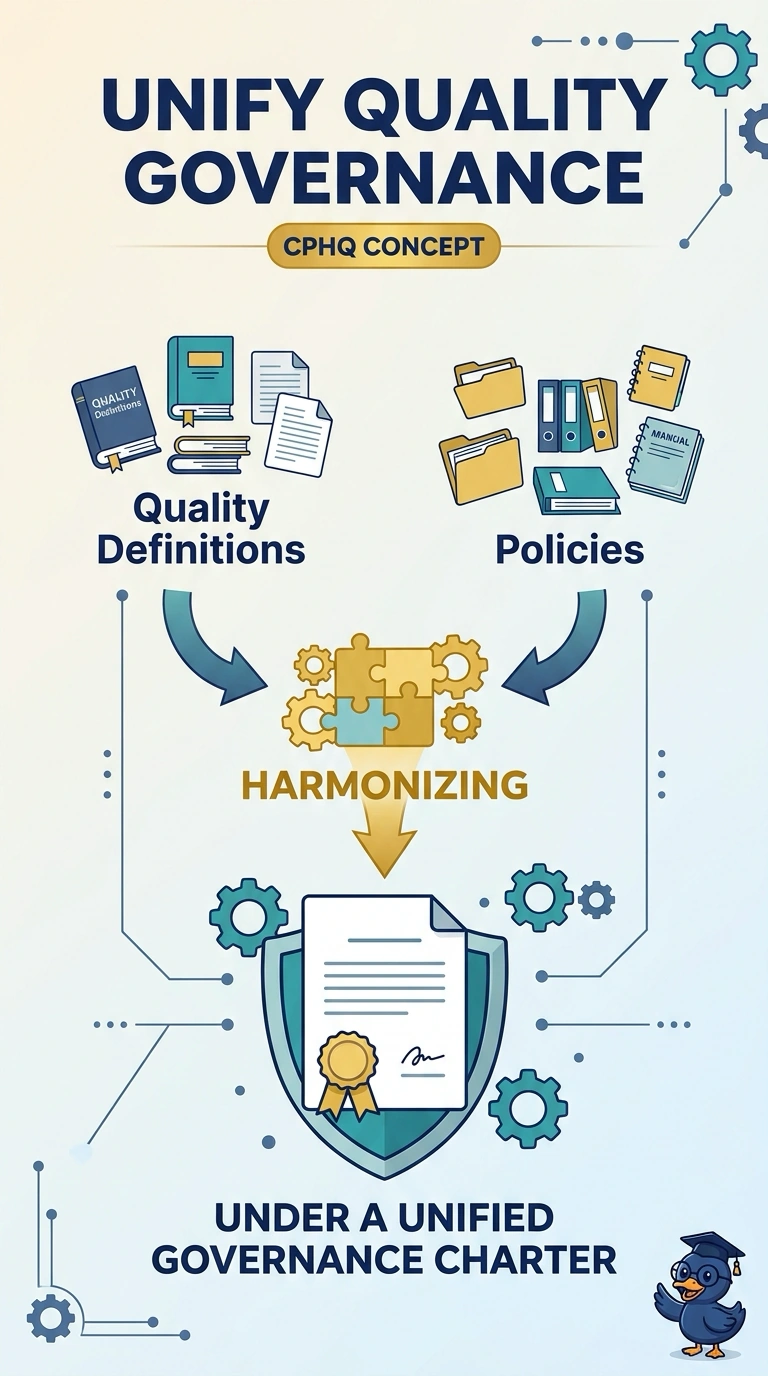
An integrated health system cannot compare performance, spot system-wide risks, or uphold board accountability without shared standards. Harmonizing quality definitions and policies under a unified governance charter works because it establishes consistent numerator and denominator rules, clear committee reporting lines, and uniform safety expectations across both campuses. Keeping separate quality definitions and policies at each campus prevents valid cross-campus benchmarking and obscures emerging safety trends. Merging the two campuses' incident reports into one spreadsheet reviewed annually creates only a data repository without common definitions, timely analysis, or accountability for action. Waiting for a single electronic health record before aligning metrics delays comparable governance for years when crosswalks and manual abstraction can harmonize key measures now. One caveat is that harmonization should preserve any campus-specific regulatory obligations tied to distinct licensure or service lines while aligning core metrics. As an operational check, audit the first combined quarterly board dashboard to verify both campuses apply identical metric specifications and escalation thresholds.
Prefer to study offline? Printable PDF study book + test engine ($7.50, unofficial). These questions stay free here.