
An accountable care organization notices that patients with end-stage heart failure and advanced COPD cycle repeatedly through intensive care units during their final months without documented care preferences or symptom support. Which population health intervention best improves these transitions?
Select an answer to reveal the explanation.
Short Explanation
Waiting until a crisis in the ICU to ask what a patient values is like packing a parachute after jumping from the plane. The trap is treating palliative care as synonymous with hospice, when you actually need early goal-setting conversations to guide every transition.
Full Explanation
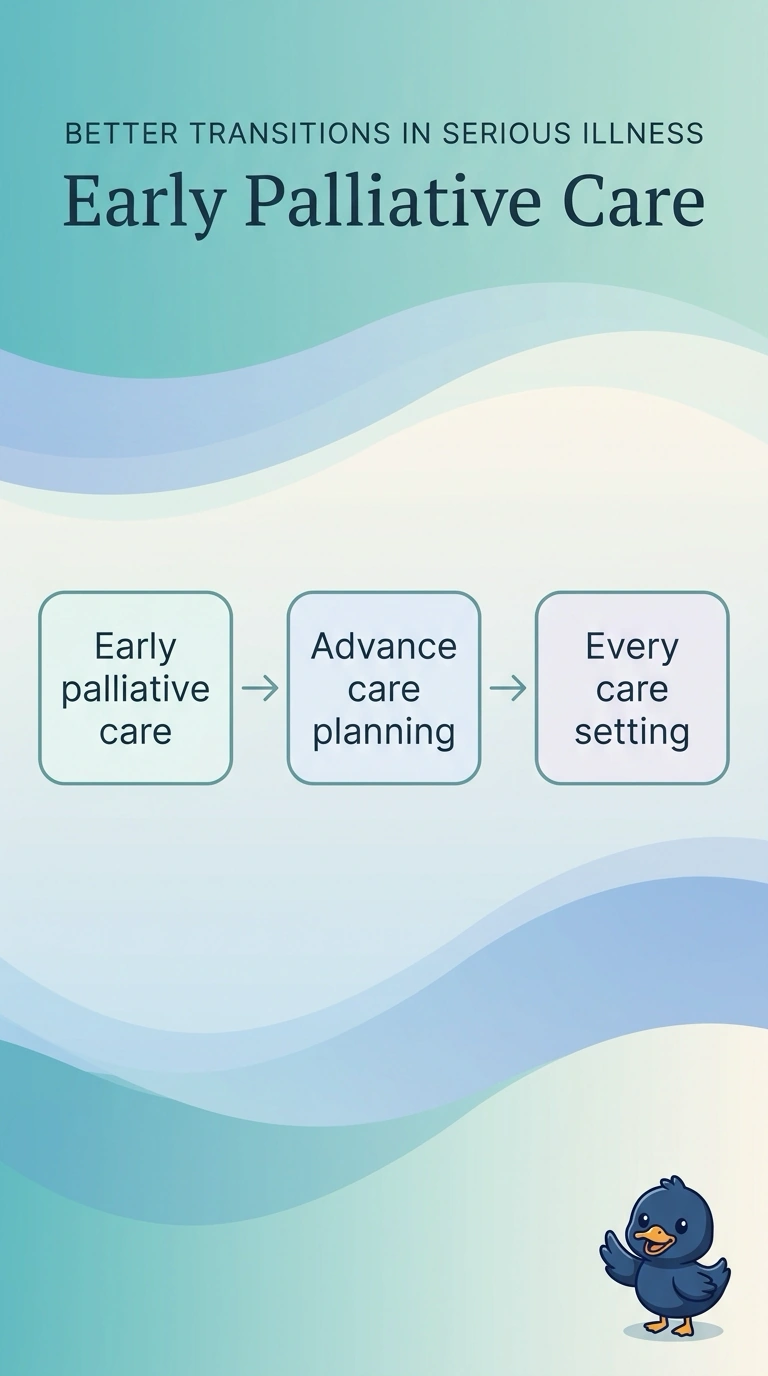
Patients living with serious, progressive illnesses frequently experience fragmented, high-intensity care when their personal goals and symptom needs are not shared across inpatient and outpatient teams. Choosing to Integrate early palliative care and structured advance care planning across care settings aligns treatment with patient values, improves symptom management, and reduces unwanted emergency transfers. By contrast, to Refer these patients for hospice evaluation after a third ICU stay in the same quarter uses an arbitrary utilization threshold that delays comfort-focused support and misses earlier opportunities to align care with values. Choosing to Send generic end-of-life brochures by mail after each ICU discharge is a passive tactic that fails to engage families in shared decision-making or update the care plan. Similarly, to Ask about treatment goals at the first hospice enrollment visit delays vital conversations until the final weeks of life, missing months of opportunities to coordinate care. As a caveat, advance care planning must be revisited whenever clinical status changes and documented in an accessible, portable EHR section so emergency teams can honor it. Operationally, track the percentage of high-risk chronic disease patients with a documented goals-of-care note shared with primary care and emergency services.
Prefer to study offline? Printable PDF study book + test engine ($7.50, unofficial). These questions stay free here.