
A primary care network finds that patients with both type 2 diabetes and untreated depression have significantly worse glycemic control and higher emergency department utilization than other diabetic patients. Which population health intervention best addresses these co-occurring needs?
Select an answer to reveal the explanation.
Short Explanation
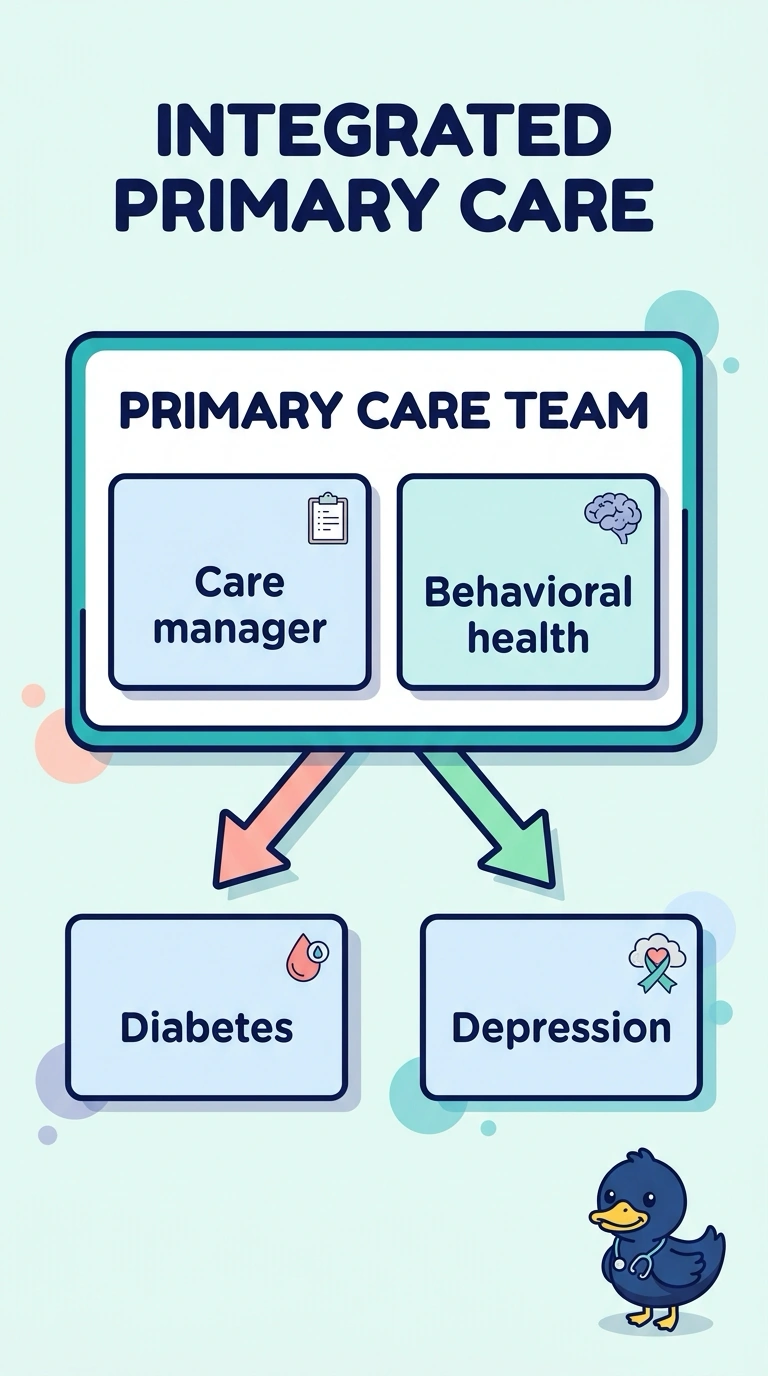
Treating blood sugar without addressing depression is like patching a roof while ignoring the structural leak underneath. When you embed behavioral support directly into primary care, patients receive coordinated treatment without fragmented referrals. The trap is choosing administrative hurdles or passive handouts instead of team-based care.
Full Explanation
Integrating behavioral health care managers into primary care teams reflects the evidence-based Collaborative Care Model, which pairs primary care clinicians, behavioral health care managers, and consulting psychiatric specialists using shared registries. Untreated depression undermines medication adherence, nutrition, and self-monitoring, so co-locating and coordinating behavioral support directly improves both mood and glycemic control while reducing avoidable emergency visits. Mailing a depression pamphlet after two missed primary care visits provides only passive information with no engagement, follow-up, or treatment adjustment for patients already disengaged from care. Requiring patients to complete depression screenings before annual billing turns a clinical assessment into an administrative barrier and provides no follow-up treatment pathway once symptoms are identified. Expanding group diabetes education classes led by dietitians in the primary care clinic improves nutrition knowledge but does not treat depression or provide follow-up to improve adherence. Remember that screening without warm handoffs and longitudinal tracking rarely improves population outcomes. As an operational check, track the percentage of patients screening positive for depression who complete a behavioral care manager contact within two weeks alongside quarterly HbA1c trends.
Prefer to study offline? Printable PDF study book + test engine ($7.50, unofficial). These questions stay free here.