
A health system's accountable care organization discovers that 24% of patients discharged from its flagship hospital to partner skilled nursing facilities return to the emergency department within 72 hours due to missing wound-care orders and unverified anticoagulation plans. Which intervention best addresses this transition failure?
Select an answer to reveal the explanation.
Short Explanation
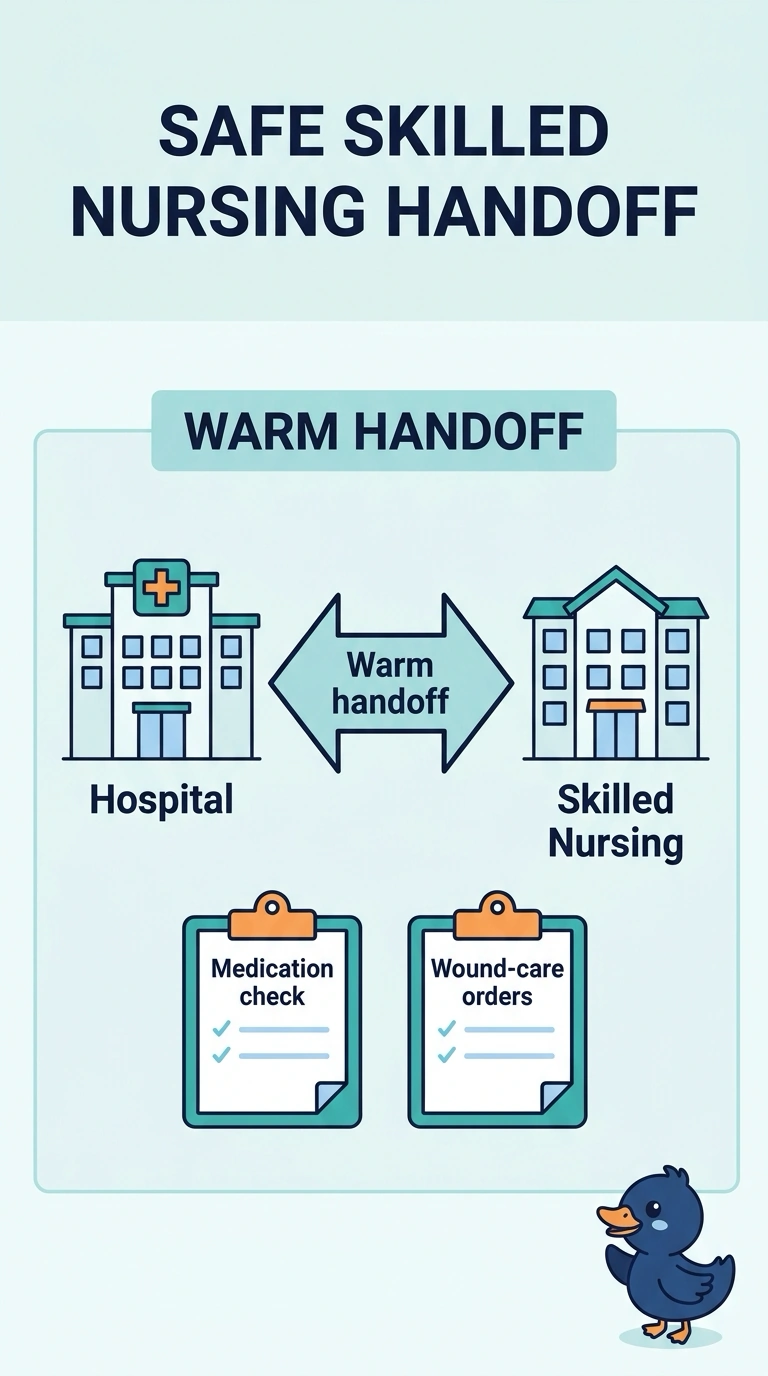
You’re right to focus on what happens at the moment of transfer: a nurse-to-nurse warm handoff with shared medication verification helps confirm wound-care orders and anticoagulation plans before the patient leaves. Extra hospital days, quarterly reports, and notification after an emergency return don’t fix that communication gap in time.
Full Explanation
Early 72-hour emergency department returns from skilled nursing facilities commonly stem from incomplete order transmission and unverified high-risk medications at the moment of transfer. A structured nurse-to-nurse warm handoff with shared medication verification lets sending and receiving clinicians actively confirm wound-care supplies, anticoagulation dosing, and follow-up parameters before the patient leaves the acute unit. Extending inpatient length of stay by two days for all patients awaiting placement adds unnecessary cost and hospital-acquired risk without repairing the broken communication channel at discharge. Sending a quarterly readmission summary report to all skilled nursing facility administrators provides delayed, retrospective feedback that arrives too late to prevent missing orders on daily transfers. Requiring emergency department physicians to notify primary care after return visits reacts after the transition has already failed rather than preventing the medication or wound-care gap upstream. As a caveat, align the handoff checklist with both facilities’ electronic health record workflows so nurses do not duplicate documentation. Operationally, audit a sample of weekly skilled nursing facility transfers to verify documented warm-handoff completion and measure 72-hour emergency department return rates.
Prefer to study offline? Printable PDF study book + test engine ($7.50, unofficial). These questions stay free here.