
An accountable care organization discovers that 40% of its attributed patients hospitalized for COPD exacerbations are admitted to out-of-network hospitals, leaving primary care clinics unaware of discharges until weeks later. Which transition strategy best closes this information gap?
Select an answer to reveal the explanation.
Short Explanation
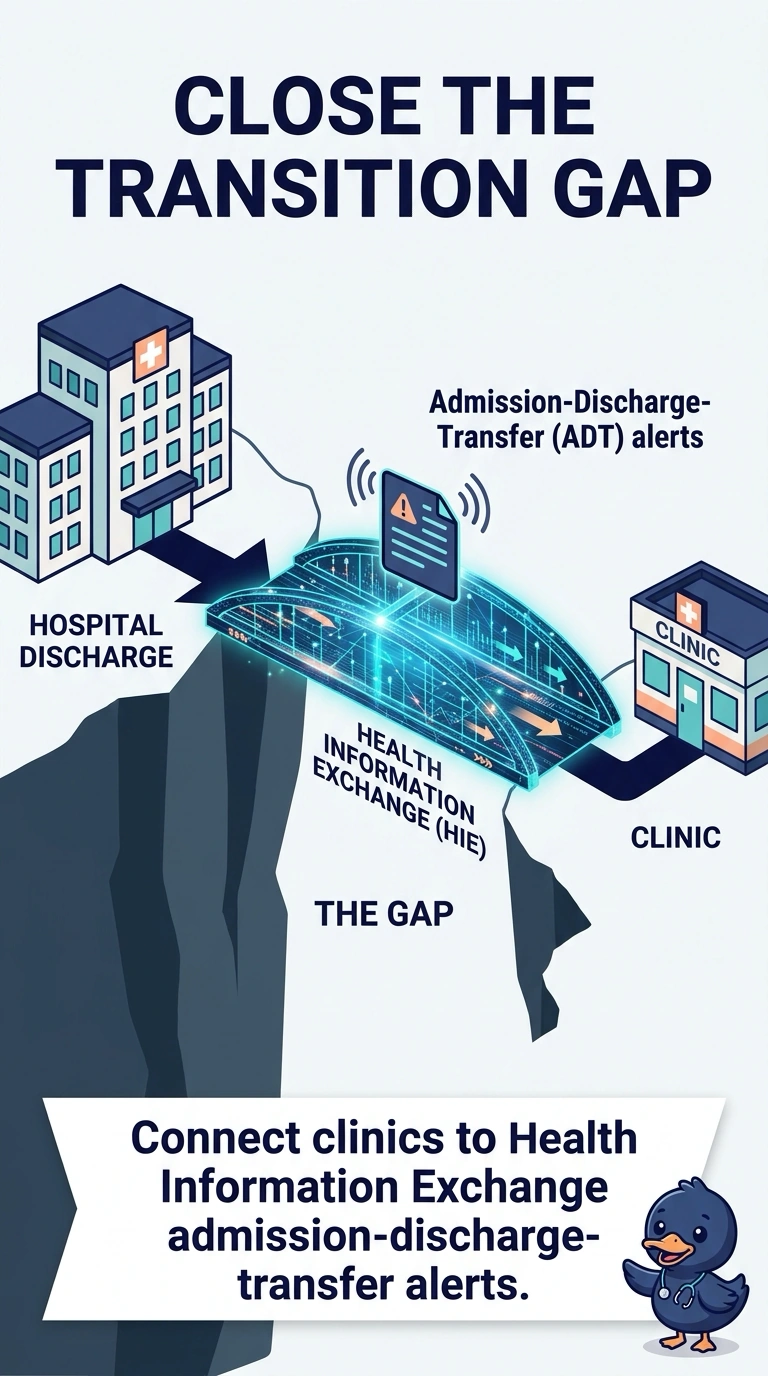
Waiting for insurance claims to find out a patient was hospitalized is like reading last month's weather report to decide whether to carry an umbrella today. The trap is relying on delayed billing data or putting the burden on recovering patients. When you plug clinics into real-time Health Information Exchange alerts, care teams can reach out within days of discharge.
Full Explanation
To coordinate timely post-discharge follow-up across unaffiliated facilities, the organization should Connect clinics to Health Information Exchange admission-discharge-transfer alerts. Real-time ADT notifications alert primary care coordination teams the moment an attributed patient enters an emergency department or is discharged from an external hospital, enabling medication reconciliation and follow-up scheduling within the critical first seven days. Choosing to Send quarterly claims summaries to primary care clinics to review past hospitalizations introduces months of billing lag, long after the highest-risk window for preventable readmission has passed. Choosing to Ask patients to request their discharge summaries from the hospital after returning home places an unreliable burden on acutely ill patients who may face transportation, literacy, or symptom barriers. Choosing to Limit care coordination outreach to patients admitted to owned hospitals leaves a large, high-risk portion of the attributed population unsupported and undermines value-based accountability. As a caveat, ADT feeds require accurate patient-matching panels and clear clinic triage workflows so alerts do not sit unread in an inbox. For an operational check, track the percentage of out-of-network discharges generating an automated alert and the median time from discharge to clinic outreach.
Prefer to study offline? Printable PDF study book + test engine ($7.50, unofficial). These questions stay free here.