
An accountable care organization finds that heart failure patients discharged to low-income neighborhoods have nearly double the 30-day readmission rate of other areas, largely due to missed clinic visits and unfilled prescriptions. Which intervention best addresses these social determinants of health during care transitions?
Select an answer to reveal the explanation.
Short Explanation
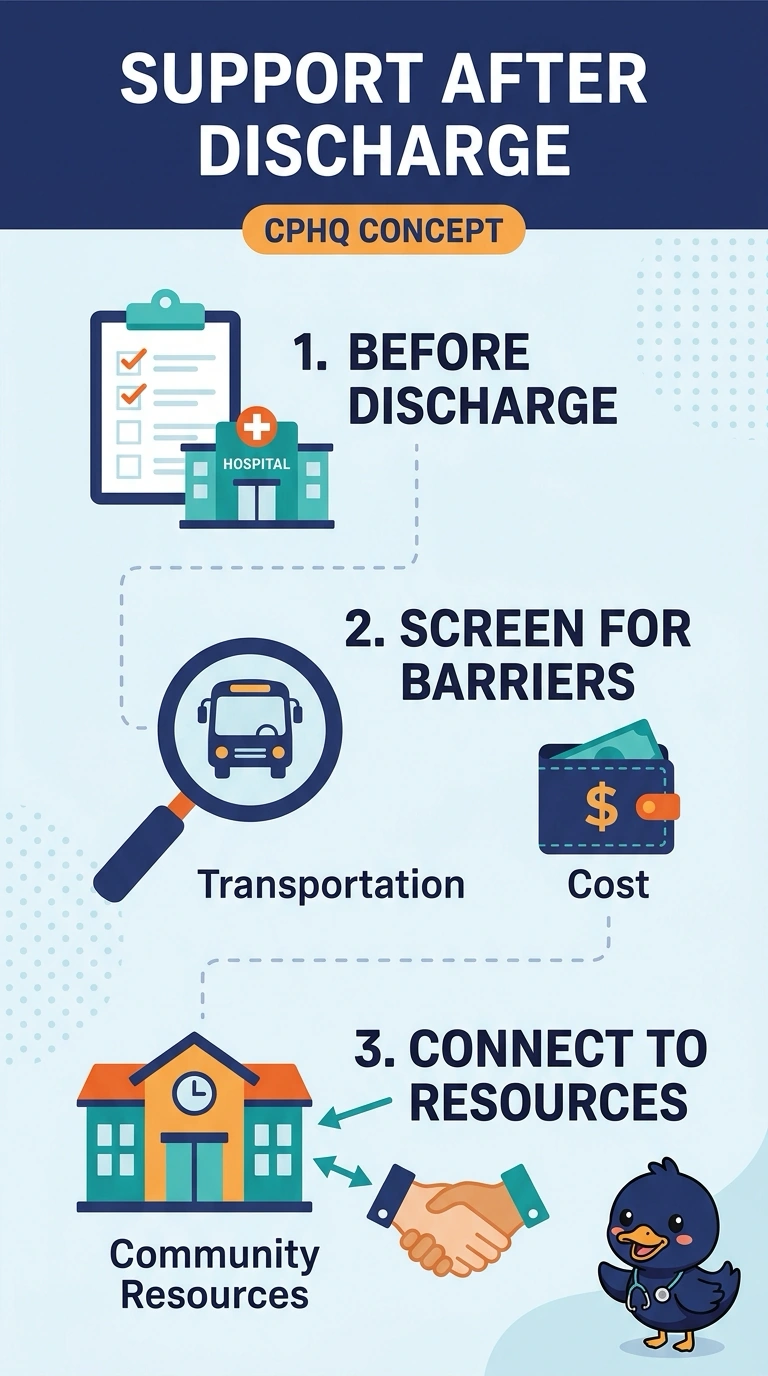
Handing someone a map does not help if they have no gas in the car to get to the appointment. To close equity gaps in readmissions, you need to uncover transit and medication cost barriers before discharge, while the trap is relying on generic brochures or extra inpatient checks that ignore life outside the hospital.
Full Explanation
Screen for transportation and cost barriers before discharge and connect patients to community resources because social determinants of health—such as inability to afford prescriptions or reach follow-up clinics—directly drive avoidable readmissions after hospital stays. Mail standardized heart failure brochures to all discharged patients provides generic education without solving the practical financial or transit obstacles preventing patients from acting on discharge instructions. Increase the frequency of inpatient vital sign checks before discharge focuses on acute physiological monitoring inside the hospital rather than the post-discharge community conditions causing patients to return. Schedule follow-up appointments at the next available primary care slot after discharge arranges timely clinical follow-up but does not uncover or resolve the transportation and affordability barriers that cause missed visits and unfilled prescriptions. As a caveat, screening without closed-loop referral tracking can leave patients unconnected to promised community programs. For an operational check, audit the percentage of heart failure discharges with documented social-needs screening, confirm warm handoffs to social work or community health workers, and stratify 30-day readmission rates by zip code quarterly.
Prefer to study offline? Printable PDF study book + test engine ($7.50, unofficial). These questions stay free here.