
An outpatient pathology laboratory holds biopsy specimens on a counter until 40 cassettes accumulate before starting tissue processing, causing multi-day result delays and occasional specimen mix-ups. Which Lean workflow change best reduces turnaround time and error risk?
Select an answer to reveal the explanation.
Short Explanation
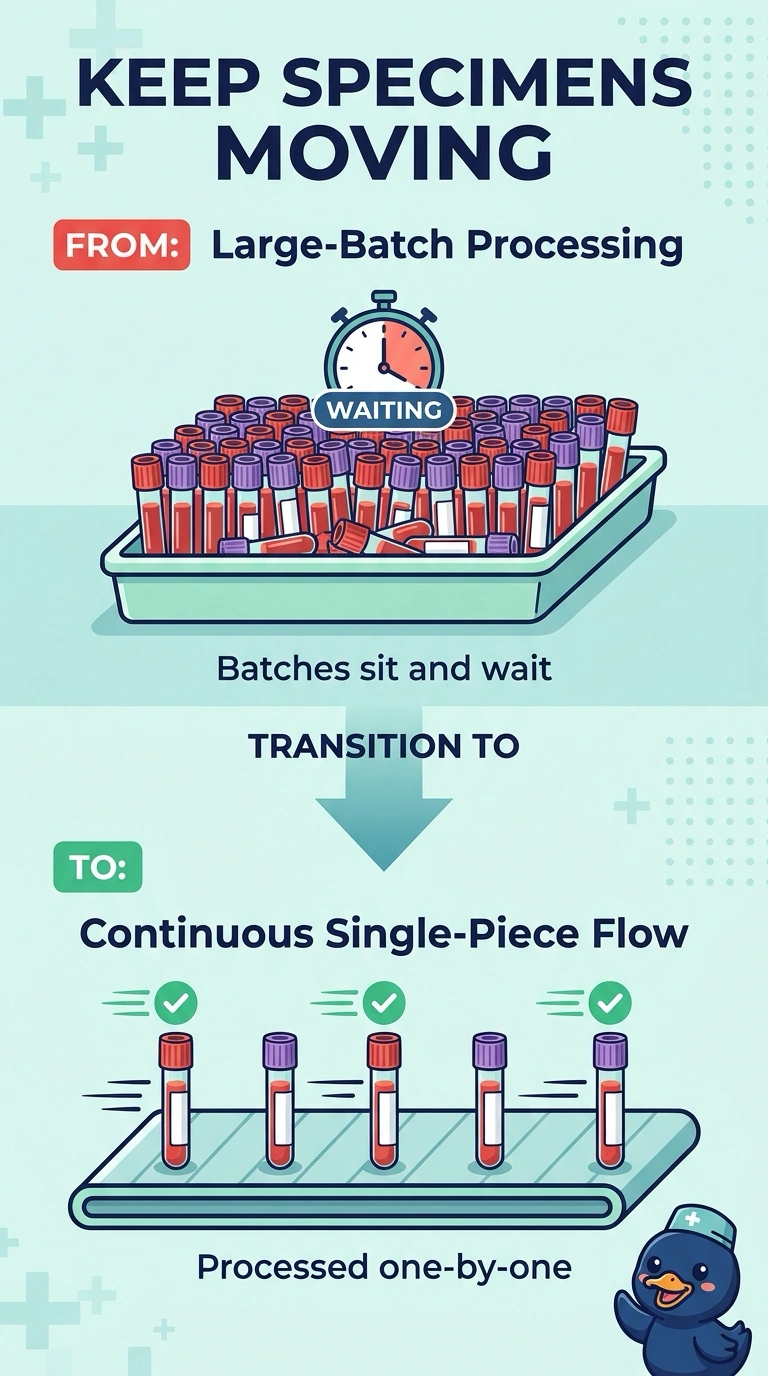
Waiting to fill a giant basket before washing a single dish just piles up dirty plates and increases the chance of mixing up orders—you want items moving steadily. The trap is enlarging batches to look efficient, when Transitioning from large-batch processing to continuous single-piece flow cuts delays and errors.
Full Explanation
Large batches create artificial waiting waste, hide defects until many items are affected, and raise misidentification risk. Transitioning from large-batch processing to continuous single-piece flow works because processing specimens as they arrive—or in small, frequent micro-lots—eliminates queue time, surfaces quality errors immediately, and smooths downstream workload. Adding a second courier pickup at midnight while keeping daily batching intact speeds transport to the door without fixing the internal holding bottleneck. Hiring temporary clerical staff to manually re-label batched specimen trays adds non-value-added labor and extra handoffs that increase mislabeling risk. Increasing the batch size to fifty specimens per run to maximize analyzer uptime optimizes equipment utilization at the expense of patient turnaround time and safety. One caveat is that certain high-volume analyzers require minimum run sizes, so labs should pair continuous accessioning with right-sized micro-batches where equipment constraints exist. As an operational check, track specimen receipt-to-diagnosis turnaround time and misidentification near misses weekly after shifting flow.
Prefer to study offline? Printable PDF study book + test engine ($7.50, unofficial). These questions stay free here.