
After an outpatient clinic staff retreat generates 24 different workflow improvement ideas, the quality committee realizes it only has capacity to charter two projects this quarter. Which structured tool best helps the team select which initiatives to launch first?
Select an answer to reveal the explanation.
Short Explanation
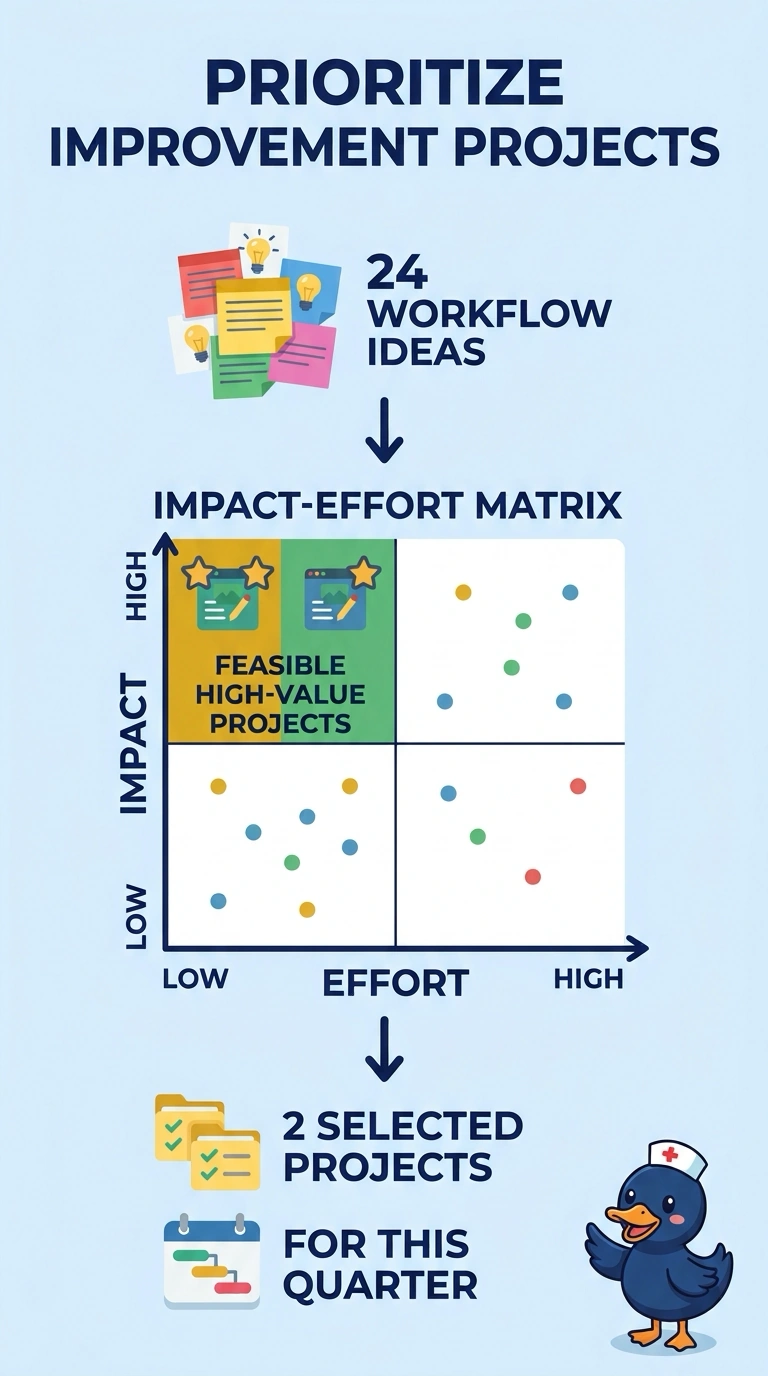
When your committee has 24 improvement ideas and capacity for only two, trying to chase every change at once will stall your clinics. An impact-effort prioritization matrix helps you spot high-value, feasible projects before committing scarce team hours. Watch out for the trap of deferring to seniority or limiting yourself to isolated single-department tweaks.
Full Explanation
Disciplined quality management requires matching limited improvement capacity to the initiatives with the highest expected return. "Using an impact-effort prioritization matrix to rank feasible high-value projects" plots each candidate idea along expected patient or operational benefit versus implementation effort, helping the committee target high-impact, lower-effort quick wins first. "Funding the first idea proposed by the highest-ranking clinical leader" introduces authority bias and may sideline urgent frontline bottlenecks that affect more patients. "Launching the cheapest ideas first without estimating patient benefit" optimizes for low upfront cost while ignoring clinical value, allowing trivial fixes to displace projects that would improve outcomes for more patients. "Selecting only projects that require zero cross-departmental coordination" avoids the very handoffs—such as scheduling, lab, and nursing interfaces—where the largest quality delays usually live. As a caveat, impact and effort ratings remain subjective unless anchored to baseline data such as patient volume affected or estimated analyst hours. As an operational check, review the two chartered projects at 30-day intervals against defined milestones before pulling any additional ideas from the backlog.
Prefer to study offline? Printable PDF study book + test engine ($7.50, unofficial). These questions stay free here.