
A hospital plans to launch a bedside discharge medication delivery service across all twelve inpatient units to reduce unfilled prescriptions. Before rolling out the program hospital-wide, what should the improvement team do next?
Select an answer to reveal the explanation.
Short Explanation
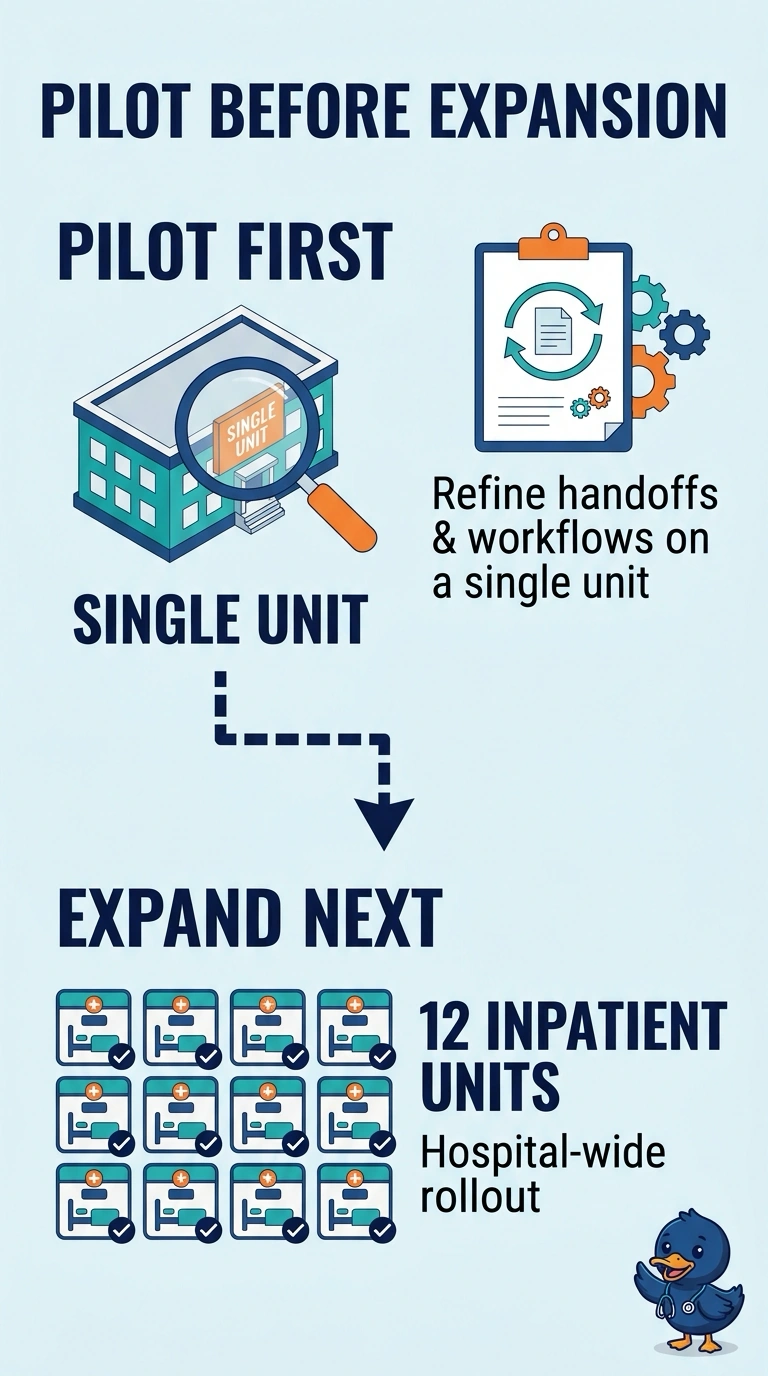
Rolling out a brand-new workflow to twelve units at once magnifies every hidden snag twelvefold. Piloting on one unit first lets you iron out timing, pharmacy-nurse handoffs, and patient education before scaling up. Avoid the trap of big-bang launches or telling busy staff to improvise.
Full Explanation
Testing change on a small scale reduces operational disruption and exposes unforeseen workflow flaws early. "Piloting the workflow on a single unit to refine handoffs before hospital-wide rollout" allows pharmacy technicians, nurses, and case managers to test delivery timing, resolve electronic order triggers, and adapt staffing before committing resources across all twelve units. "Deploying the untested workflow across all twelve inpatient units on day one" risks widespread discharge bottlenecks and clinician frustration if a single step—such as insurance prior authorization—breaks down. "Have unit clerks deliver the medications so pharmacists stay in the central pharmacy" assigns delivery and counseling to staff without pharmacy training and removes pharmacist expertise from the bedside where it prevents errors. "Issuing a written memo asking nurses to improvise delivery steps as needed" creates inconsistent, error-prone practices across shifts instead of reliable standard work. As a caveat, choose a pilot unit with typical discharge complexity rather than an unusually simple unit so lessons generalize well. As an operational check, measure pilot discharge delay times and prescription capture rates for two to four weeks and revise the standard workflow before expanding to the next unit.
Prefer to study offline? Printable PDF study book + test engine ($7.50, unofficial). These questions stay free here.