
A hospital's outpatient infusion center experiences frequent scheduling bottlenecks, yet conference-room meetings with managers produce conflicting explanations of how chair assignments work. What should the improvement facilitator do next to understand the actual workflow?
Select an answer to reveal the explanation.
Short Explanation
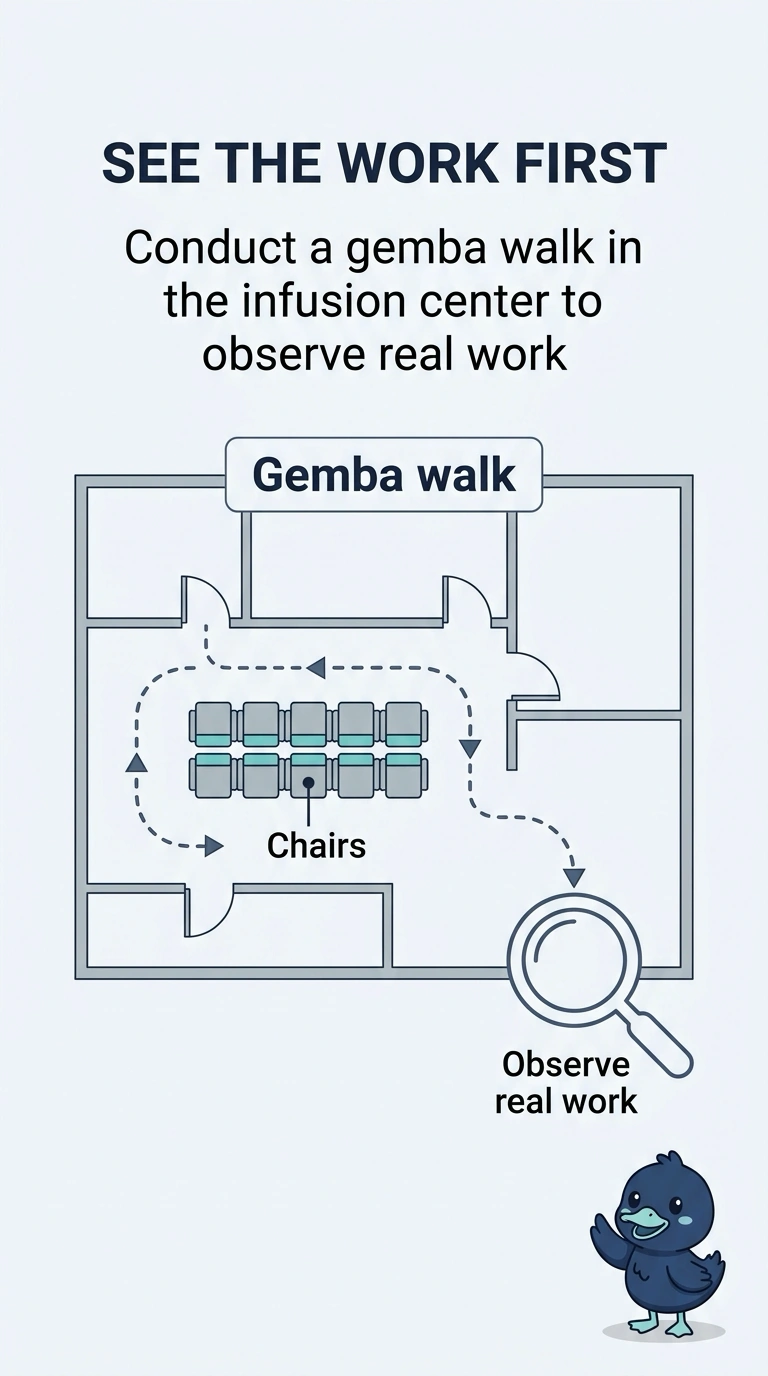
You cannot fix a broken clinical workflow from a conference room three floors away. The trap is trusting policy manuals or secondhand opinions instead of seeing where delays actually happen. Take a gemba walk to the point of care so you can observe real work and ask frontline staff what gets in their way.
Full Explanation
In Lean quality improvement, understanding a process requires observing it directly where value is created rather than debating assumptions in a meeting room. Choosing to "Conduct a gemba walk in the infusion center to observe real work" lets the facilitator watch how schedules, pharmacy preparation, and nurse chair handoffs actually interact while engaging frontline staff respectfully about daily barriers. Choosing to "Distribute a multiple-choice policy quiz to infusion nurses" tests memorization of written rules rather than revealing informal workarounds or physical bottlenecks. Attempting to "Rewrite the scheduling policy manual from the quality office" creates top-down rules disconnected from operational reality that staff will likely bypass. Asking the infusion manager to diagram the scheduling process from memory for the team substitutes one recollection for observation of how scheduling, pharmacy, and chair handoffs actually work. One caveat is that a gemba walk must focus on process curiosity rather than auditing or blaming individual staff members. As an operational check, pair direct observation notes with timestamped cycle-time measurements from registration to infusion start before proposing workflow changes.
Prefer to study offline? Printable PDF study book + test engine ($7.50, unofficial). These questions stay free here.