
After a hospital's outpatient pharmacy and orthopedic clinic reduce discharge prescription delays during a three-month improvement project, how should the quality team lock in the new workflow so performance does not drift back to baseline?
Select an answer to reveal the explanation.
Short Explanation
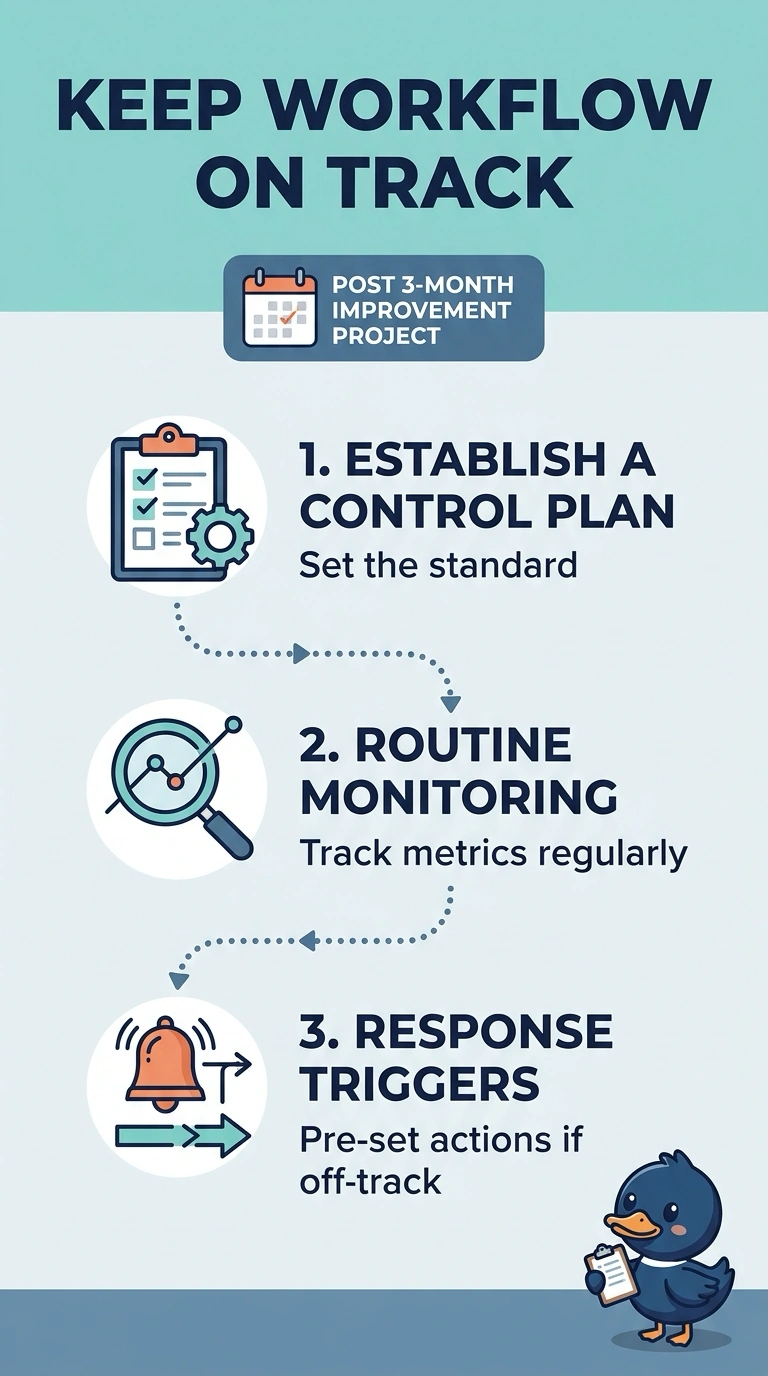
Getting an improvement project across the finish line is like tuning a race car—if you stop checking the gauges, performance drifts right back to where you started. The trap is assuming that a successful three-month pilot sustains itself on autopilot. You lock in gains by building a formal control plan that assigns ongoing monitoring and clear response triggers.
Full Explanation
In Six Sigma and structured quality improvement, sustaining a gain requires transitioning from active redesign into ongoing process control. Choosing to Establish a control plan with routine monitoring and response triggers gives process owners defined metrics, acceptable performance thresholds, and predetermined corrective actions whenever turnaround times begin to slip. By contrast, deciding to Rely on annual staff competency sign-offs and a one-time audit after project close leaves leaders blind to gradual workflow drift between yearly reviews. Trying to Repeat the baseline stakeholder chartering workshop every calendar quarter wastes team time on project scoping that was already completed rather than tracking daily operations. Similarly, attempting to Conduct a full Failure Mode and Effects Analysis once a year on the clinic provides only an infrequent deep-dive risk review rather than continuous monitoring with response triggers for daily operations. One caveat is that a control plan only works when metric thresholds are realistic and assigned to an accountable owner with authority to act. As an operational check, review the control plan dashboard monthly during clinic huddles to verify that prescription turnaround stays within target limits and that escalation triggers actually fire when breached.
Prefer to study offline? Printable PDF study book + test engine ($7.50, unofficial). These questions stay free here.