
A clinic quality team generates 18 ideas to reduce missed appointments, but two vocal department leaders dominate the discussion while quieter front-desk staff hesitate to speak up. Which facilitation method best ensures equitable prioritization of the ideas?
Select an answer to reveal the explanation.
Short Explanation
When the loudest voices in the room steer every meeting, great frontline ideas quietly disappear under the table. The trap is mistaking vocal consensus for genuine team agreement. You can level the playing field by giving every participant an equal, silent voice when ranking solutions.
Full Explanation
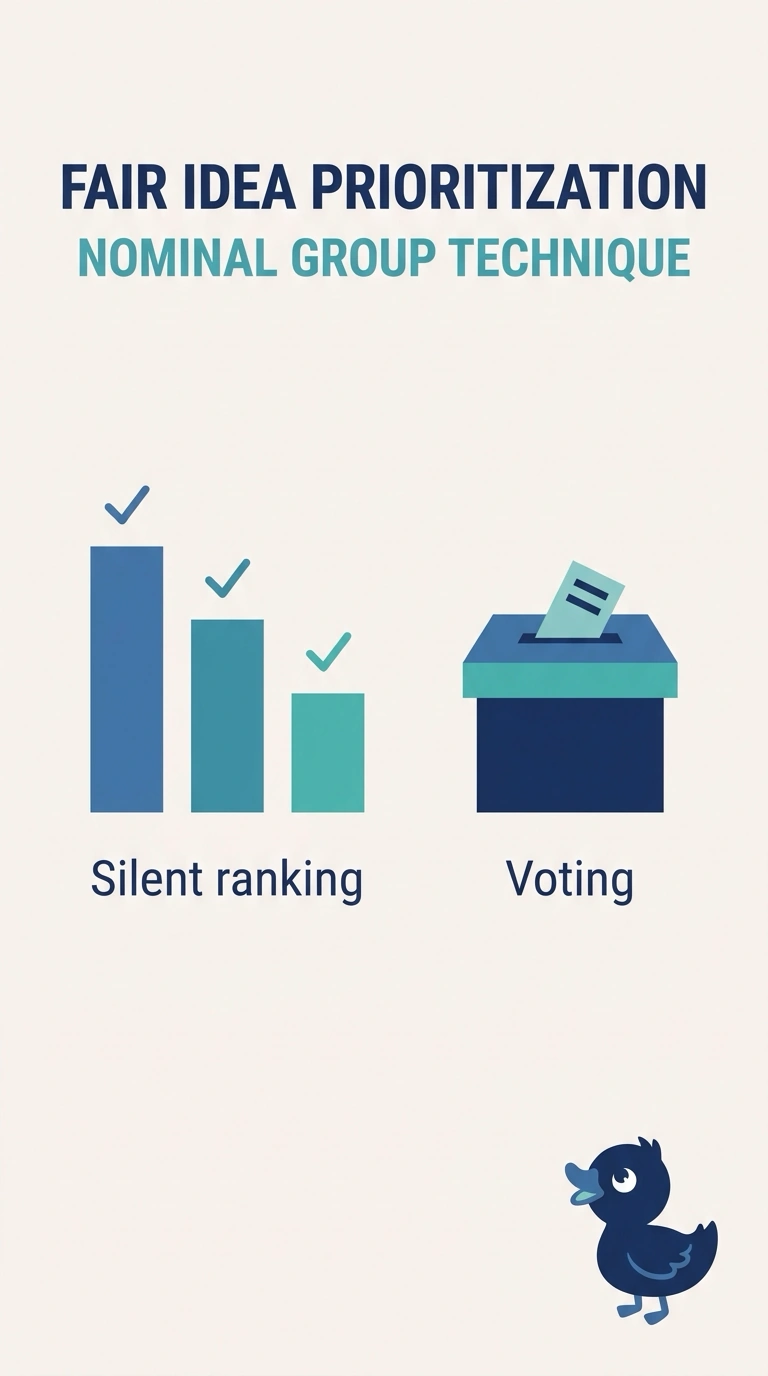
Quality improvement depends on frontline staff input because receptionists and schedulers often see appointment barriers that senior clinicians miss. Using nominal group technique with silent idea ranking and voting gives each team member structured quiet time to weigh options and cast weighted votes before open debate, preventing dominant personalities from skewing priorities. Asking the medical director to select the top three ideas by executive decision bypasses collaborative ownership and risks picking interventions that fail in daily front-desk workflows. Collecting written suggestions by email and letting the vocal leaders merge them still allows dominant voices to filter or reinterpret frontline ideas during consolidation, so bias returns before voting. Letting the two vocal leaders summarize and rank the ideas for the group hands prioritization back to the same imbalance that silenced quieter staff from the start rather than creating true buy-in. One caveat is that nominal group voting should follow clear selection criteria—such as impact and feasibility—so votes reflect strategic value rather than personal preference. As an operational check, track meeting participation and verify that the top-ranked ideas include frontline workflow steps before launching a pilot.
Prefer to study offline? Printable PDF study book + test engine ($7.50, unofficial). These questions stay free here.