
A radiology quality team launches a project to reduce outpatient MRI report turnaround times, but three weeks in, radiologists and schedulers keep adding inpatient CT workflows and billing software upgrades to the meetings. Which Six Sigma artifact should the team establish or revisit first to control scope creep?
Select an answer to reveal the explanation.
Short Explanation
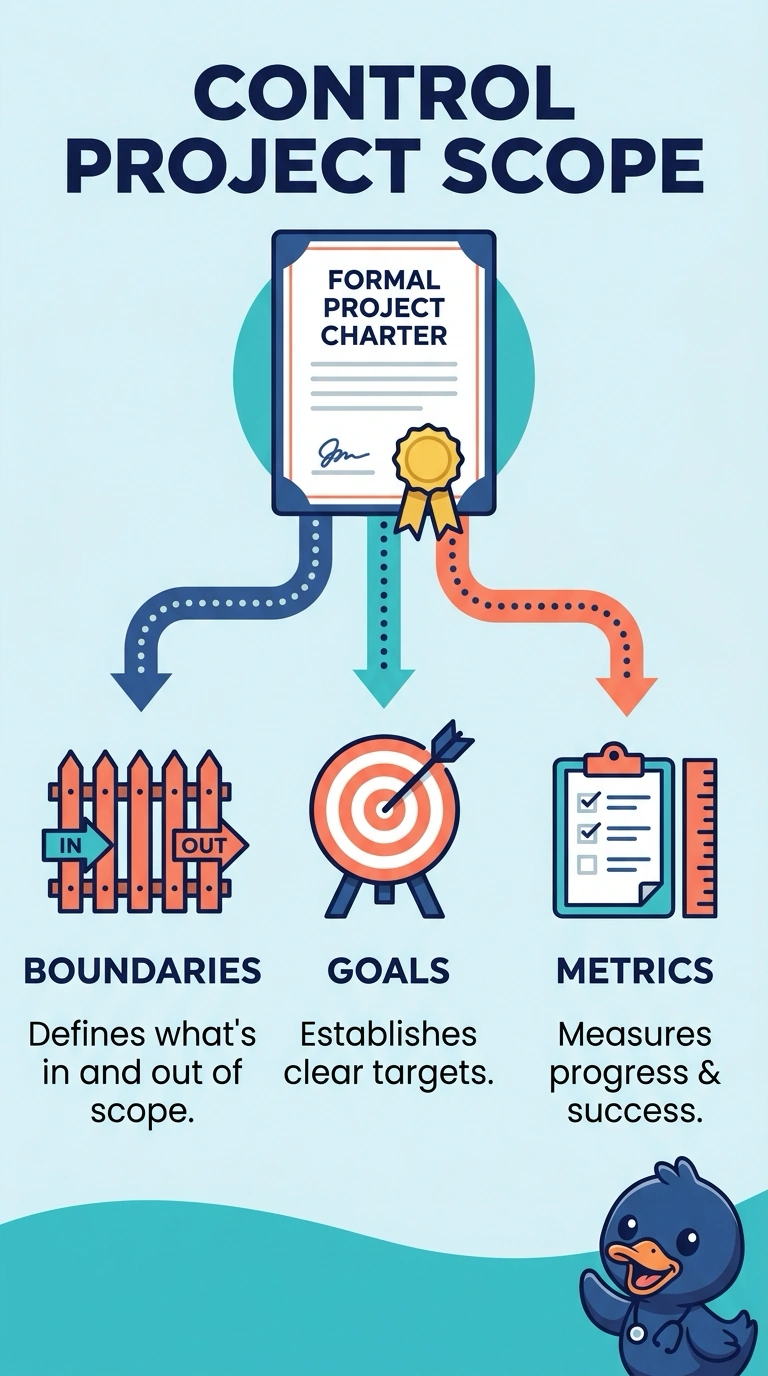
Think of a project charter like the fence around your backyard: without clear lines, everyone's stray project wanders onto your lawn. The trap is reaching for charts or risk tools before agreeing on what is actually in or out of bounds.
Full Explanation
In Six Sigma and structured quality improvement, scope creep derails teams when new problems are added mid-flight without adjusting timelines or resources. Establishing or revisiting A formal project charter specifying boundaries, goals, and metrics anchors the initiative in the Define phase by documenting the problem statement, measurable aim, in-scope and out-of-scope processes, team roles, and target milestones. By contrast, A multi-hospital benchmarking dashboard comparing national imaging percentiles helps set external performance targets, but it cannot stop stakeholders from expanding internal meeting agendas. Similarly, A statistical process control chart tracking daily MRI scanner uptime monitors equipment stability during measurement and control phases rather than defining project boundaries. Likewise, A failure mode and effects analysis scoring equipment breakdown risks proactively identifies potential failure points in a defined workflow, yet it requires an agreed scope first to stay focused. One important caveat is that a charter is a living governance agreement: if inpatient CT delays truly warrant attention, the sponsor should log them as a separate future project rather than silently absorbing them. As an operational check, review the charter's out-of-scope list at the start of each weekly team huddle and park unrelated requests on a formal parking lot.
Prefer to study offline? Printable PDF study book + test engine ($7.50, unofficial). These questions stay free here.