
A community hospital discovers that 18% of inpatient adverse drug events stem from omitted home anticoagulants and antihypertensives that were missing from admission orders. Which medication reconciliation practice should the safety team standardize at admission?
Select an answer to reveal the explanation.
Short Explanation
Think of admission medication reconciliation like packing for a trip—if you start with an outdated list, you will leave essentials behind. The trap is trusting a single stale record instead of verifying what the patient actually takes today.
Full Explanation
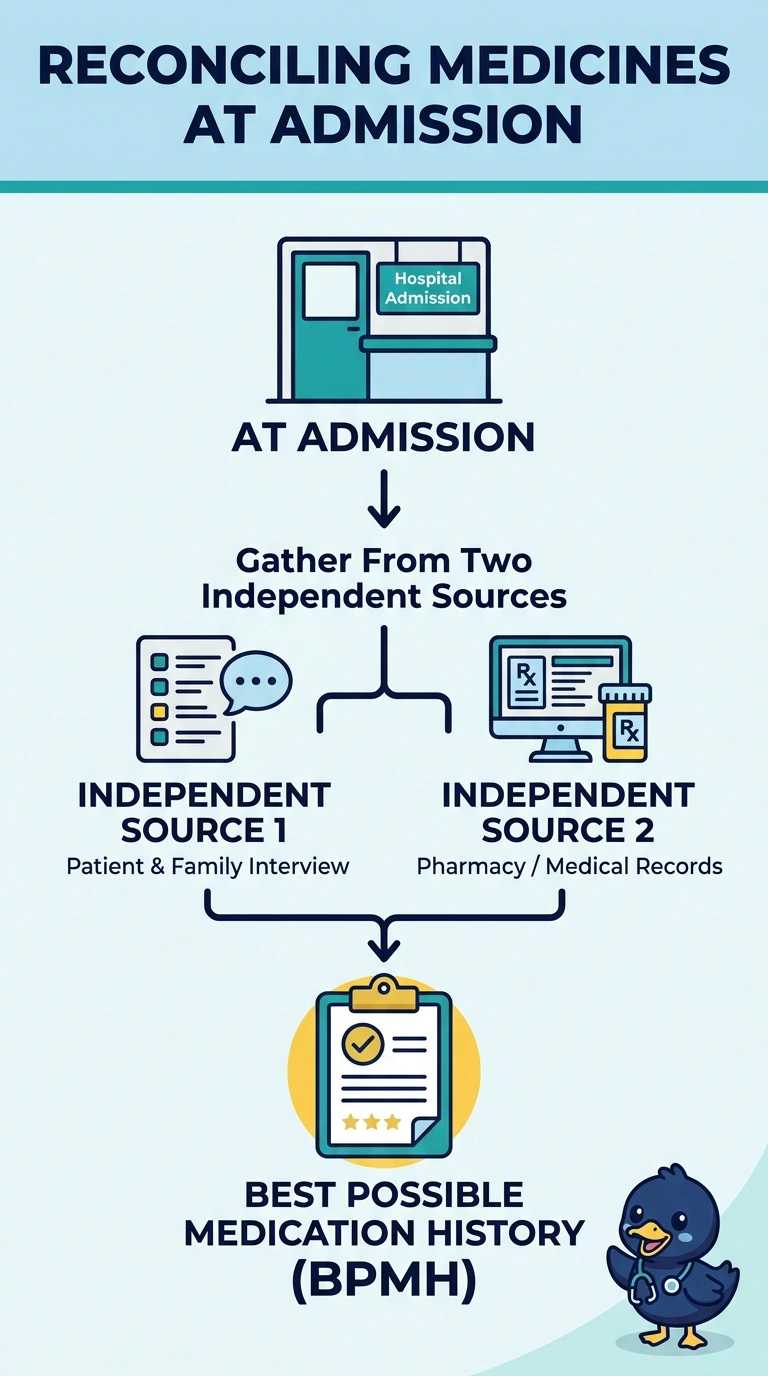
Compiling a Best Possible Medication History using two independent sources at admission prevents omission and dosing errors by cross-checking what the patient actually takes against an objective record such as outpatient pharmacy fill data or pill bottles. Relying on a single source misses recent dose changes, over-the-counter products, and prescriptions filled by outside specialists. Copying the outpatient medication list directly from the prior discharge summary fails because medication regimens frequently change between hospitalizations, propagating outdated or discontinued drugs. Waiting until the first inpatient pharmacy shift review to clarify home doses leaves a dangerous gap during the first hours of admission when acute orders are written. Asking the admitting physician to estimate doses from recent clinic notes introduces recall and documentation gaps, especially for patients seen across unaffiliated practices. As a practical caveat, even a thorough admission history loses value if clinicians do not reconcile it against every inpatient order and transfer. To verify reliability, audit a monthly sample of admissions to confirm two documented verification sources and time-to-reconciliation completion.
Prefer to study offline? Printable PDF study book + test engine ($7.50, unofficial). These questions stay free here.