
A hospital discovers that critical care, medical-surgical, and emergency units maintain separate smart infusion pump drug libraries with different concentration defaults, leading float nurses to select incorrect dosing profiles. Which system-level safety intervention best reduces this hazard?
Select an answer to reveal the explanation.
Short Explanation
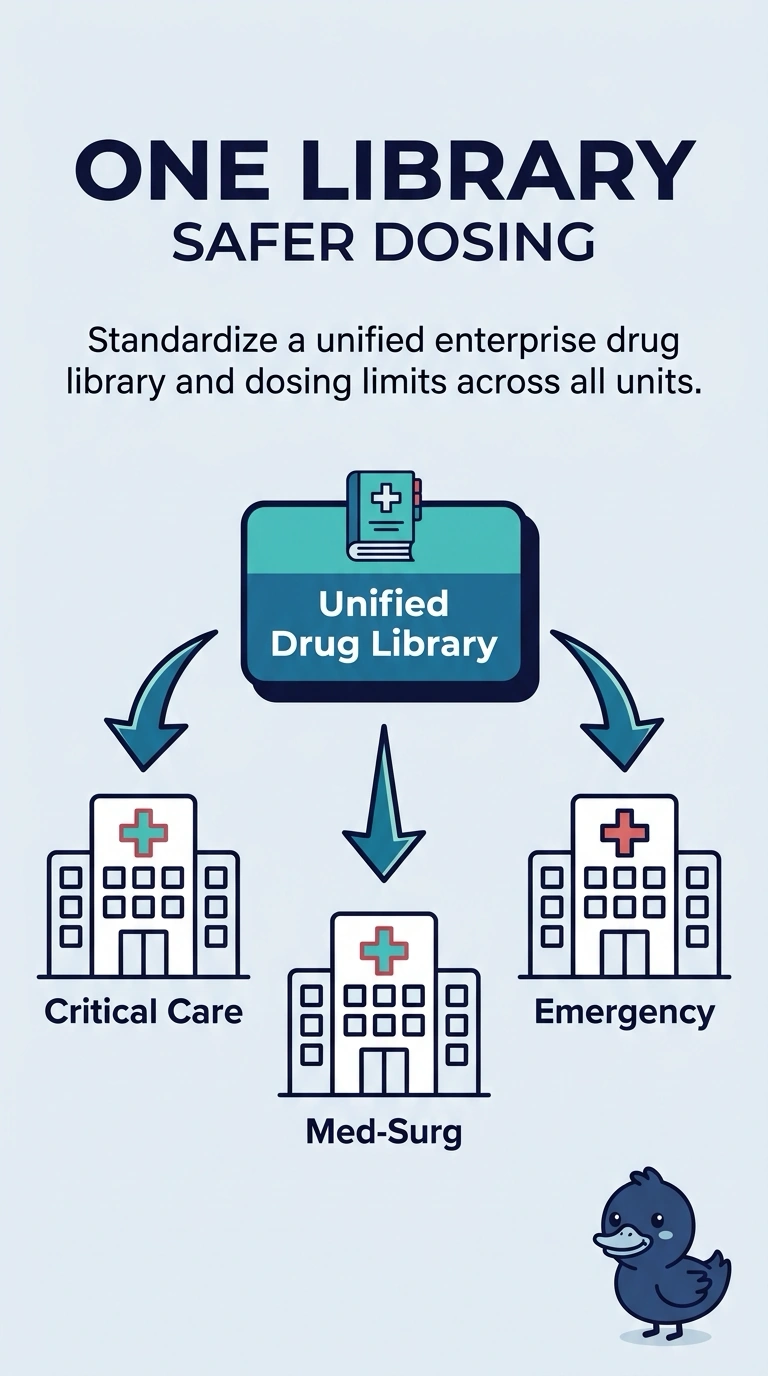
You can reduce this hazard by standardizing one enterprise drug library and dosing limits across the hospital. This standardization gives you familiar concentrations and safety limits wherever you work, reducing the chance of selecting the wrong profile.
Full Explanation
Standardizing a unified enterprise drug library and dosing limits across all units reduces unnecessary variation in medication concentrations and dosing guardrails. This human-factors strategy lowers cognitive load and helps prevent mode or profile errors when clinicians float between units or transfer patients. Restricting float nurses from programming smart infusion pumps during busy shifts creates workflow bottlenecks and may delay urgent medication administration without correcting the inconsistent libraries. Posting laminated unit-specific concentration conversion charts on every infusion pump pole depends on memory and manual calculations under pressure, which are unreliable in fast-paced care. Letting each unit keep its own library but adding a pop-up that names the unit profile before programming leaves conflicting defaults in place and relies on a single warning to prevent selection errors, which is vulnerable to inattention and alert fatigue. An exam caveat is that specialized populations, such as neonates and children, still need clearly labeled, weight-based care-area profiles within the unified library. As a practical check, audit wireless drug-library update compliance and dosing-limit override rates across all smart pumps each quarter.
Prefer to study offline? Printable PDF study book + test engine ($7.50, unofficial). These questions stay free here.