
After a near miss in an outpatient dialysis clinic, leadership accepts a one-line conclusion that staff simply forgot to check machine settings without reviewing staffing ratios, alarm audibility, or scheduling pressure. Which High Reliability Organization principle is the clinic failing to apply?
Select an answer to reveal the explanation.
Short Explanation
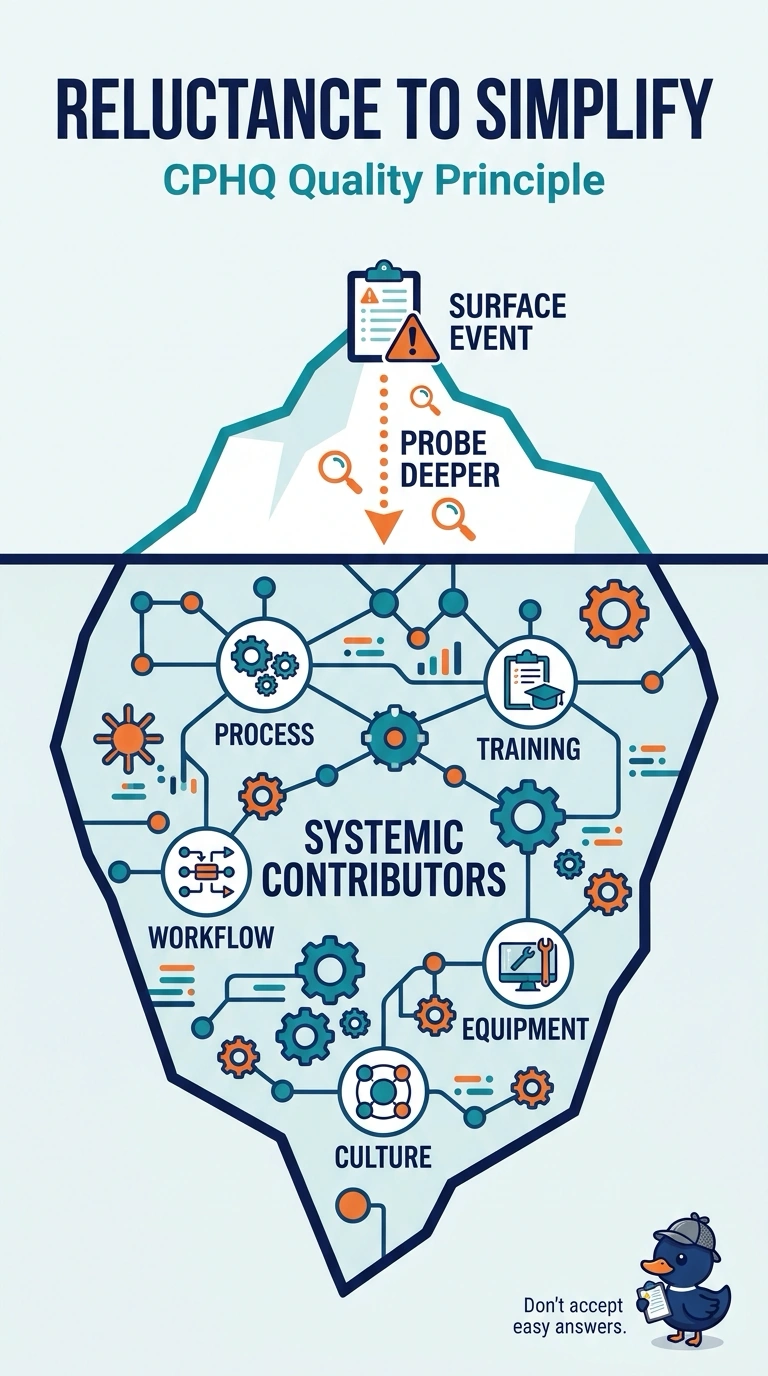
Stopping at human forgetfulness is like blaming a tripped breaker without checking the overloaded circuit. When you investigate a near miss, you must resist neat one-line answers that hide real workflow hazards. The trap is mistaking any safety action for the specific habit of questioning superficial explanations.
Full Explanation
High Reliability Organizations practice reluctance to simplify by probing deeper systemic contributors instead of accepting convenient single-cause labels such as staff forgetfulness. Healthcare processes are complex and tightly coupled, so an apparent slip at the chairside almost always interacts with workload, equipment design, alarm clutter, or schedule compression. Refusing simple explanations forces the safety team to map those interacting conditions and redesign defenses before harm reaches a patient. Deference to expertise by elevating frontline technicians during emergencies describes shifting decision authority to knowledgeable staff during urgent events rather than how post-event explanations are evaluated. Preoccupation with failure by logging every minor equipment malfunction focuses on treating small anomalies as early warning signs, yet logging alone does not stop leadership from oversimplifying root causes. Commitment to resilience by stocking backup dialysis machines on site addresses rapid recovery and continuity when a failure occurs rather than digging beneath surface-level incident summaries. Even in busy outpatient clinics, time pressure tempts leaders to close reviews quickly once a human step is named. As an operational check, review the clinic's last five near-miss summaries and verify whether each action plan modifies a system condition such as scheduling, environment, or equipment rather than stopping at staff reminders.
Prefer to study offline? Printable PDF study book + test engine ($7.50, unofficial). These questions stay free here.