
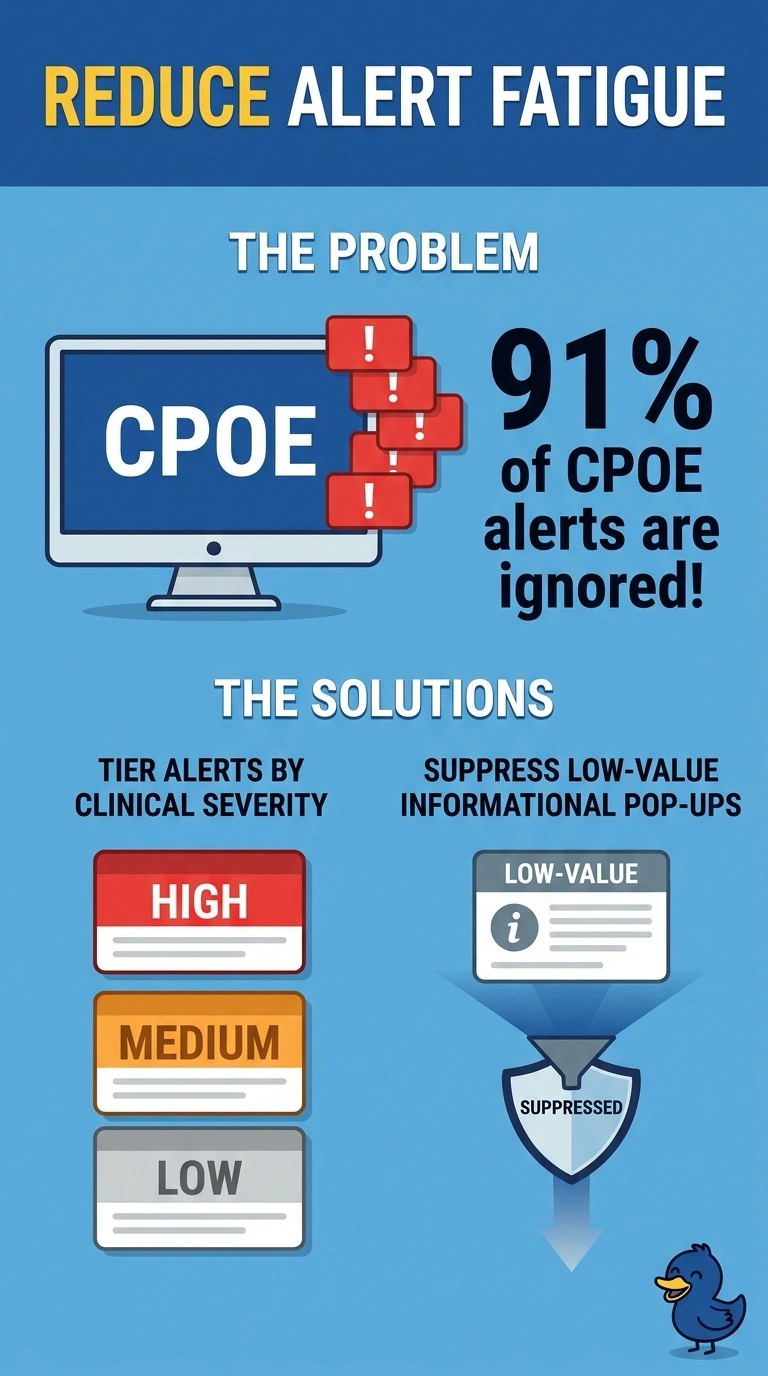
A hospital's safety committee discovers that prescribers override 91% of computerized provider order entry (CPOE) medication alerts because low-value duplicate-therapy pop-ups appear on nearly every order. Which intervention best addresses this alert fatigue?
Select an answer to reveal the explanation.
Short Explanation
When every car alarm on the street goes off at once, you stop looking out the window—and that is exactly what happens when CPOE fires constant low-value pop-ups. The trap is blaming prescribers with retraining or rankings when the real culprit is a noisy safety technology design. When you tier alerts by severity and quiet the background noise, clinicians actually notice the critical warnings.
Full Explanation
The most effective way to restore signal-to-noise in computerized provider order entry is to Tier alerts by clinical severity and suppress low-value informational pop-ups. Human factors principles show that excessive, non-actionable interruptions condition users to click through warnings automatically, causing them to miss life-threatening drug-allergy or dosing alerts. Stratifying alerts so only high-severity, actionable risks trigger interruptive hard stops preserves cognitive attention for true hazards. Choosing to Convert most medication alerts into interruptive hard stops requiring a documented override reason amplifies interruptions without restoring signal, deepening fatigue and hiding critical warnings. Choosing to Require prescribers to attend mandatory annual retraining on responding to pop-ups relies on human vigilance rather than fixing the flawed system design that created alert fatigue. Choosing to Send monthly email scorecards ranking individual physicians by their override rate treats a system-wide usability flaw as an individual performance failure and encourages defensive workarounds. As a caveat, any suppression of low-value alerts must undergo multidisciplinary pharmacy and clinical informatics review so critical interactions are not inadvertently muted. For an operational check, audit post-change override rates by alert severity tier and track near-miss adverse drug events over the following quarter.
Prefer to study offline? Printable PDF study book + test engine ($7.50, unofficial). These questions stay free here.