
A public health quality team wants to evaluate whether a new hospital-wide infection prevention bundle is reducing newly acquired Clostridioides difficile cases each month, rather than counting patients who already had the infection upon arrival or remained positive from prior weeks. Which epidemiological measure should the team track?
Select an answer to reveal the explanation.
Short Explanation
Think of incidence as the rate of new arrivals at your door, while prevalence is a snapshot of everyone already in the room. The trap is using a prevalence count to judge your infection-prevention bundle, because lingering pre-existing cases can mask whether new transmission actually dropped.
Full Explanation
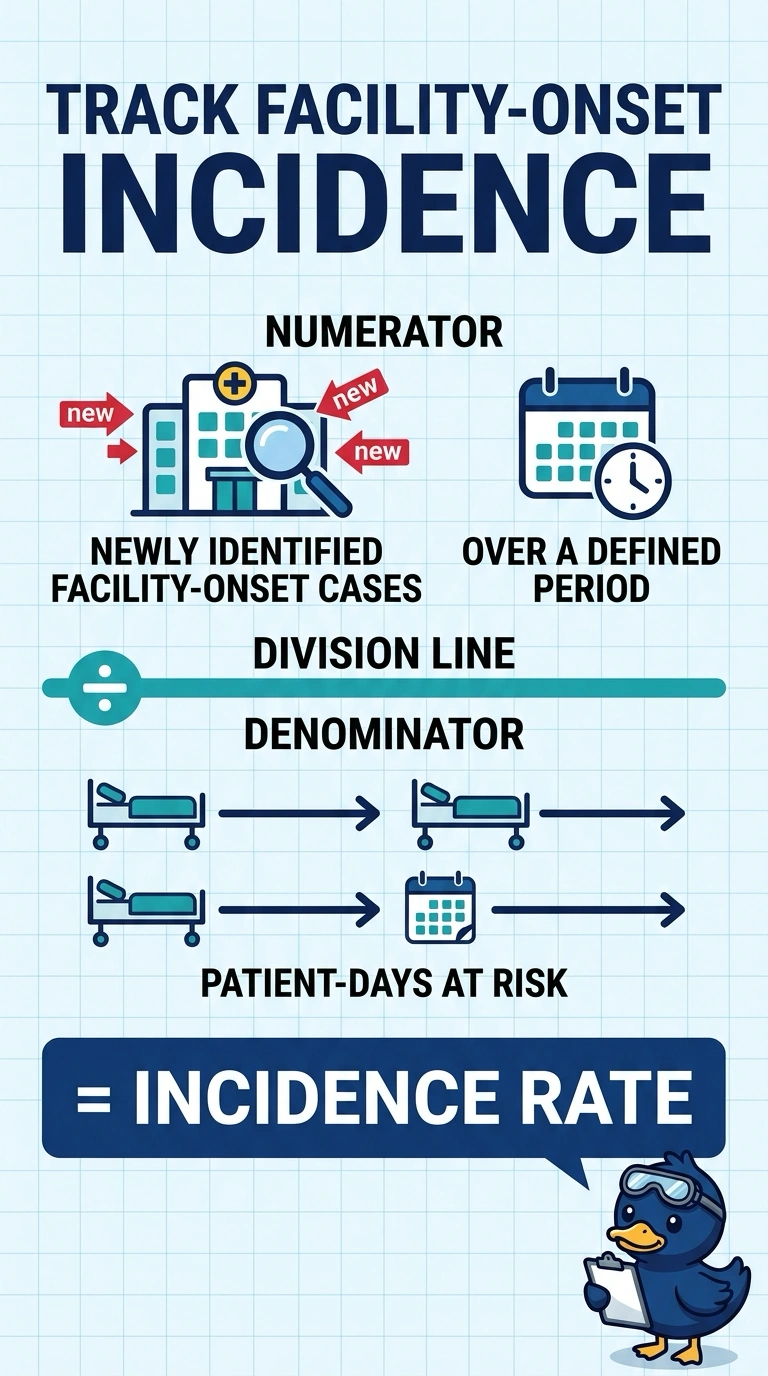
Incidence rate measuring newly identified facility-onset cases over a defined period per patient-days at risk directly isolates new transmission events occurring after admission, making it the right metric for evaluating whether an infection prevention bundle is working. Using patient-days at risk in the denominator also adjusts for fluctuating hospital census so monthly comparisons remain fair. By contrast, Point prevalence measuring all existing active cases present on a single calendar day blends newly acquired infections with long-stay or community-onset cases, obscuring intervention impact. Period prevalence counting all patients with active C. difficile infection during the month similarly mixes incident facility-onset cases with prevalent cases carried over from admission or prior weeks, so declines in new transmission can be masked. Community-onset case counts per 100,000 regional residents each year reflect external population burden rather than hospital-acquired transmission and cannot evaluate a facility-level bundle. One caveat is that incidence tracking requires strict surveillance definitions—such as CDC NHSN specimen timing rules—to separate community-onset from healthcare-facility-onset cases accurately. As an operational check, verify that laboratory specimen timestamps and admission dates are validated before calculating monthly facility-onset rates.
Prefer to study offline? Printable PDF study book + test engine ($7.50, unofficial). These questions stay free here.