
A hospital quality analyst needs to audit 60 charts per month from a chronological electronic discharge log of 600 medical-surgical patients so every day of the week and shift is fairly represented without complex software. Which sampling method is most appropriate?
Select an answer to reveal the explanation.
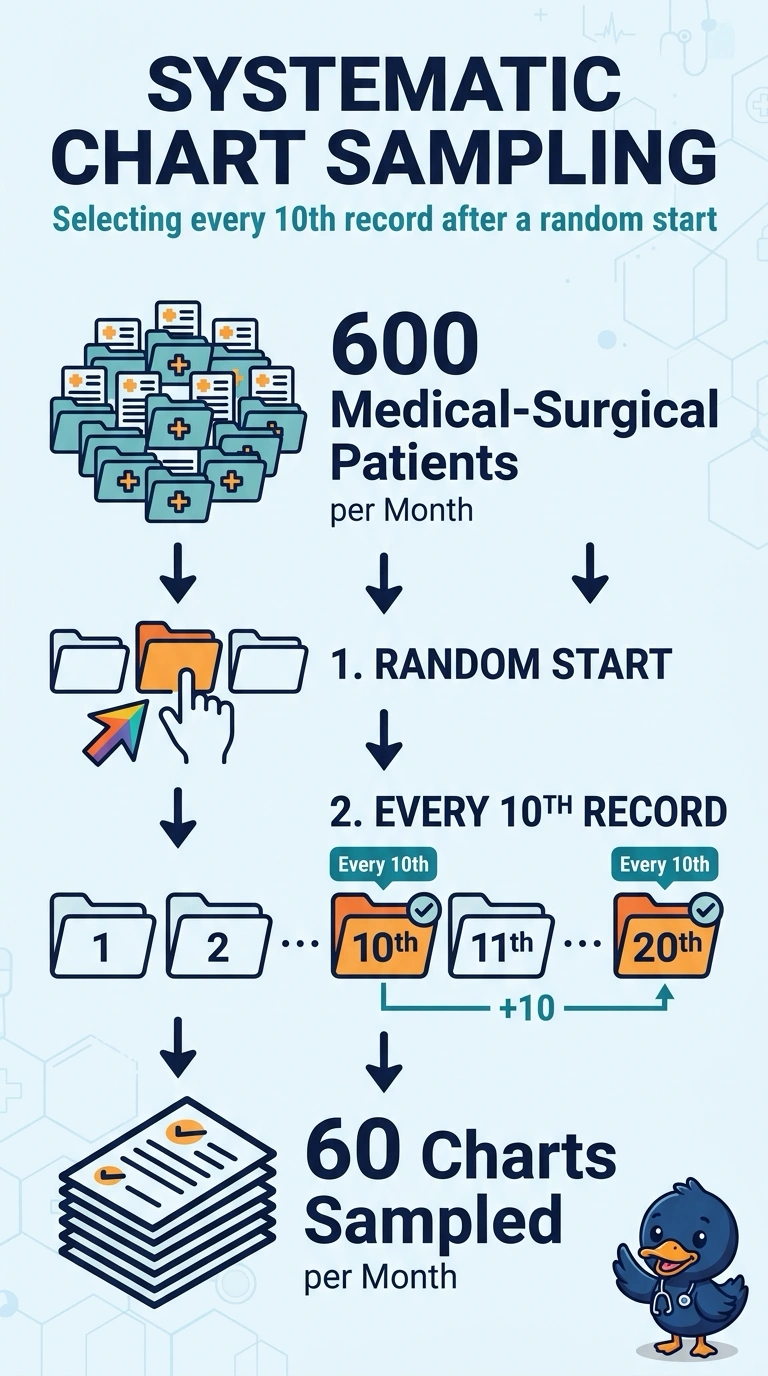
Short Explanation
When you want a fair slice across an entire month without overcomplicating the pull, stepping evenly through the list after a random starting point keeps your sample honest. The trap is grabbing easy daytime charts, instead of Systematic random sampling selecting every tenth record after a random start.
Full Explanation
Auditing a 10% sample from a chronological log requires a probability method that spreads selections evenly across time. Systematic random sampling selecting every tenth record after a random start works because choosing a random initial record between 1 and 10 and then pulling every tenth case ensures uniform coverage across weekdays, weekends, and shifts with minimal administrative burden. Convenience sampling of charts from weekday morning discharges only introduces severe selection bias and misses weekend or night-shift workflow gaps. Judgmental sampling of cases flagged by unit managers as exemplary skews results upward and invalidates any estimate of true unit performance. Snowball sampling based on informal referrals from clinic nurses is a non-probability technique suited for qualitative outreach, not representative chart audits. One caveat is to check the log for hidden periodic patterns—such as every tenth case falling on a specific clinic day—that could bias the interval. As an operational check, verify that the sampled dates and discharge shifts closely match the proportions of the full 600-patient log.
Prefer to study offline? Printable PDF study book + test engine ($7.50, unofficial). These questions stay free here.