
A hospital tracks a four-element sepsis bundle and sees 85% to 92% compliance on each separate element, leading executives to assume sepsis care is highly reliable. However, chart reviews show many patients still miss at least one required step. Which measurement approach best reveals how often patients receive complete, defect-free sepsis care?
Select an answer to reveal the explanation.
Short Explanation
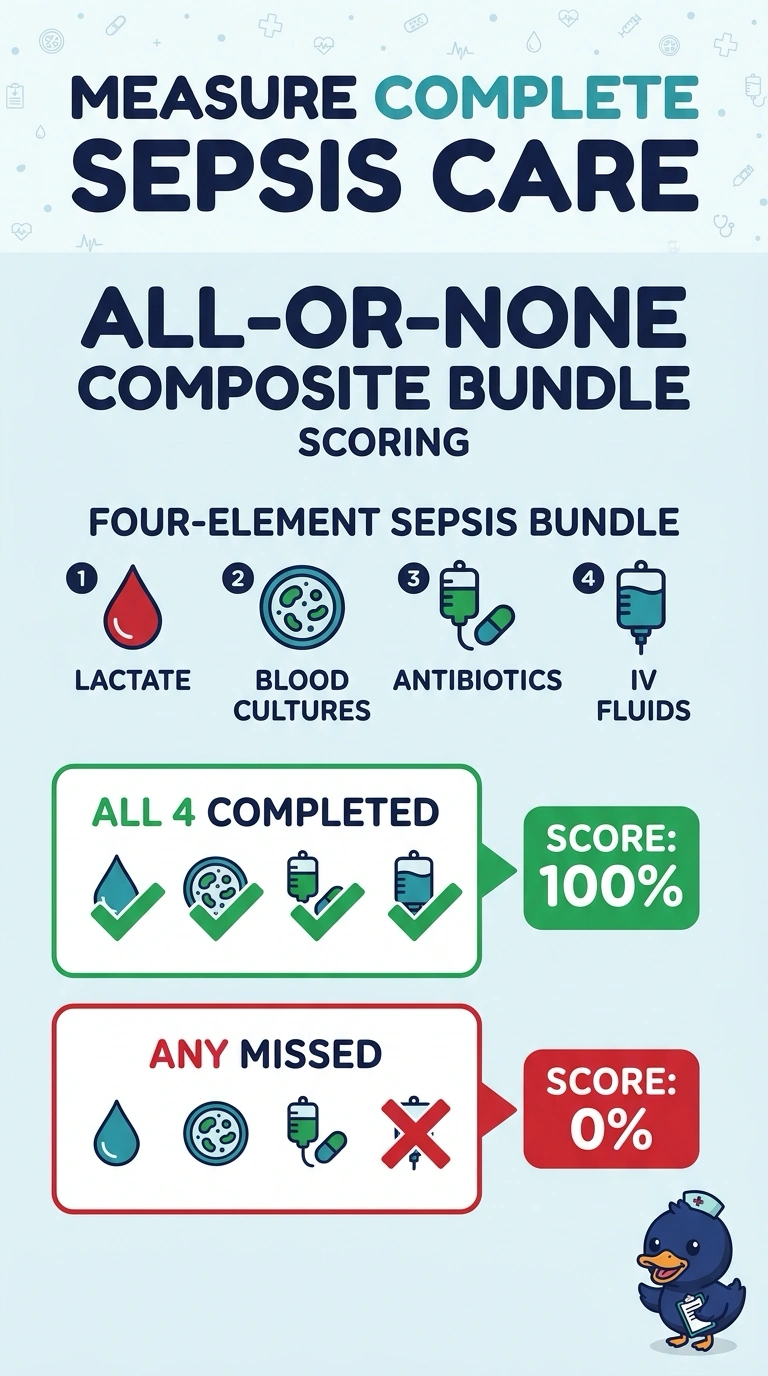
Think of a parachute with four straps: 90% reliability on each strap still leaves you in trouble if one strap fails on your jump. All-or-none composite bundle scoring counts a case as passing only when a patient receives every required element, exposing the true defect-free rate. The trap is trusting element averages, rolling totals, or unit breakdowns that let strong steps hide missed care.
Full Explanation
All-or-none composite bundle scoring is the right choice because it evaluates care from the patient's perspective, awarding credit only when every eligible step in the bundle is completed on time. When four steps each run near 90% independently, the chance that a single patient receives all four can drop below 66%, so only an all-or-none metric exposes how reliably the whole process works together. Weighted average across individual bundle elements fails because weighting still blends separate step percentages, allowing high compliance on three tasks to mask a missed fourth task on the same encounter. Rolling twelve-month cumulative compliance rate fails because pooling a full year of data smooths over recent shifts and, without patient-level linkage, still hides incomplete bundles. Stratified compliance reporting by hospital unit fails because breaking results down by location shows where gaps occur, not whether individual patients received the entire bundle. As a caveat, all-or-none scores can look discouragingly low early in an improvement effort and do not pinpoint which specific step is failing most often. For an operational check, pair the monthly all-or-none composite trend with a companion table of individual element pass rates so teams can see both overall reliability and which step to fix first.
Prefer to study offline? Printable PDF study book + test engine ($7.50, unofficial). These questions stay free here.