
Three nurse abstractors independently review 40 medical records to score sepsis bundle compliance, and the quality analyst wants to verify that abstractors apply the measure specifications consistently before full data collection. Which validation step should the analyst perform?
Select an answer to reveal the explanation.
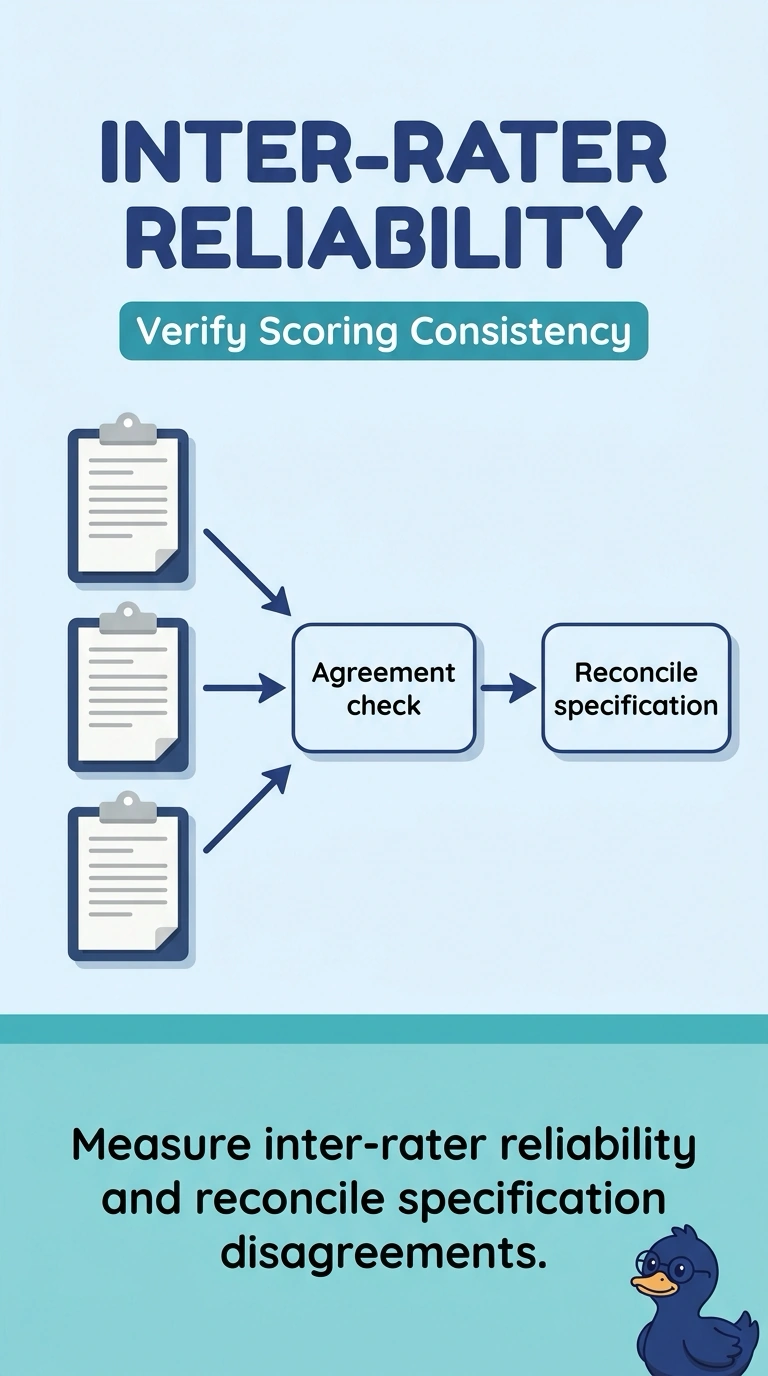
Short Explanation
Before you trust a scoreboard, you have to make sure all three referees are calling fouls by the same rulebook. The trap is averaging out disagreements or shrinking the team instead of testing and calibrating abstractor agreement up front.
Full Explanation
Data validation ensures that reported quality rates reflect actual clinical care rather than differences in how abstractors read charts. Choosing to Measure inter-rater reliability and reconcile specification disagreements quantifies agreement across abstractors—using metrics such as percent agreement or kappa—and aligns everyone on ambiguous timestamps or exclusion rules before full-scale abstraction begins. Opting to Average the three abstractors' compliance scores to smooth out disagreements masks systematic interpretation errors and produces unreliable case-level data. Choosing to Replace manual chart abstraction with automated extraction from structured EHR fields compromises clinical accuracy because structured fields often lack exact time-window details and narrative context required for sepsis bundle elements. Deciding to Reassign the 40 medical records to the most senior nurse abstractor for a final review creates an unsustainable bottleneck and never tests whether even the senior abstractor interprets every specification accurately. As a data-quality caveat, high inter-rater reliability on an initial pilot can drift over time if specifications update or staff turn over. As an operational check, schedule periodic blind re-abstractions of a small random sample each quarter to confirm ongoing agreement.
Prefer to study offline? Printable PDF study book + test engine ($7.50, unofficial). These questions stay free here.