
A skilled nursing facility launches a daily mobility protocol to reduce resident falls, but nurses worry the added ambulation time could delay morning medication passes. Which type of measure should the quality team add to monitor this potential unintended consequence?
Select an answer to reveal the explanation.
Short Explanation
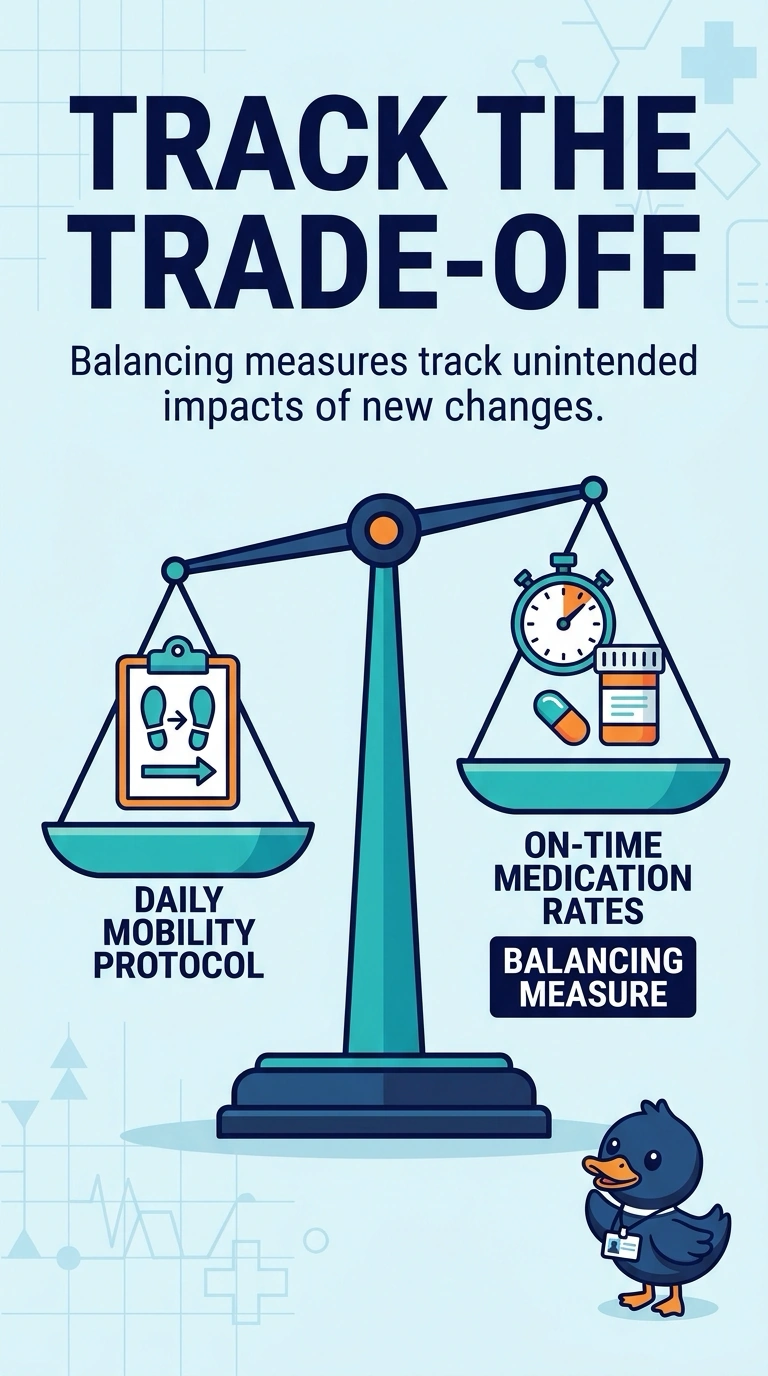
When you push down on one side of a waterbed, the other side bulges up, and clinical workflows work the same way. Adding a balancing measure lets your team spot whether better mobility is quietly hurting medication timeliness, whereas the trap is watching only process or outcome metrics that miss the side effect.
Full Explanation
A balancing measure tracking on-time medication rates is essential because improvement changes in one part of a complex clinical workflow can unintentionally strain resources or degrade performance elsewhere, and balancing measures detect those trade-offs early. A structure measure counting physical therapy staffing ratios assesses static organizational capacity or resource availability rather than whether the new mobility workflow is disrupting medication delivery. A process measure auditing daily ambulation documentation checks whether staff are completing the new intervention as intended, not whether another vital care task is falling behind. An outcome measure calculating monthly fall rates per bed evaluates the primary goal of the mobility project, which can look successful even while hidden delays harm medication timeliness. As a caveat, selecting too many balancing measures can overwhelm frontline staff with data collection, so limit them to the most plausible side effects identified during workflow mapping. For an operational check, review on-time medication administration alongside ambulation compliance and fall rates on the same monthly dashboard before expanding the mobility protocol.
Prefer to study offline? Printable PDF study book + test engine ($7.50, unofficial). These questions stay free here.