
A two-person crew must unload a 260-pound battery cabinet from a rental van parked on a gravel driveway that slopes down toward the street. The van carries a folding ramp, an appliance dolly, and wheel chocks, and no other help is on site. Which action best keeps the van and the heavy cabinet under control?
Select an answer to reveal the explanation.
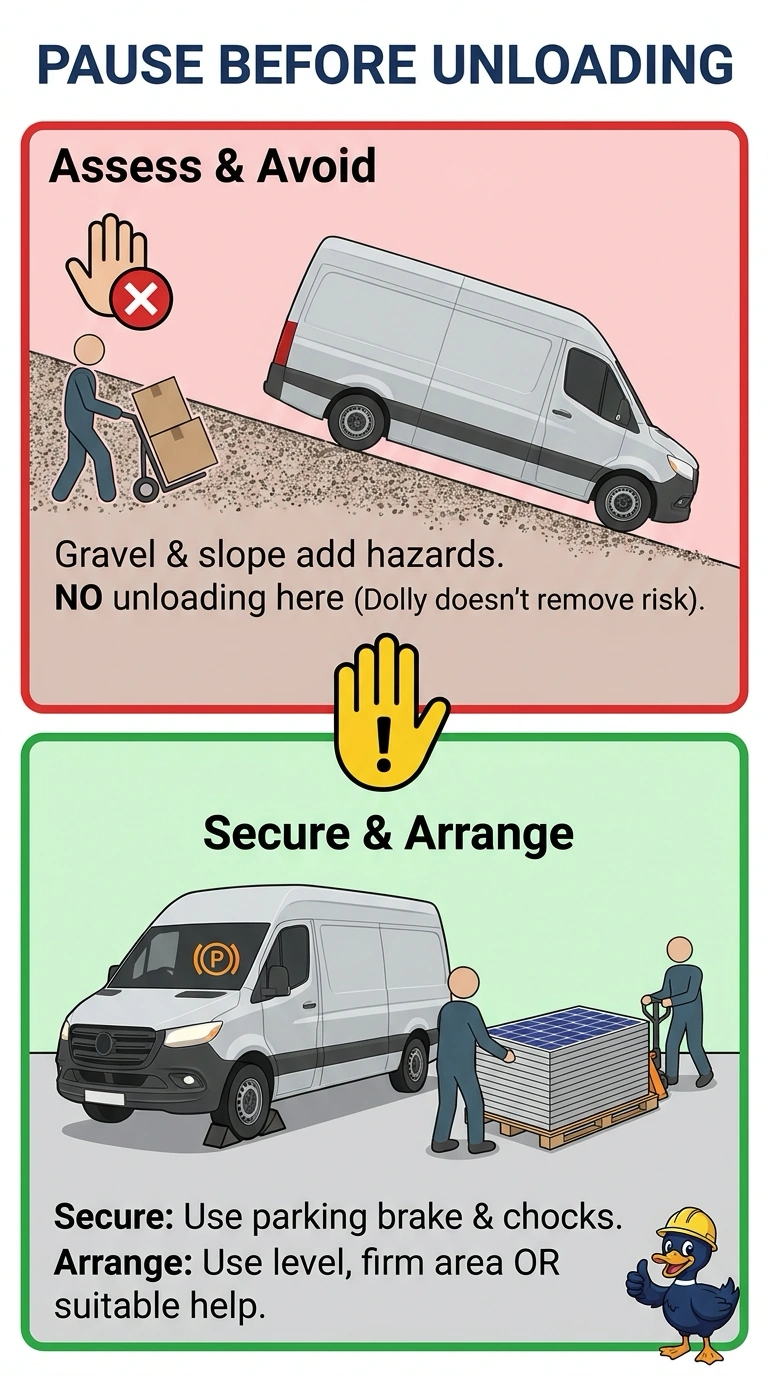
Short Explanation
Your chocks and dolly can’t make a sloped, gravel driveway safe—it’s like trying to unload a heavy cart on a tilted, loose floor. Keep the cabinet secured until you’ve arranged a level, firm area or suitable equipment and assistance.
Full Explanation
The safest action is to avoid starting an uncontrolled descent on a sloped, loose surface. A 260-pound cabinet can gain momentum quickly, while gravel can shift under the dolly or workers’ feet; the ramp, chocks, and two-person crew do not by themselves establish a safe unloading path. Keep the van and load secured until you have a level, firm work area or a properly planned alternative with equipment and assistance suited to the conditions. Moving to level, firm pavement and using the dolly and ramp would improve the route, but leaving the available wheel chocks undeployed means the parking brake alone does not provide the specified positive restraint against vehicle movement. A rated, anchored hand winch could control a descent, but relying on only the two workers already on site does not provide the additional assistance called for alongside suitable equipment; controlling the line and guiding the load can compete for their attention. Load-rated mats and chocks would address some surface and vehicle concerns, but mats over gravel do not remove the driveway’s downhill grade, so the cabinet would still be moved on a slope. Exam caveat: a device’s load rating does not prove its anchor, setup, or work area is suitable. Before moving the cabinet, check the route’s grade and footing, confirm the van cannot move, and verify that the dolly, ramp, and any restraint are rated and correctly secured.