
A small farm shop runs a grid-tied solar array with a battery bank and a smart panel for freezers and well pumps. The owner asks why power stays on after sunset and why freezers stay cold while shop tools shut off during a low-charge event. Which statement best describes energy storage and load control roles?
Select an answer to reveal the explanation.
Short Explanation
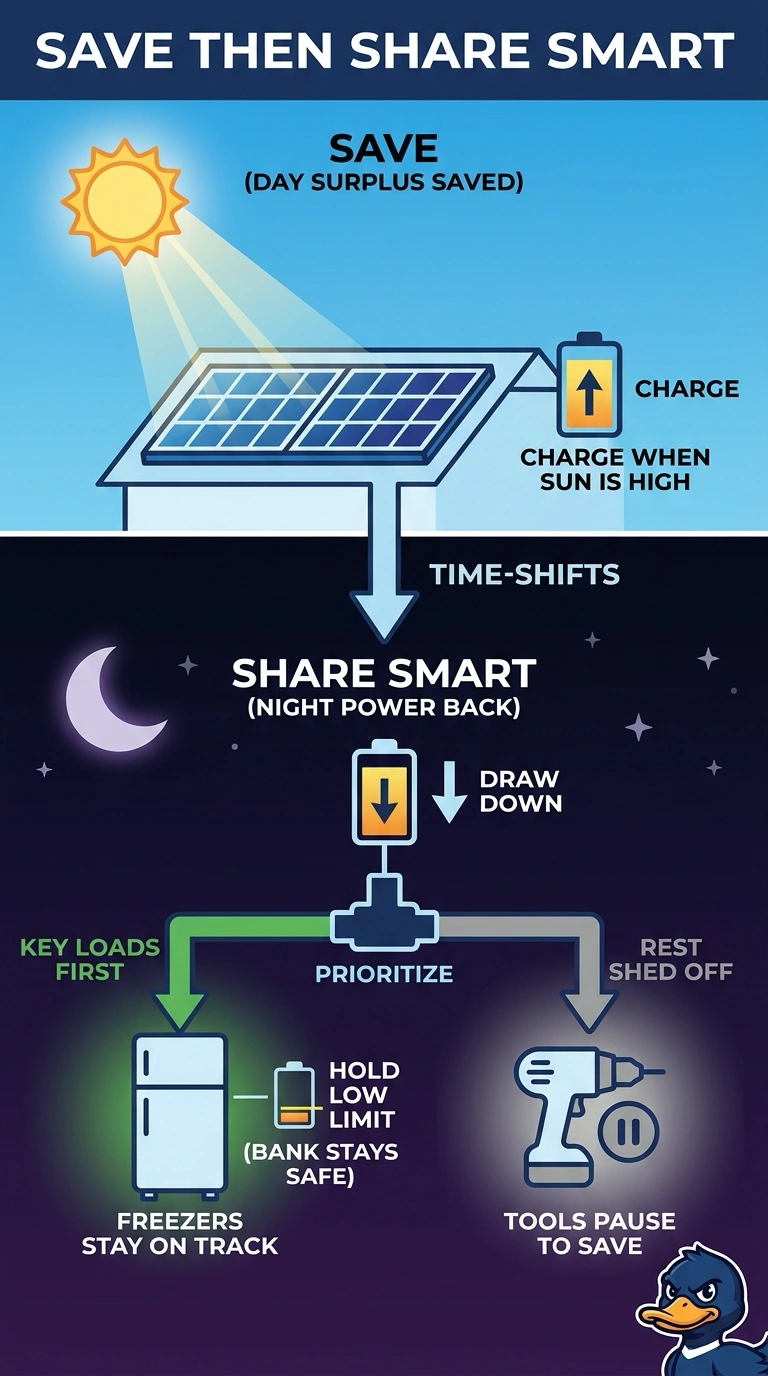
You can think of the battery as saving midday sunshine for later, while the smart panel keeps the most important things running when charge is low. Time-shifting helps explain evening power, and load priorities help keep the freezers cold.
Full Explanation
The correct statement distinguishes two complementary functions: the battery stores surplus solar energy produced during the day and makes it available later, including after sunset, while the smart panel prioritizes critical loads and sheds or restricts lower-priority ones when energy is scarce. That explains both continued evening power and why the freezers remain on while tools are disconnected during a low-charge event. Load control based on a tariff schedule can shift use to cheaper times, but a tariff schedule is not the same as protecting essential circuits in response to low battery charge; it may shift use at the wrong time or shed loads without regard to criticality. Load control that limits peak demand can reduce coincident consumption or demand charges, but does not necessarily protect freezers and pumps during an energy shortage. Storage that only smooths short-term solar fluctuations does not describe storing daytime surplus for use after sunset, even when load control prioritizes critical loads during scarcity. Exam caveat: batteries do not generate energy, and actual backup operation depends on inverter configuration, available state of charge, and whether the system can operate when the grid is unavailable. Practical check: review the smart panel’s circuit priorities and low-charge settings, then verify the battery’s usable capacity and evening discharge schedule.