
An installer on a permitted home array finds the racking manual torque differs from the site-engineered plan stamp, with mismatched clamp part numbers and a revised rail spacing note. Which practice correctly follows manufacturer manuals and site-engineered plans before proceeding?
Select an answer to reveal the explanation.
Short Explanation
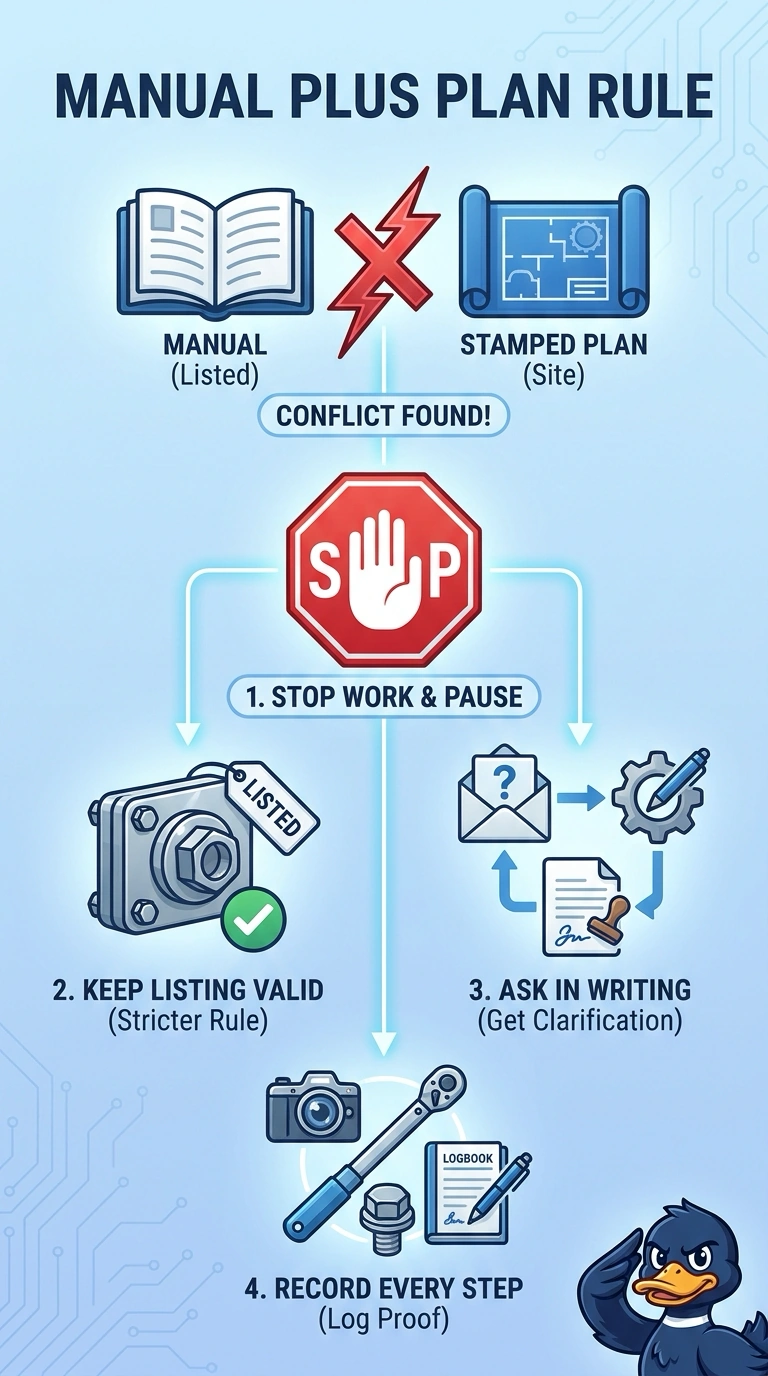
You pause when the manual and stamped plan disagree, and follow applicable listed assembly rules while the conflict is resolved. Get written clarification aligning the requirements before you proceed.
Full Explanation
Stop work because the manual and stamped plan conflict on torque, the clamp part numbers do not match, and a revised rail-spacing note is present. Follow applicable listed assembly rules and obtain written clarification aligning the manual and stamped plan before proceeding; do not decide which document governs or assume the clamps are interchangeable. Using the stricter torque, verified matching clamps, and revised spacing is not enough if the engineer’s confirmation is only verbal: written direction is needed to resolve and document the conflicting requirements. Seeking written resolution for torque and clamp compatibility while retaining the original spacing leaves the revised spacing note unaddressed. Stopping for written clarification but then using the less restrictive torque if the documents still differ does not resolve the conflict; the stricter applicable listed assembly requirement must be followed. Exam caveat: an installer should not independently interpret a stamped design change or assume the manufacturer’s manual automatically overrides site-specific engineering; approval requirements can depend on the project and jurisdiction. Practical check: before resuming, confirm that written direction identifies the approved clamp part number, torque value, and rail spacing, and verify the installed components and settings match it.