
A two-person crew stages a steep residential install with a leading-edge eave, an open skylight curb, and brittle shake areas that break underfoot near the ridge. Which assessment correctly identifies fall hazards such as leading edges and roof openings for this crew?
Select an answer to reveal the explanation.
Short Explanation
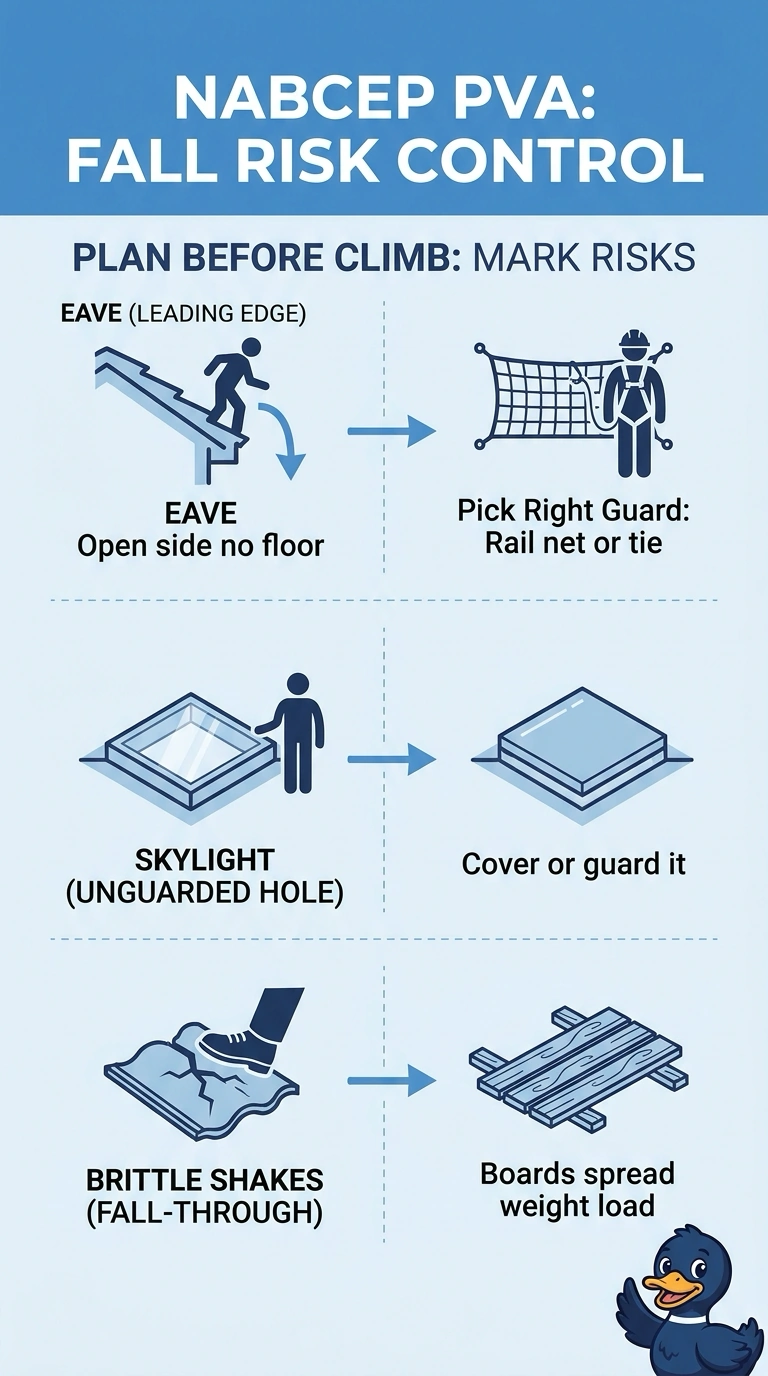
You can spot each drop and weak area before the crew climbs. The eave, skylight, and brittle shakes each need hazard-specific controls.
Full Explanation
The correct assessment identifies three distinct fall hazards: the eave is a leading edge, the open skylight is an unguarded roof opening, and brittle shakes may fail under a worker’s weight, creating a fall-through hazard. Each requires suitable controls before work proceeds; recognizing the surface’s fragility matters even if the crew plans to limit access. Calling the shakes restricted-access roofing rather than a fall-through hazard correctly identifies the eave and skylight but misclassifies the brittle surface. Limiting access may help manage exposure, but it does not change the material’s capacity to fail or remove the need to assess and control that hazard. Treating the raised skylight curb as adequate protection correctly identifies the eave and shakes but wrongly assumes a curb alone protects the opening; it is not a guard or cover unless it meets applicable protective requirements. Calling the eave an ordinary perimeter rather than a leading edge correctly identifies the skylight and shakes but misses the eave’s leading-edge hazard. Exam caveat: terminology and required systems can depend on the task, roof geometry, and applicable regulations, so do not infer protection from a curb or access plan alone. Practical check: before staging, verify the opening is guarded or securely covered, select suitable edge protection or a personal fall-arrest system, and confirm the roof surface can support workers and equipment.