
A designer models an 8-kW rooftop array rated at STC for a dusty site with long DC runs and a hot attic. Notes list soiling loss, wiring voltage drop, elevated cell temperature, and published inverter efficiency. Which sizing adjustment correctly applies derating factors and system losses to predict output?
Select an answer to reveal the explanation.
Short Explanation
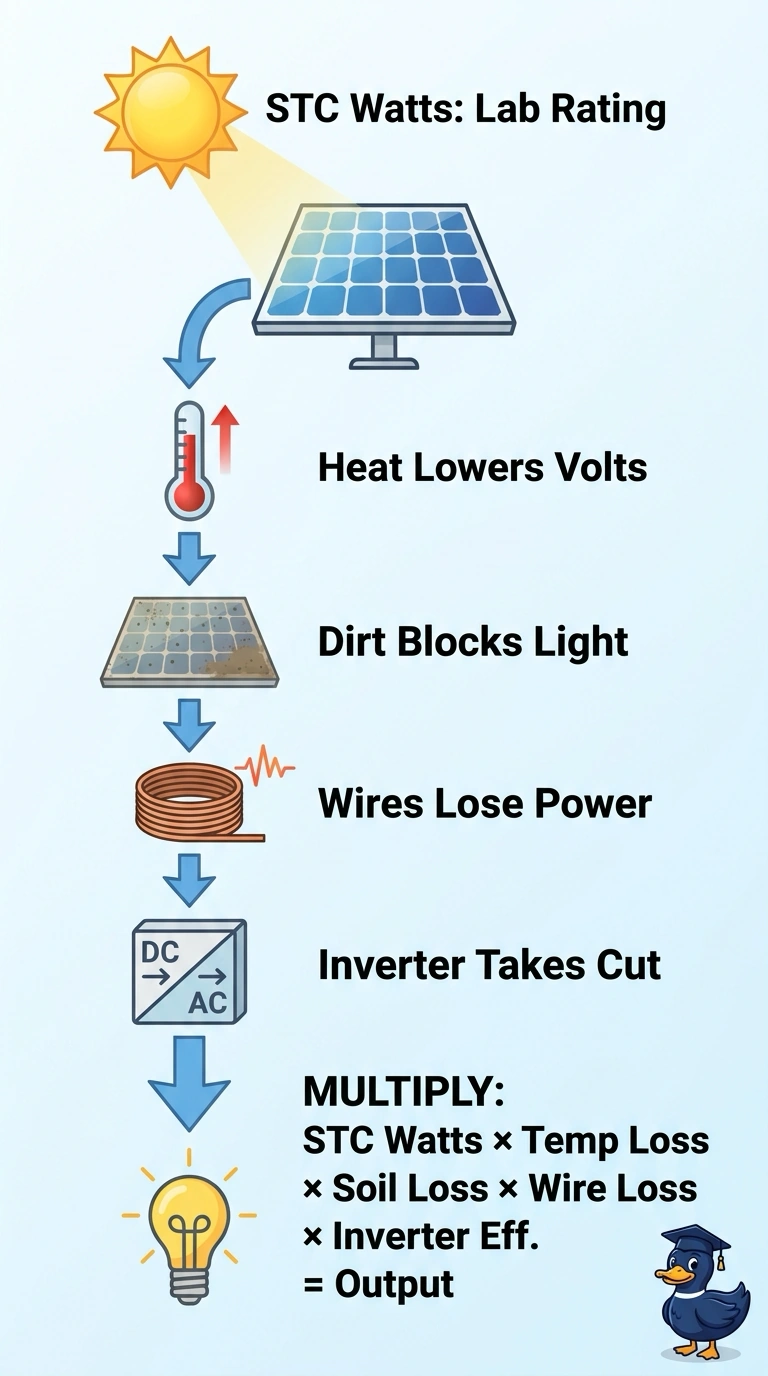
You get a realistic output estimate by including every listed loss, from hot cells and dust to wiring and inverter conversion. These factors work like filters in a row, each reducing the output that remains.
Full Explanation
To predict delivered output, multiply the STC rating by each independent loss factor: temperature accounts for reduced module output as cells heat up, soiling and wiring factors represent site and circuit losses, and inverter efficiency converts the remaining DC output to AC. Applying all four factors captures the conditions described. Leaving the STC temperature rating unchanged ignores the hot operating conditions and overstates output. Treating soiling as negligible because of routine cleaning is unsuitable for a dusty site and omits a stated loss. Applying temperature, soiling, and wiring factors alone can estimate array-side DC output, but it does not predict delivered AC output because inverter conversion losses are missing. Exam caveat: apply each derating only once; a loss already included in a simulation or measured performance value should not be applied again. Practical check: verify that the temperature coefficient, expected cell temperature, soiling estimate, DC wiring drop, and inverter efficiency match the same operating conditions and output boundary.