
Your crew arrives for a 12-kW commercial rooftop job requiring extension ladders, fall protection harnesses, and a torque wrench, and the lead asks for a pre-use check before anyone climbs or lifts panels in breezy morning conditions. Which inspection of equipment before use best meets safe work practices?
Select an answer to reveal the explanation.
Short Explanation
You’re setting the tone that safe days start on the ground, not the roof. A documented hands-on check catches cracks, wear, and faults before they matter.
Full Explanation
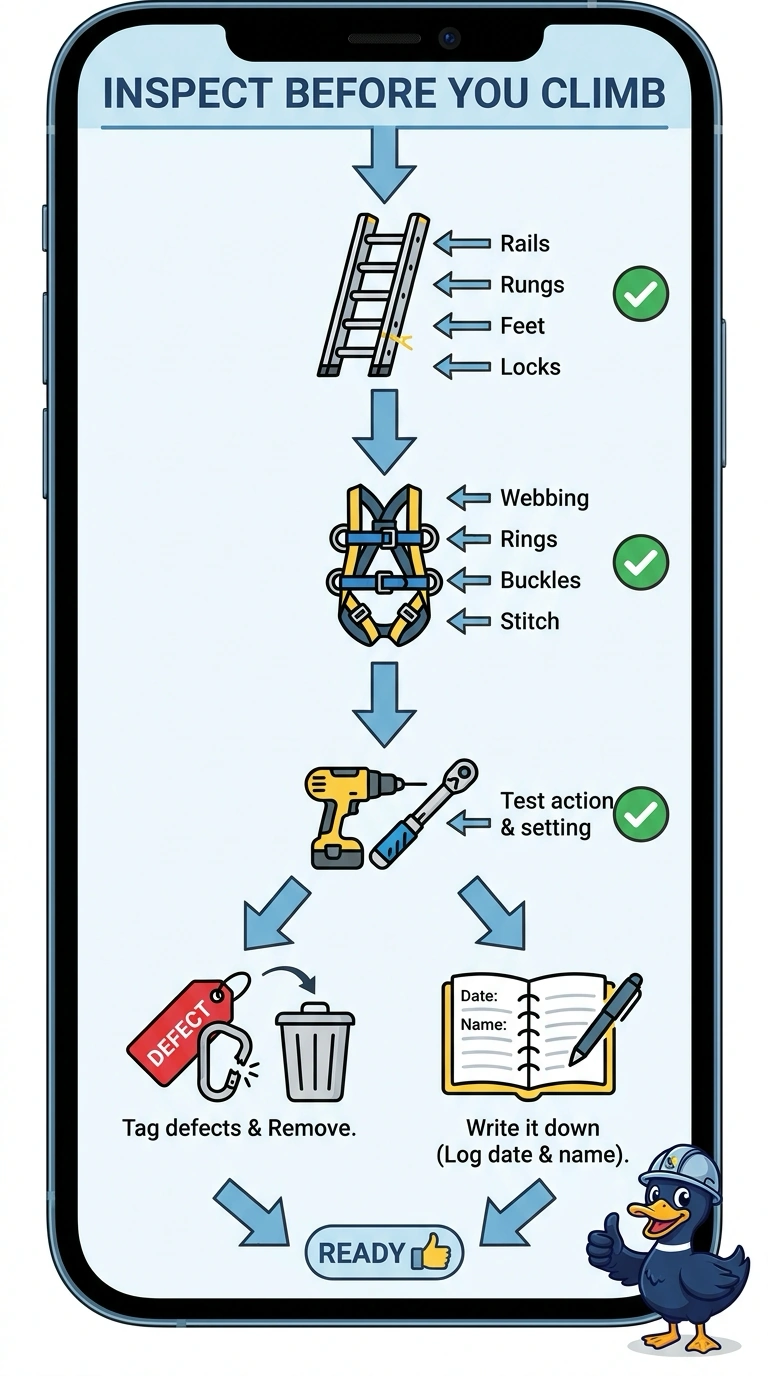
The documented pre-use check of ladders, harness stitching and hardware, and tool function is the best fit because it verifies that every listed item is ready before anyone climbs or handles panels. Recording the check makes completion clear to the crew, and doing it before work begins avoids relying on an earlier review. Checking the torque wrench’s calibration status, along with ladders and harness stitching and hardware, does not establish that the wrench functions properly; a current calibration record cannot reveal a sticking mechanism or damaged ratchet. Checking ladder rails and feet, harness stitching, and wrench operation leaves harness buckles, connectors, and other hardware unchecked. Checking ladders, harness hardware, and wrench operation omits harness stitching, which can be damaged even when fittings appear sound. Each of these checks therefore leaves one required inspection element unverified. Exam caveat: a pre-use inspection does not replace required periodic inspections or manufacturer instructions, and equipment with a defect must be removed from service. Practical check: inspect ladder components and locking parts, examine harness webbing and stitching along its length and operate each fitting, then verify the torque wrench’s operation using the maker’s procedure and confirm its calibration status as applicable.