
A homeowner asks why rooftop solar plus staying tied to the grid helps household bills and the local feeder with evening peaks and daytime solar surplus. Which description of economic benefits and distributed generation answers correctly?
Select an answer to reveal the explanation.
Short Explanation
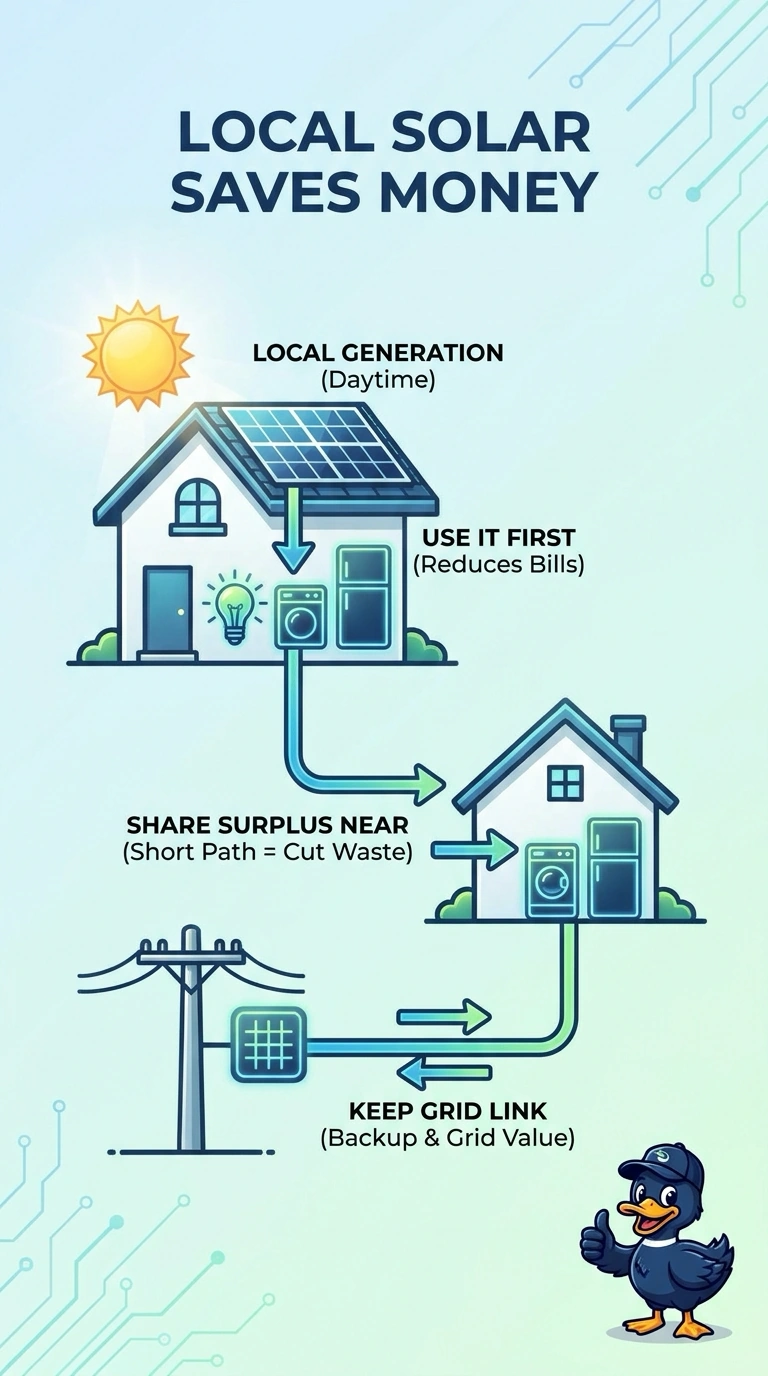
Rooftop solar earns twice, at home and on your street. Self-use cuts buys while nearby use trims line losses, like growing veggies in your yard instead of trucking them in.
Full Explanation
The correct description captures both sides of the benefit: using rooftop solar directly avoids buying some electricity, reducing the household bill, while generation near the point of consumption can supply daytime feeder demand and reduce upstream power flows. The net-billing statement describes a legitimate tariff and a possible bill saving, but focuses on how exports are credited; it does not explain the value of local generation to the feeder, and avoided-cost credits are not necessarily equal to retail rates. A battery can shift solar energy into the evening, reduce grid imports, and help with peak demand, but this account omits the benefit of supplying the feeder while solar is being generated. Exporting surplus can earn credits and support the feeder, but overlooking self-use misses a direct way solar reduces household purchases; moreover, export credits and feeder effects depend on local rules and conditions. Exam caveat: daytime solar does not automatically relieve an evening peak, and feeder value depends on where and when generation matches demand, as well as network constraints. Practical check: compare interval household consumption and solar output with the utility tariff, export-credit rules, and available feeder or interconnection data.