
During a noon maintenance visit on a 25-kW rooftop array with one warm combiner fuse and normal inverter output, the tech carries an IR thermometer and a thermal camera. Which diagnostic use of the IR thermometer and thermal camera should the tech choose to locate the heat fault safely?
Select an answer to reveal the explanation.
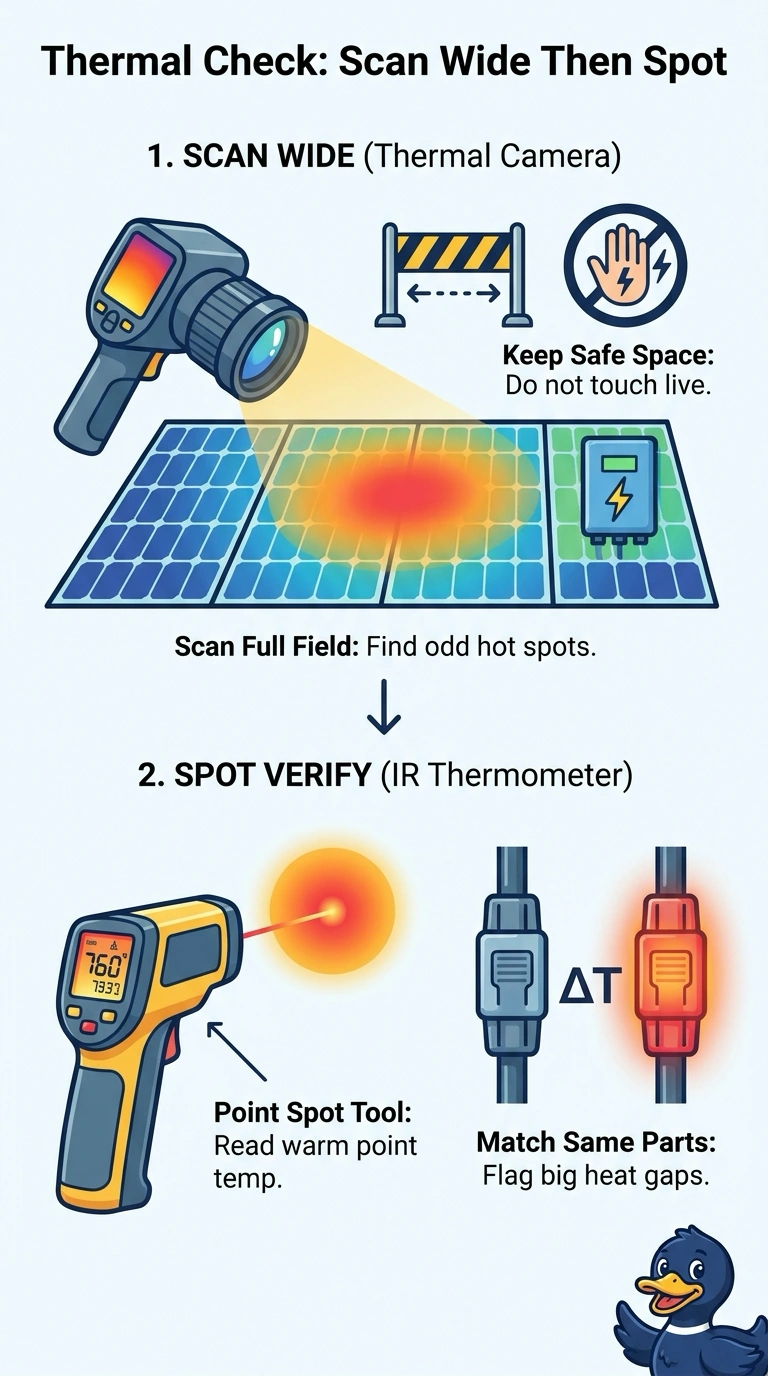
Short Explanation
Nice work keeping your distance from live heat. You scan for hotspots with the thermal camera, then spot-check temperatures without touching the equipment—a distance approach like scouting with binoculars before using a tape measure.
Full Explanation
The thermal camera is the right first tool for surveying energized equipment without contact: it shows the location and pattern of abnormal heating across the combiner, helping you distinguish a localized fuse hotspot from warmer neighboring components. The IR thermometer then provides a spot-temperature check of the identified area, also from a safe, noncontact position. Scanning the inverter and module surfaces instead could miss the reported warm combiner fuse, even if you safely verify the hottest spots. Shutting down before scanning the combiner removes the array’s normal operating load; a resistive connection or fuse may cool and become less apparent, undermining diagnosis during the noon visit. Scanning the combiner fuse but measuring the adjacent cable lug does not verify the suspect component’s temperature, and the lug reading may not represent the fuse temperature. Exam caveat: normal inverter output does not rule out a localized combiner fault, and thermal images show surface-temperature patterns rather than proving a specific electrical cause. Practical check: maintain the manufacturer’s safe approach distance, confirm the IR thermometer’s spot-size ratio covers the fuse, and compare readings with similar components under comparable load.