
A two-person crew arrives for a summer flat-roof service call at 95F with dark membrane, no shade, and wasps around the parapet conduit. One tech feels dizzy and the forecast shows afternoon lightning. Which hazard response best controls heat, weather, and animal risks?
Select an answer to reveal the explanation.
Short Explanation
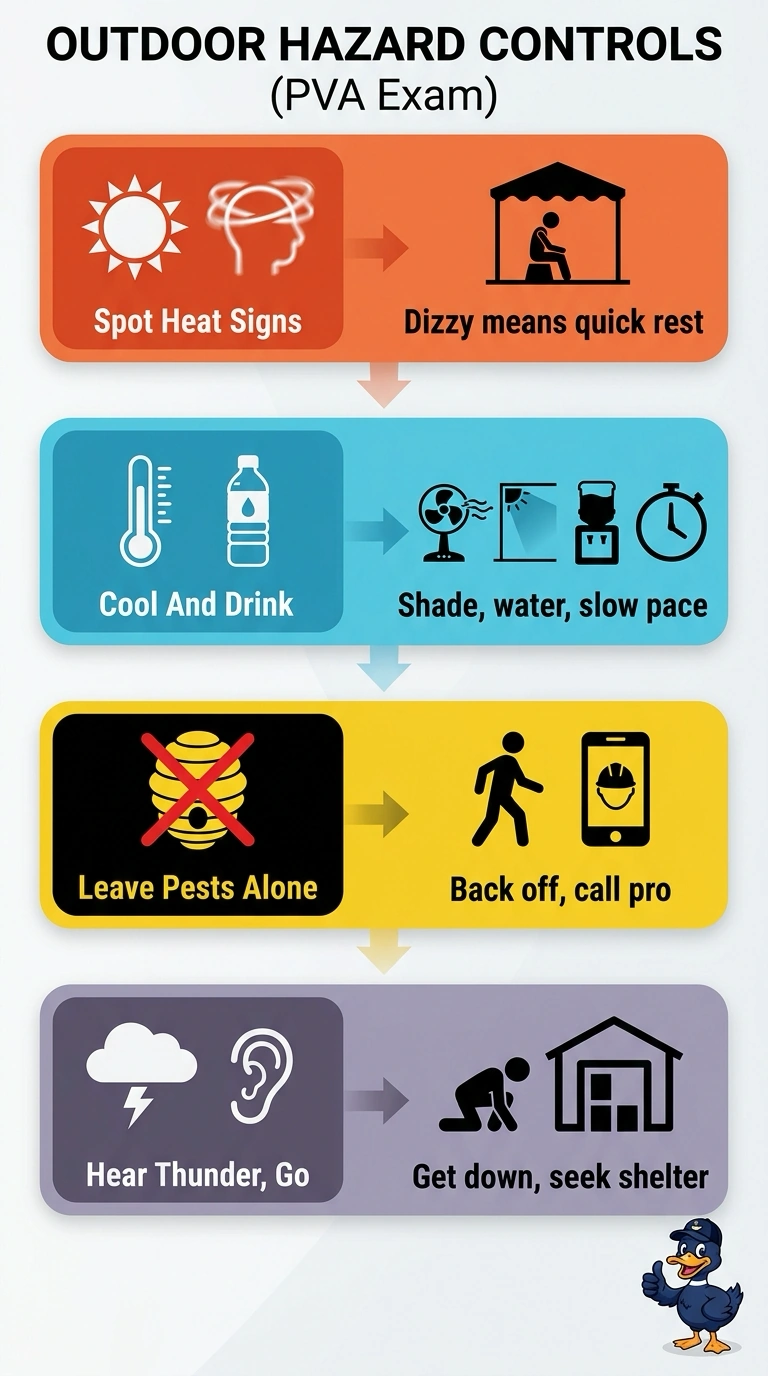
You’re the safety net when the roof turns harsh. Smart recovery means shade, water, active cooling, wasp removal, and a proper lightning shelter—not toughing it out. If you feel dizzy, stop work and get help.
Full Explanation
The response that pauses work for shade, water, active cooling, wasp removal, and proper lightning shelter addresses all three hazards and the dizzy worker’s immediate needs. Shade and fluids alone may not be enough when heat illness is developing; active cooling and monitoring matter, too, and seek emergency medical help if symptoms persist or worsen. A response with shade, water, professional wasp removal, and lightning shelter omits active cooling, leaving the dizziness inadequately addressed. A response that adds active cooling but only cordons off the parapet does not arrange control of the wasp hazard. A response with shade, active cooling, professional wasp removal, and lightning shelter omits water, an important part of heat-stress response and recovery. Exam caveat: a lightning forecast does not prove a strike is imminent, but stop outdoor work and reach suitable shelter when thunderstorms threaten; a canopy or open-sided shelter is not a substitute for a substantial enclosed building. Practical check: confirm the dizzy worker is improving, identify an accessible enclosed building, and keep the crew clear of the parapet until the wasp hazard is controlled.