
A small metal fabrication shop has approved a 30 kW rooftop array on its 480Y/277 V, three-phase, 60 Hz service, and the designer has reserved a 100 A breaker space for the inverter in the main switchboard. A low-cost unit in stock lists 208 V three-phase output, 80 A continuous output, 60 Hz, and 150% surge for 10 seconds. Which inverter specification check determines whether this unit may be connected directly to the shop service?
Select an answer to reveal the explanation.
Short Explanation
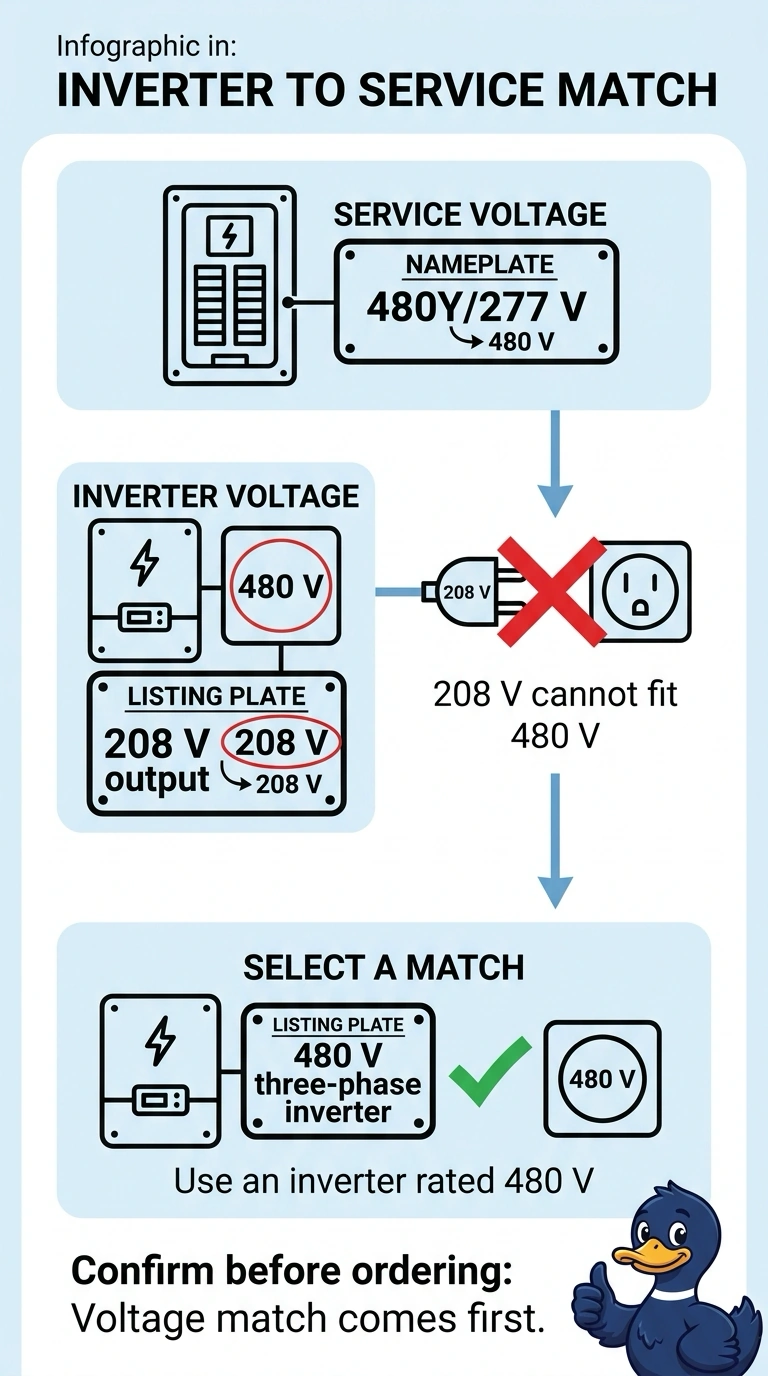
Voltage is the first line you line up, because an inverter has to speak the same voltage as the service it lands on. The other three checks are perfectly good ones, but they only matter after the voltages agree. It's like picking a hose that fits the tap before you worry about its flow rate.
Full Explanation
The output voltage rating is the gatekeeper for any AC interconnection, because the inverter's output terminals connect to conductors energized at the service voltage. A unit listed for 208 V three-phase cannot be connected directly to a 480Y/277 V system; its output voltage rating is not compatible, so a model listed for 480 V is required. Sizing a breaker at 125% of continuous output current is correct practice, but that calculation protects a device that could never land on this bus in the first place. Frequency agreement confirms compatibility with a 60 Hz grid and resolves no voltage mismatch. A grid-connected inverter's surge rating does not establish that it can supply the shop's motor-starting loads. Exam caveat: datasheet tables stack voltage, current, frequency and surge together, so read the voltage line first. Practical check: photograph the nameplate on the service disconnect and match the inverter listing to it before comparing any other column.