
An installer is mounting an AC disconnect for a residential array. The manual lists the enclosure as NEMA 1 and gives a torque value for each terminal, but the crew plans to hang it on the exterior wall beside the meter where rain runs down the siding. An indoor spot in the attached garage stays within reach of the equipment. Which mounting and tightening decision meets both requirements?
Select an answer to reveal the explanation.
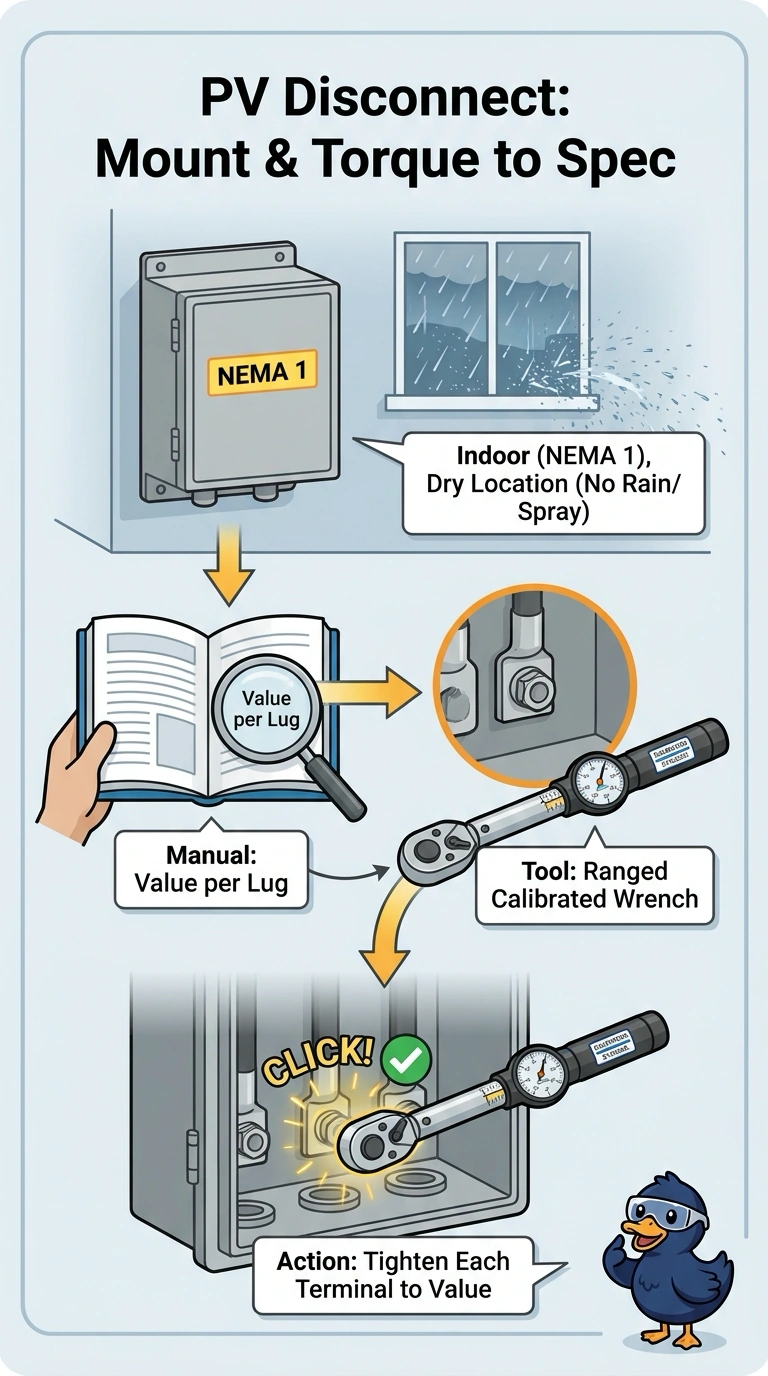
Short Explanation
Mount your NEMA 1 disconnect indoors in the garage—it isn’t built to handle rain like an outdoor-rated enclosure. Tighten each terminal to its specified torque using a properly ranged, calibrated wrench, like following a recipe’s exact measurements.
Full Explanation
Enclosure ratings and termination torque are independent requirements set by the manufacturer, and an installation only complies when both are honored. A NEMA 1 enclosure is for indoor use and is not rated to protect against rain or spray, so a disconnect mounted where rain runs down the exterior wall is not in a suitable location. Moving it into the attached garage keeps it within reach of the equipment while matching the enclosure rating. Torque values specify the clamping force for a lug: too little can allow the connection to loosen and heat up, while too much can deform the screw or clamp and degrade the connection. Tightening by hand plus a quarter turn is not a reliable way to meet a specified torque, and a nut driver cannot confirm that the specified torque has been reached. Only terminals with a specified torque value should be tightened to that value; check the manufacturer’s instructions and use a calibrated torque tool with a range that covers the required value.