
A new O&M helper checks a 20-kW commercial rooftop where the owner wants phone alerts for low output, string-level fault location, and proof of monthly savings without opening electrical gear. Which monitoring equipment description best meets these visibility needs?
Select an answer to reveal the explanation.
Short Explanation
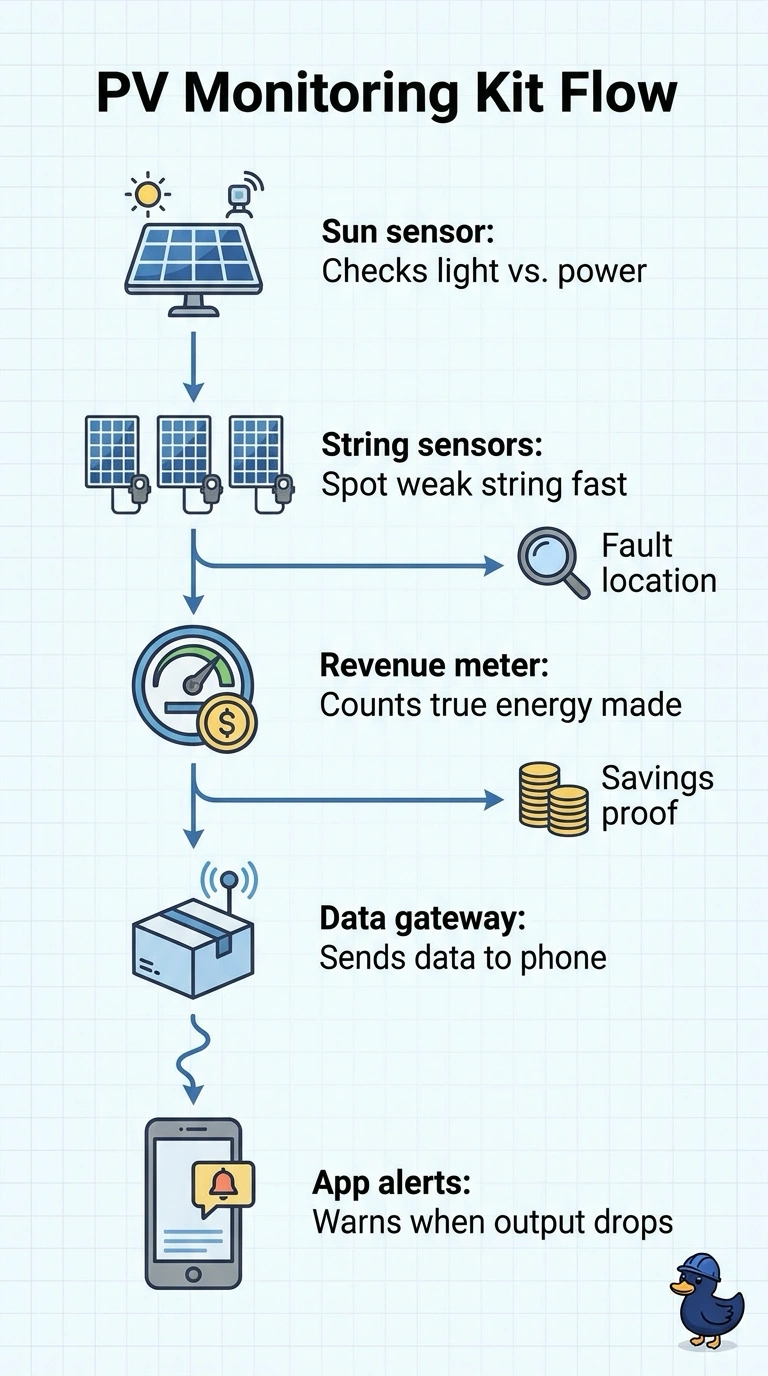
You give owners peace of mind when data flows on its own. A connected meter and gateway turn raw power into alerts, charts, and clear savings reports.
Full Explanation
The revenue meter, gateway, and sensors package combines the needed functions: sensors and inverter data can reveal low production and help identify an affected string, the gateway can send phone alerts, and revenue-grade measurements can support monthly savings calculations. Once installed and configured, the owner can review this information without opening electrical equipment for routine checks. A string-inverter portal may provide timely alerts and string-level diagnostics, but savings estimates based only on production or modeled tariffs do not establish measured savings against consumption or a billing baseline. A revenue meter, gateway, and general site sensors can support alerts and savings reporting, yet without string-level sensing or equivalent inverter data they cannot pinpoint which string has a fault. A revenue meter with a string-current logger can document energy and help locate string issues, but without a notification-capable gateway or service it will not send phone alerts when output falls. Exam caveat: confirm what “savings proof” means, since avoided-cost estimates, utility-bill comparisons, and revenue-grade energy records are not interchangeable. Practical check: verify the proposed system measures the relevant energy flows, maps data to individual strings, supports configured low-output phone notifications, and retains timestamped monthly reports.