
A maintenance tech must check an older 600-V string for degraded insulation after a ground fault cleared. The array can be isolated, the sun is up, and the crew has lockout gear. Which use of an insulation tester (megohmmeter) yields a valid reading safely?
Select an answer to reveal the explanation.
Short Explanation
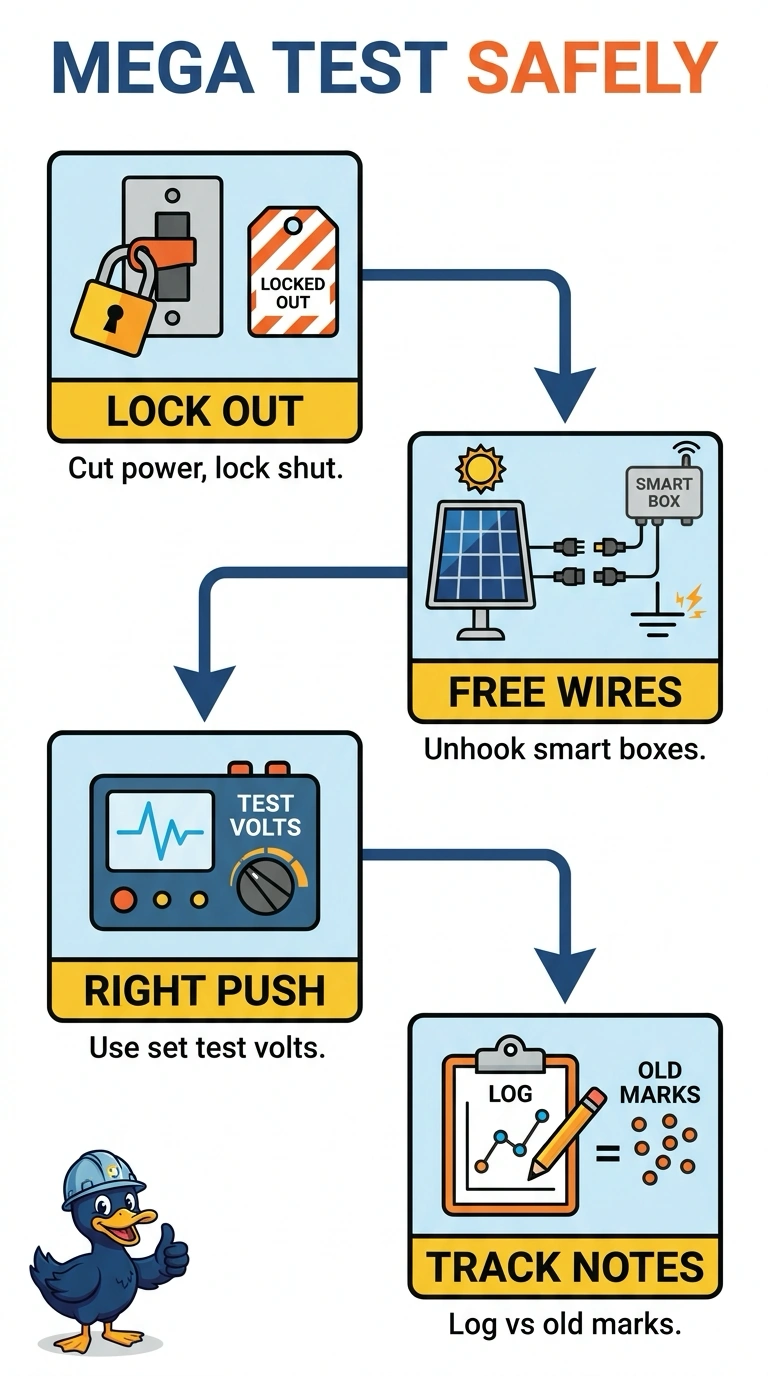
You’re checking whether the insulation has weakened, so a comparable baseline helps make the reading meaningful. Isolation and a brief, correctly set test protect the crew and equipment while you get a useful result.
Full Explanation
The valid procedure combines safe isolation with a reading that can reveal change in the string. Lockout prevents unexpected reconnection, and discharging the string and disconnecting electronics protects equipment that may be damaged by the tester’s DC voltage. Apply the specified test voltage briefly, then record the reading against a comparable baseline to assess whether insulation has degraded. A procedure that records the result without comparing it to a baseline still produces a number, but it cannot show how this older string has changed. A ten-minute polarization test is not interchangeable with the brief application specified here; although timed polarization testing is used in some contexts, it may impose unnecessary stress unless the equipment and test plan call for it. Comparing the reading only with a generic acceptance threshold may provide a screening reference, but it does not establish deterioration from this string’s prior condition. Exam caveat: follow the tester and module manufacturers’ instructions, because suitable test voltage and duration depend on the equipment and applicable procedure. Practical check: confirm isolation and lockout, verify that electronics are disconnected and the string is discharged, and document test settings and conditions alongside a comparable baseline.