
A nursing facility's central supply room frequently runs out of sterile wound dressings mid-week while older boxes of intravenous tubing expire unused on back shelves. Which inventory management practice best resolves both problems?
Select an answer to reveal the explanation.
Short Explanation
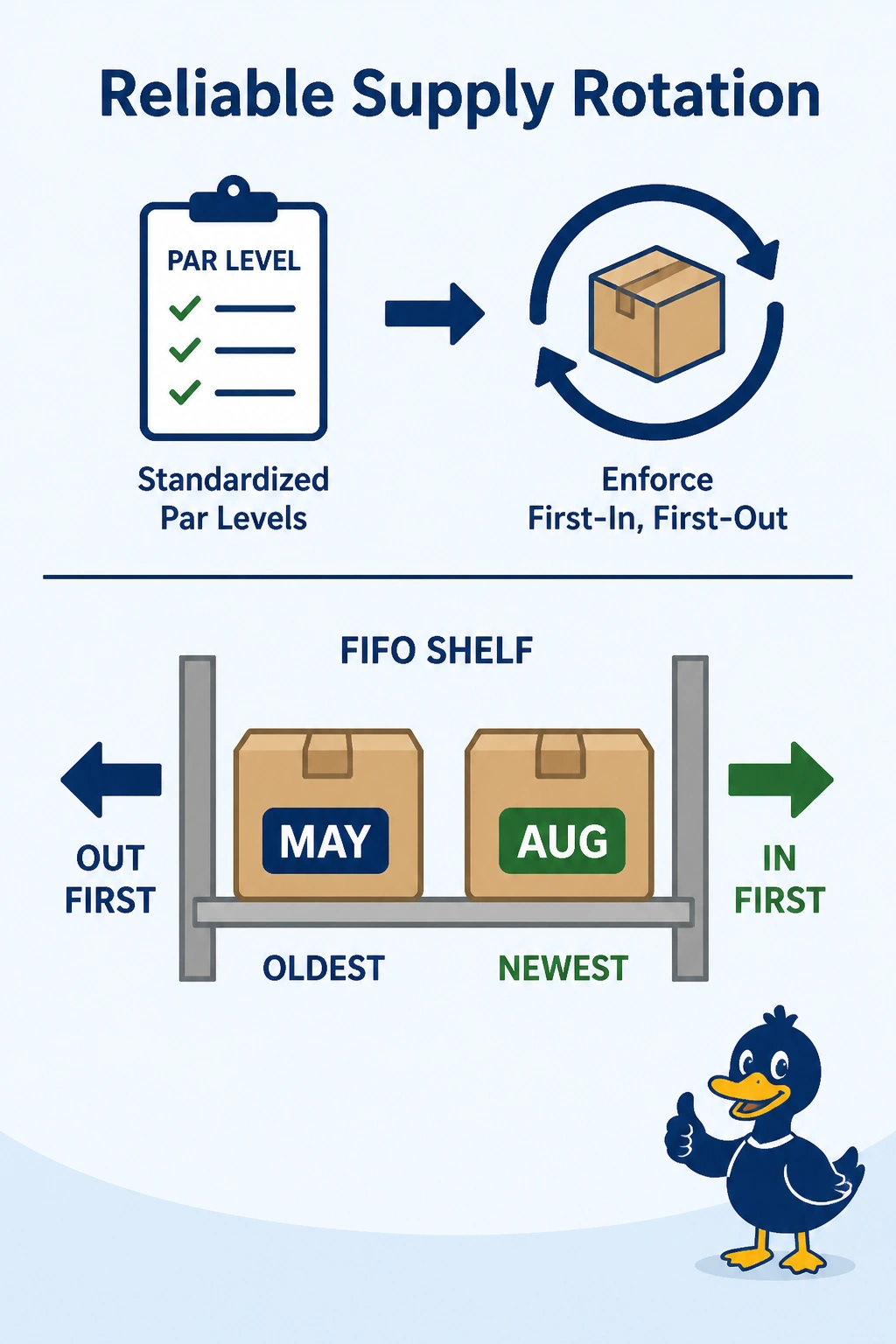
Running out of dressings while other supplies expire on the back shelf is a classic sign of unmanaged stock flow. The trap is throwing more money at the problem by over-ordering or letting every unit buy on its own. Setting clear par levels and rotating older items to the front keeps your shelves stocked, fresh, and cost-effective.
Full Explanation
Central supply management requires balancing adequate clinical availability against waste and carrying costs. Choosing to establish standardized par levels and enforce First-In, First-Out stock rotation sets minimum reorder points based on actual clinical consumption so essential wound dressings do not run out mid-week, while placing older dated supplies in front ensures they are used before expiration. Choosing to order double the monthly quantity of all supplies regardless of usage ties up working capital, crowds storage shelves, and worsens product expiration waste. Choosing to store newly delivered cartons in front of older inventory on every shelf follows a Last-In, First-Out pattern that traps older stock in the back until it expires. Deciding to eliminate central supply tracking and let each unit order independently fragments purchasing, drives up unit prices, and eliminates oversight of expiration dates. As a caveat, par levels should be reviewed whenever resident acuity or census shifts significantly, such as after opening a complex wound-care program. For an operational check, inspect central supply bins monthly for expired items, verify bin labels display current par quantities, and reconcile physical counts against vendor invoices.
Prefer to study offline? Printable PDF study book + test engine ($7.50, unofficial). These questions stay free here.